January 12, 2026

January 12, 2026

Best Car Rental Website Design for Online Bookings

Best Car Rental Website Design for Online Bookings

Real examples of car rental websites that show how online booking works in practice. These designs focus on structure, clarity, and booking flow rather than visuals or decorative design elements.

Real examples of car rental websites that show how online booking works in practice. These designs focus on structure, clarity, and booking flow rather than visuals or decorative design elements.

Side view of a green SUV with palm trees in the background during sunset

Luxerra

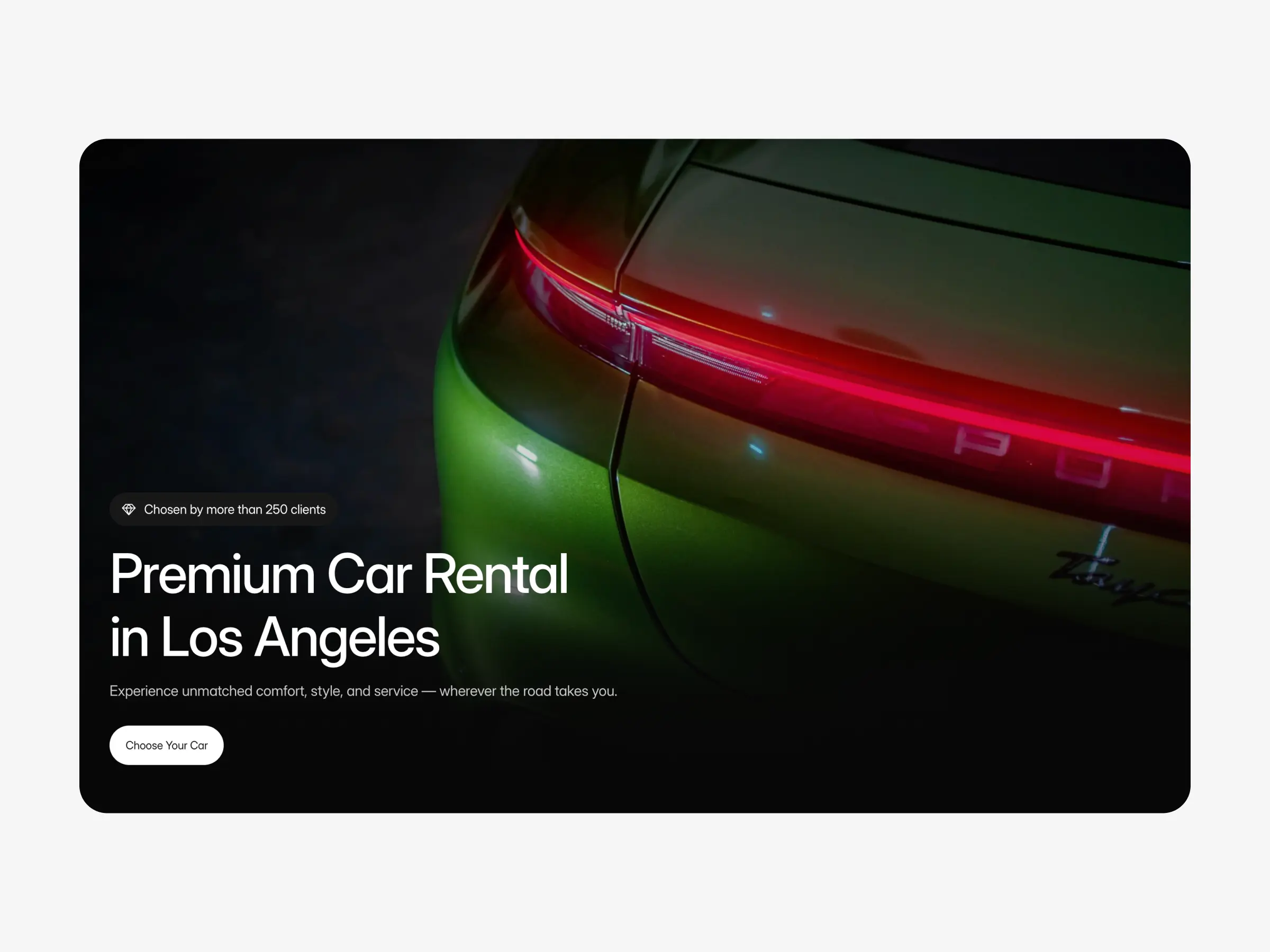
Luxerra is a clear example of a modern, booking-first car rental website. The homepage immediately establishes the main user action by guiding visitors toward choosing a vehicle without requiring unnecessary exploration.

The vehicle listing is structured around comparison. Cars are presented in a consistent layout, with key information placed predictably. This allows users to scan options quickly and understand differences without cognitive overload.

Individual vehicle pages continue the same logic. The layout keeps attention on the rental decision, with booking actions clearly separated from descriptive content. Navigation remains minimal, and secondary elements do not interrupt the main flow.

Overall, the site demonstrates how a clean structure and restrained interface help users move from browsing to booking with confidence.

View the website: https://luxerra.framer.website
Modern car rental website homepage with booking-first layout and vehicle selection interface

Sixt

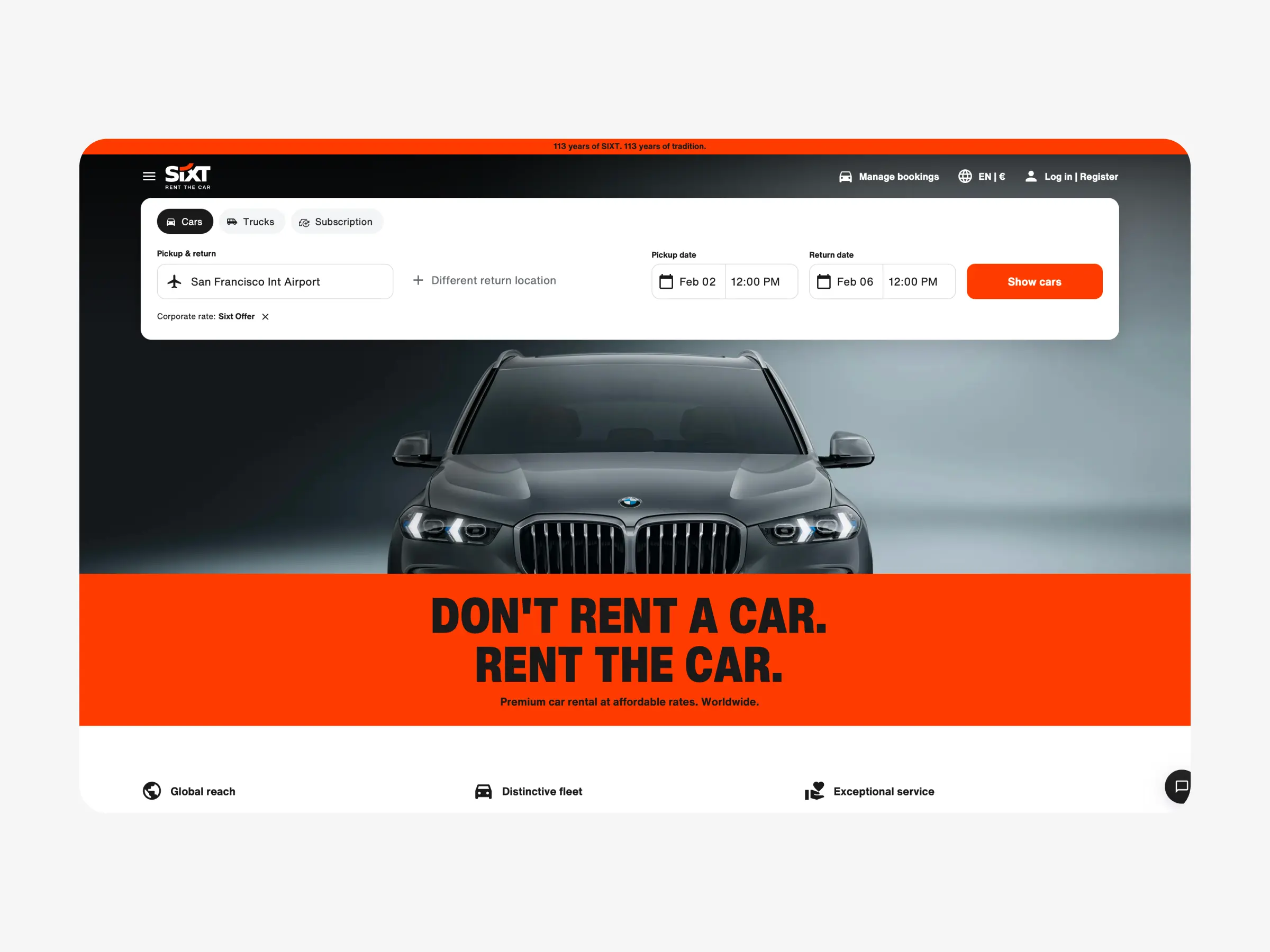
Sixt represents a strong benchmark for large-scale car rental platforms. From the first screen, users are directed to the booking form, making the next step immediately obvious.

The inventory is designed for fast comparison. Each vehicle card follows the same structure, with pricing and core details shown early. This consistency reduces friction and helps users make decisions faster.

The interface avoids unnecessary elements that could distract from booking. As a result, the user journey remains predictable and focused on completing a reservation.

View the website: https://www.sixt.com
Sixt car rental website homepage with search form and vehicle booking interface

Peacock Rentals

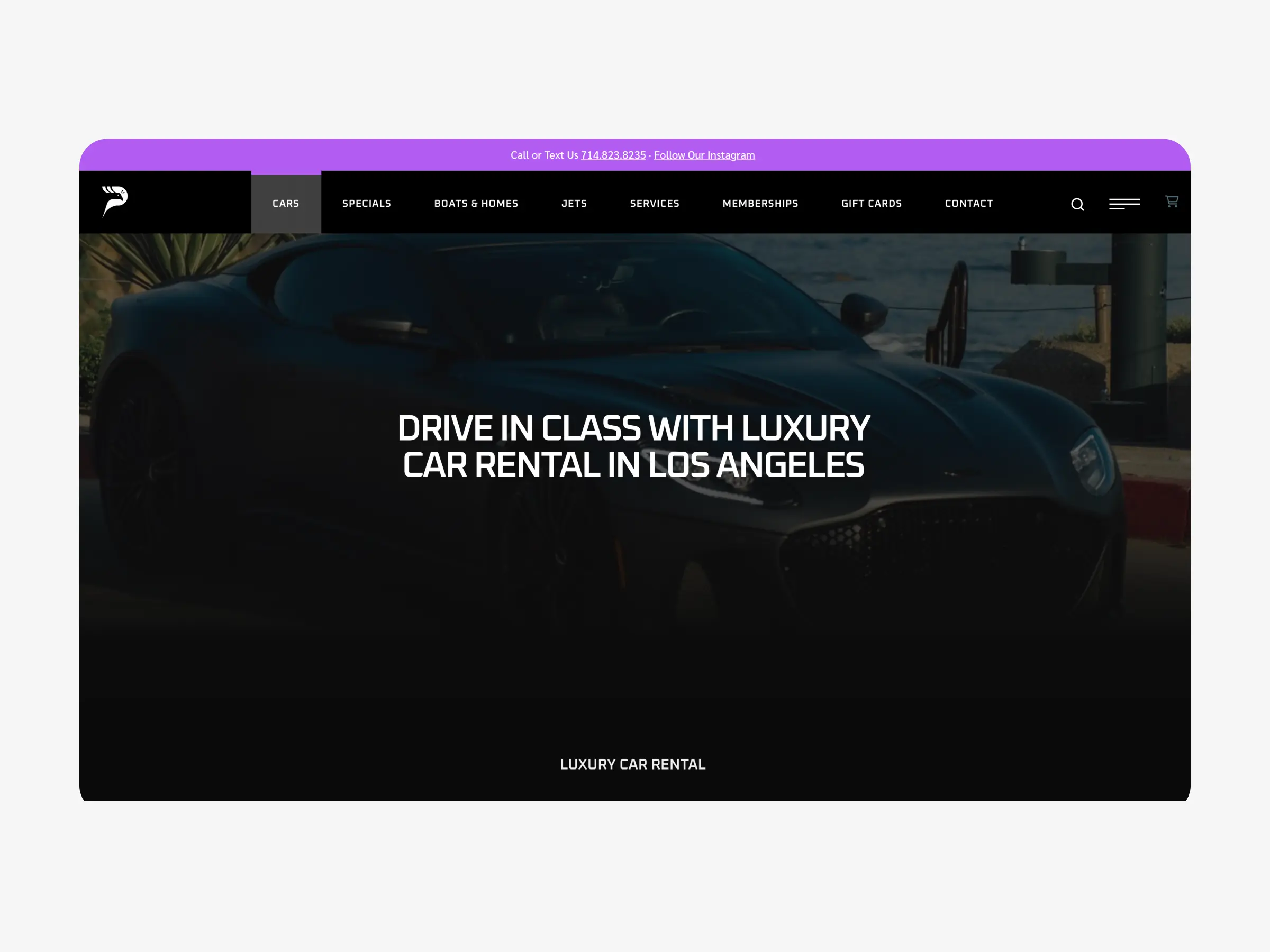
Peacock Rentals uses a visually driven layout that places strong emphasis on showcasing available vehicles and establishing brand presence. The homepage clearly communicates the type of service offered and helps users quickly understand what to expect.

The vehicle catalog is organized in a straightforward way, allowing users to browse cars by category and explore available options with ease. Visual presentation plays an important role in guiding attention across the page.

Overall, the website balances vehicle presentation with accessibility, supporting exploration while still providing clear paths toward taking the next step in the rental process.

View the website: https://peacock-rentals.com
Peacock Rentals car rental website homepage showcasing vehicle listings and navigation

Falcon Car Rental

Falcon Car Rental uses a visually oriented website structure that places strong emphasis on presenting available vehicles and brand identity. The homepage introduces users to the fleet and service offering through large visuals and clear categorization.

The catalog allows users to browse vehicles in an organized way, with individual pages providing detailed information about each car. The overall layout encourages exploration and familiarization with available options before moving toward a booking decision.

The design reflects a presentation-focused approach, where users are guided through the inventory and service offering in a visually engaging and structured manner.

View the website: https://www.falconcarrental.com
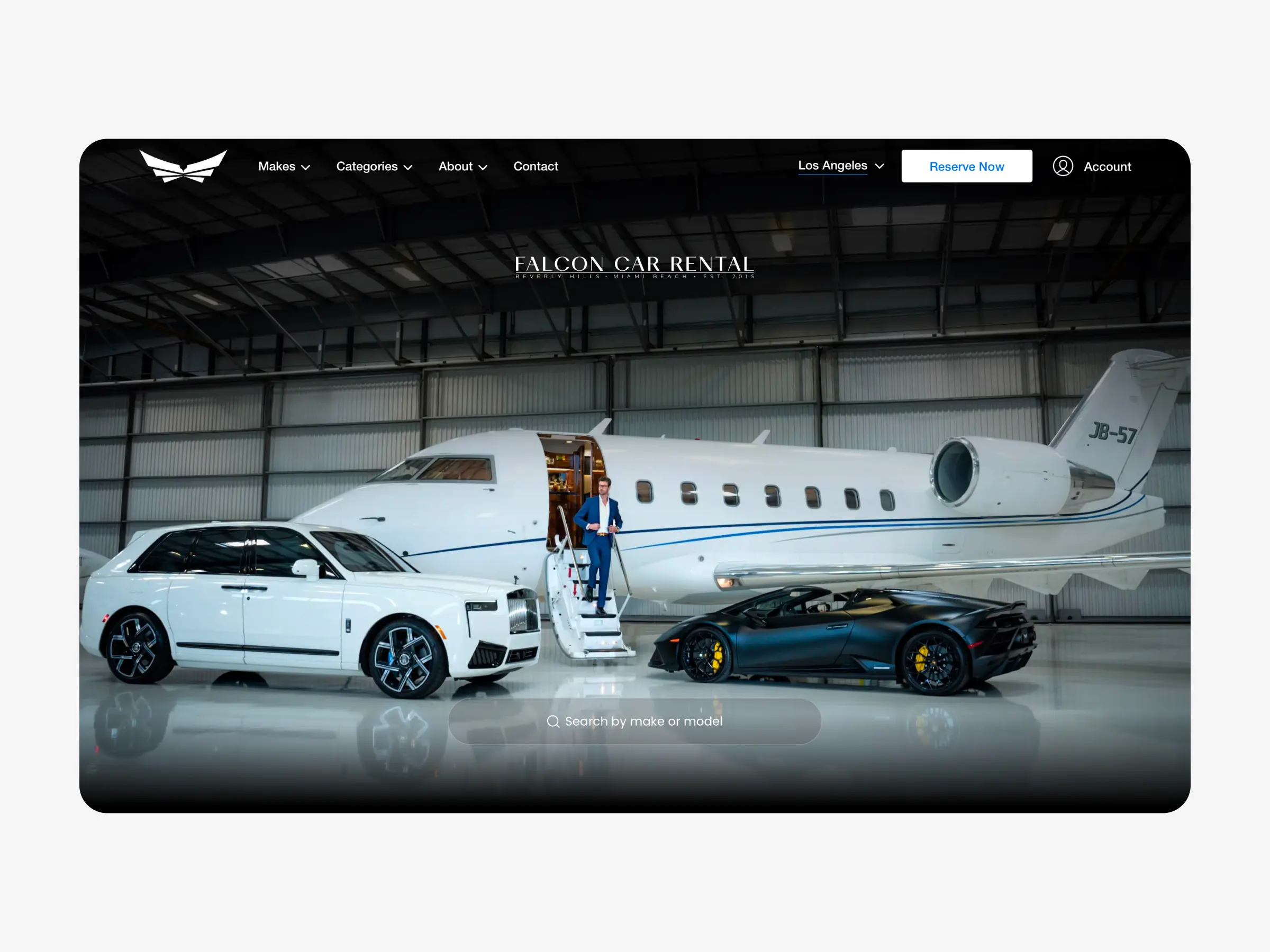
Falcon Car Rental website homepage featuring vehicle catalog and booking navigation

Monza Exotics

Monza Exotics features a content-rich layout designed to showcase its vehicle lineup and available services. The homepage combines vehicle presentation, informational sections, and navigation elements to give users a broad overview of the offering.

Vehicle pages provide detailed descriptions and visuals, allowing users to explore cars in depth. The structure supports browsing and discovery, giving users space to review options before proceeding further.

Overall, the website emphasizes exploration and information clarity, supporting users who prefer to review details before taking the next step.

View the website: https://monzaexotics.com
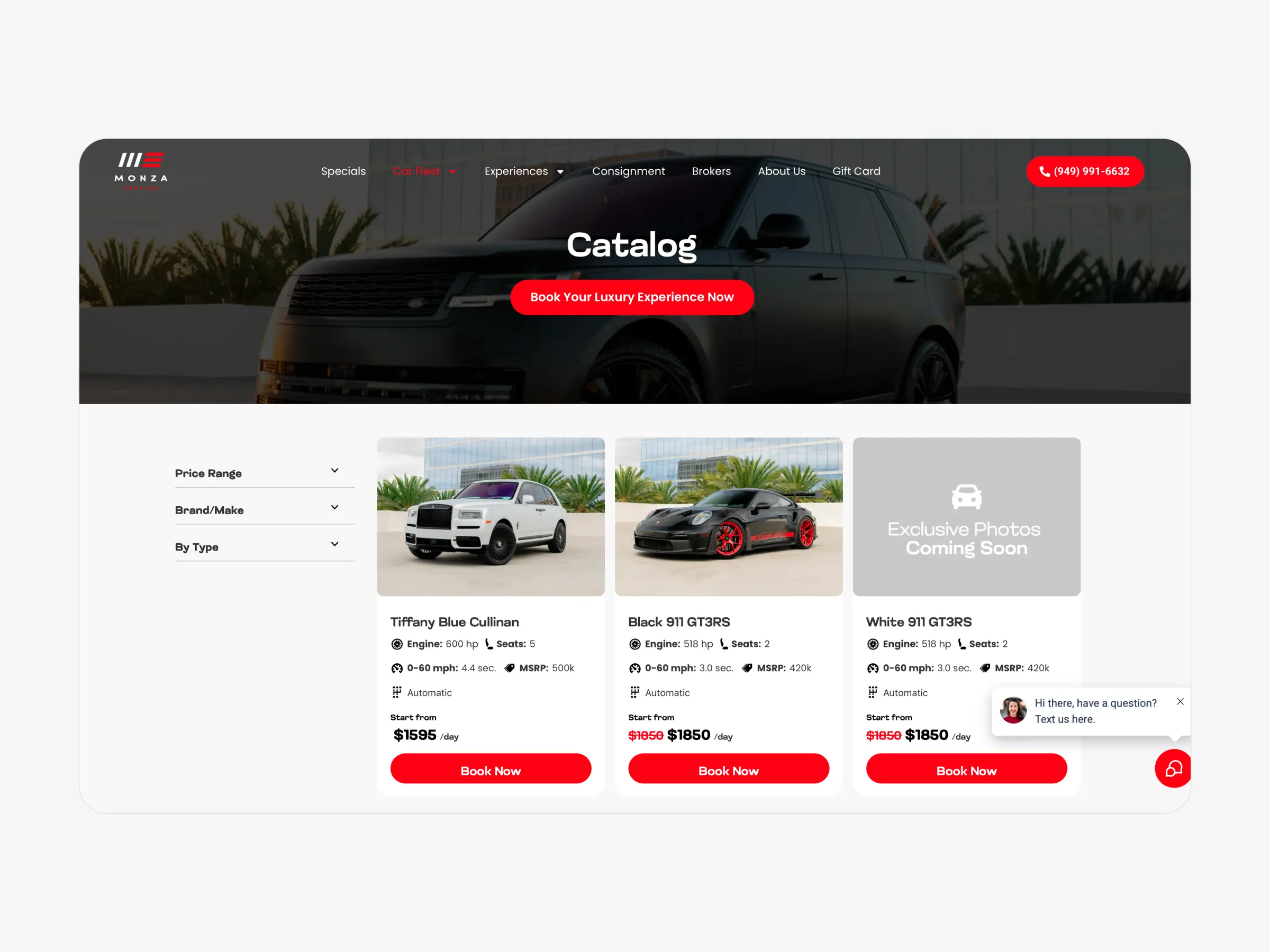
Monza Exotics car rental website catalog page with vehicle cards and filtering options

Centurion Lifestyle

Centurion Lifestyle follows a service-oriented website structure that highlights vehicle selection alongside direct communication options. The layout introduces users to the available fleet while emphasizing personal interaction as part of the rental process.

Vehicle listings are clearly presented, allowing users to review options and understand the scope of services offered. Calls to action guide users toward contacting the team to continue the rental process.

The design reflects a personalized service model, where the website acts as an entry point into a more tailored rental experience.

View the website: https://centurionlifestyle.com
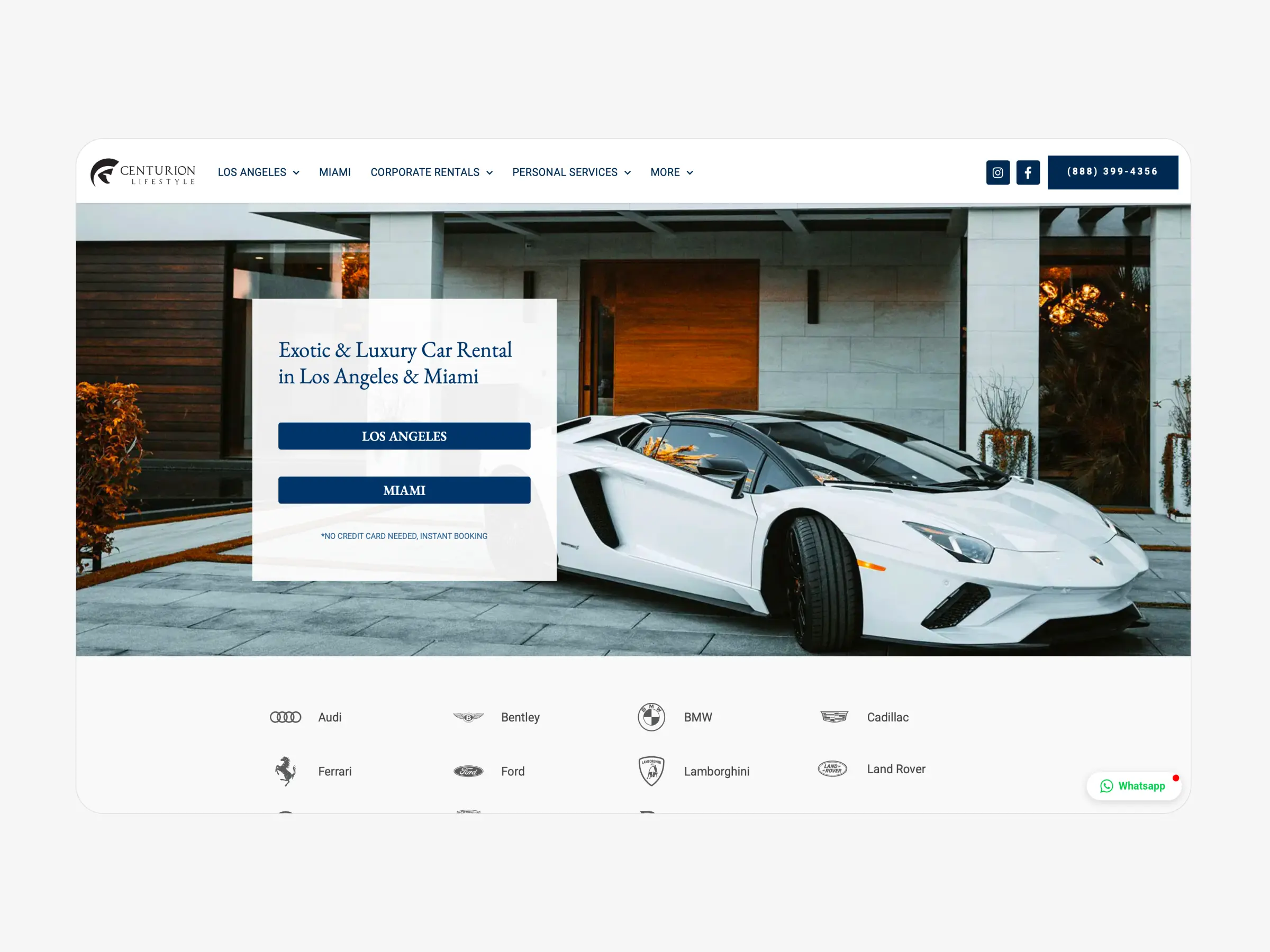
Centurion Lifestyle car rental website homepage highlighting vehicle selection and contact options

Key observations

Across all examples, one pattern is consistent. Websites that prioritize booking visibility and structured comparison reduce friction and convert more effectively.

When booking actions are delayed or overshadowed by secondary elements, users hesitate. Clear hierarchy and predictable layouts consistently support faster decisions.

Conclusion

Effective car rental website design is defined by structure, not decoration. The fastest-growing sites make booking the primary action and remove anything that competes with it.

Real examples show that when clarity leads the interface, online bookings become a natural outcome rather than a forced conversion.

Luxerra

Luxerra is a clear example of a modern, booking-first car rental website. The homepage immediately establishes the main user action by guiding visitors toward choosing a vehicle without requiring unnecessary exploration.

The vehicle listing is structured around comparison. Cars are presented in a consistent layout, with key information placed predictably. This allows users to scan options quickly and understand differences without cognitive overload.

Individual vehicle pages continue the same logic. The layout keeps attention on the rental decision, with booking actions clearly separated from descriptive content. Navigation remains minimal, and secondary elements do not interrupt the main flow.

Overall, the site demonstrates how a clean structure and restrained interface help users move from browsing to booking with confidence.

View the website: https://luxerra.framer.website

Modern car rental website homepage with booking-first layout and vehicle selection interface

Sixt

Sixt represents a strong benchmark for large-scale car rental platforms. From the first screen, users are directed to the booking form, making the next step immediately obvious.

The inventory is designed for fast comparison. Each vehicle card follows the same structure, with pricing and core details shown early. This consistency reduces friction and helps users make decisions faster.

The interface avoids unnecessary elements that could distract from booking. As a result, the user journey remains predictable and focused on completing a reservation.

View the website: https://www.sixt.com

Sixt car rental website homepage with search form and vehicle booking interface

Peacock Rentals

Peacock Rentals uses a visually driven layout that places strong emphasis on showcasing available vehicles and establishing brand presence. The homepage clearly communicates the type of service offered and helps users quickly understand what to expect.

The vehicle catalog is organized in a straightforward way, allowing users to browse cars by category and explore available options with ease. Visual presentation plays an important role in guiding attention across the page.

Overall, the website balances vehicle presentation with accessibility, supporting exploration while still providing clear paths toward taking the next step in the rental process.

View the website: https://peacock-rentals.com

Peacock Rentals car rental website homepage showcasing vehicle listings and navigation

Falcon Car Rental

Falcon Car Rental uses a visually oriented website structure that places strong emphasis on presenting available vehicles and brand identity. The homepage introduces users to the fleet and service offering through large visuals and clear categorization.

The catalog allows users to browse vehicles in an organized way, with individual pages providing detailed information about each car. The overall layout encourages exploration and familiarization with available options before moving toward a booking decision.

The design reflects a presentation-focused approach, where users are guided through the inventory and service offering in a visually engaging and structured manner.

View the website: https://www.falconcarrental.com

Falcon Car Rental website homepage featuring vehicle catalog and booking navigation

Monza Exotics

Monza Exotics features a content-rich layout designed to showcase its vehicle lineup and available services. The homepage combines vehicle presentation, informational sections, and navigation elements to give users a broad overview of the offering.

Vehicle pages provide detailed descriptions and visuals, allowing users to explore cars in depth. The structure supports browsing and discovery, giving users space to review options before proceeding further.

Overall, the website emphasizes exploration and information clarity, supporting users who prefer to review details before taking the next step.

View the website: https://monzaexotics.com

Monza Exotics car rental website catalog page with vehicle cards and filtering options

Centurion Lifestyle

Centurion Lifestyle follows a service-oriented website structure that highlights vehicle selection alongside direct communication options. The layout introduces users to the available fleet while emphasizing personal interaction as part of the rental process.

Vehicle listings are clearly presented, allowing users to review options and understand the scope of services offered. Calls to action guide users toward contacting the team to continue the rental process.

The design reflects a personalized service model, where the website acts as an entry point into a more tailored rental experience.

View the website: https://centurionlifestyle.com

Centurion Lifestyle car rental website homepage highlighting vehicle selection and contact options

Key observations

Across all examples, one pattern is consistent. Websites that prioritize booking visibility and structured comparison reduce friction and convert more effectively.

When booking actions are delayed or overshadowed by secondary elements, users hesitate. Clear hierarchy and predictable layouts consistently support faster decisions.

Conclusion

Effective car rental website design is defined by structure, not decoration. The fastest-growing sites make booking the primary action and remove anything that competes with it.

Real examples show that when clarity leads the interface, online bookings become a natural outcome rather than a forced conversion.

Luxerra

Luxerra is a clear example of a modern, booking-first car rental website. The homepage immediately establishes the main user action by guiding visitors toward choosing a vehicle without requiring unnecessary exploration.

The vehicle listing is structured around comparison. Cars are presented in a consistent layout, with key information placed predictably. This allows users to scan options quickly and understand differences without cognitive overload.

Individual vehicle pages continue the same logic. The layout keeps attention on the rental decision, with booking actions clearly separated from descriptive content. Navigation remains minimal, and secondary elements do not interrupt the main flow.

Overall, the site demonstrates how a clean structure and restrained interface help users move from browsing to booking with confidence.

View the website: https://luxerra.framer.website

Modern car rental website homepage with booking-first layout and vehicle selection interface

Sixt

Sixt represents a strong benchmark for large-scale car rental platforms. From the first screen, users are directed to the booking form, making the next step immediately obvious.

The inventory is designed for fast comparison. Each vehicle card follows the same structure, with pricing and core details shown early. This consistency reduces friction and helps users make decisions faster.

The interface avoids unnecessary elements that could distract from booking. As a result, the user journey remains predictable and focused on completing a reservation.

View the website: https://www.sixt.com

Sixt car rental website homepage with search form and vehicle booking interface

Peacock Rentals

Peacock Rentals uses a visually driven layout that places strong emphasis on showcasing available vehicles and establishing brand presence. The homepage clearly communicates the type of service offered and helps users quickly understand what to expect.

The vehicle catalog is organized in a straightforward way, allowing users to browse cars by category and explore available options with ease. Visual presentation plays an important role in guiding attention across the page.

Overall, the website balances vehicle presentation with accessibility, supporting exploration while still providing clear paths toward taking the next step in the rental process.

View the website: https://peacock-rentals.com

Peacock Rentals car rental website homepage showcasing vehicle listings and navigation

Falcon Car Rental

Falcon Car Rental uses a visually oriented website structure that places strong emphasis on presenting available vehicles and brand identity. The homepage introduces users to the fleet and service offering through large visuals and clear categorization.

The catalog allows users to browse vehicles in an organized way, with individual pages providing detailed information about each car. The overall layout encourages exploration and familiarization with available options before moving toward a booking decision.

The design reflects a presentation-focused approach, where users are guided through the inventory and service offering in a visually engaging and structured manner.

View the website: https://www.falconcarrental.com

Falcon Car Rental website homepage featuring vehicle catalog and booking navigation

Monza Exotics

Monza Exotics features a content-rich layout designed to showcase its vehicle lineup and available services. The homepage combines vehicle presentation, informational sections, and navigation elements to give users a broad overview of the offering.

Vehicle pages provide detailed descriptions and visuals, allowing users to explore cars in depth. The structure supports browsing and discovery, giving users space to review options before proceeding further.

Overall, the website emphasizes exploration and information clarity, supporting users who prefer to review details before taking the next step.

View the website: https://monzaexotics.com

Monza Exotics car rental website catalog page with vehicle cards and filtering options

Centurion Lifestyle

Centurion Lifestyle follows a service-oriented website structure that highlights vehicle selection alongside direct communication options. The layout introduces users to the available fleet while emphasizing personal interaction as part of the rental process.

Vehicle listings are clearly presented, allowing users to review options and understand the scope of services offered. Calls to action guide users toward contacting the team to continue the rental process.

The design reflects a personalized service model, where the website acts as an entry point into a more tailored rental experience.

View the website: https://centurionlifestyle.com

Centurion Lifestyle car rental website homepage highlighting vehicle selection and contact options

Key observations

Across all examples, one pattern is consistent. Websites that prioritize booking visibility and structured comparison reduce friction and convert more effectively.

When booking actions are delayed or overshadowed by secondary elements, users hesitate. Clear hierarchy and predictable layouts consistently support faster decisions.

Conclusion

Effective car rental website design is defined by structure, not decoration. The fastest-growing sites make booking the primary action and remove anything that competes with it.

Real examples show that when clarity leads the interface, online bookings become a natural outcome rather than a forced conversion.

Frequently Asked Questions

What makes a car rental website work well for online bookings in real practice?

An effective car rental website focuses on clear structure, predictable navigation, and early access to booking functionality. Users should be able to compare vehicles, see pricing, and understand availability without unnecessary steps or distractions.

Do car rental websites need complex design to convert visitors successfully today?

No. Conversion is driven more by clarity and structure than by visual complexity. Simple layouts with consistent vehicle listings and clear booking actions usually perform better than visually overloaded designs.

Why do many car rental websites rely on contact-based booking instead of online checkout?

Some businesses prioritize personalized service or manual confirmation processes. While this approach can work for specific use cases, it often shifts the booking experience away from automation and requires additional user effort.

Can a booking-first website structure work for both small and large car rental businesses?

Yes. Structures scale across different business sizes. Clear inventory presentation and booking flows help reduce friction regardless of fleet size or market.

What makes a car rental website work well for online bookings in real practice?

An effective car rental website focuses on clear structure, predictable navigation, and early access to booking functionality. Users should be able to compare vehicles, see pricing, and understand availability without unnecessary steps or distractions.

Do car rental websites need complex design to convert visitors successfully today?

No. Conversion is driven more by clarity and structure than by visual complexity. Simple layouts with consistent vehicle listings and clear booking actions usually perform better than visually overloaded designs.

Why do many car rental websites rely on contact-based booking instead of online checkout?

Some businesses prioritize personalized service or manual confirmation processes. While this approach can work for specific use cases, it often shifts the booking experience away from automation and requires additional user effort.

Can a booking-first website structure work for both small and large car rental businesses?

Yes. Structures scale across different business sizes. Clear inventory presentation and booking flows help reduce friction regardless of fleet size or market.

What makes a car rental website work well for online bookings in real practice?

An effective car rental website focuses on clear structure, predictable navigation, and early access to booking functionality. Users should be able to compare vehicles, see pricing, and understand availability without unnecessary steps or distractions.

Do car rental websites need complex design to convert visitors successfully today?

No. Conversion is driven more by clarity and structure than by visual complexity. Simple layouts with consistent vehicle listings and clear booking actions usually perform better than visually overloaded designs.

Why do many car rental websites rely on contact-based booking instead of online checkout?

Some businesses prioritize personalized service or manual confirmation processes. While this approach can work for specific use cases, it often shifts the booking experience away from automation and requires additional user effort.

Can a booking-first website structure work for both small and large car rental businesses?

Yes. Structures scale across different business sizes. Clear inventory presentation and booking flows help reduce friction regardless of fleet size or market.