{ "@context": "https://schema.org", "@type": "FAQPage", "mainEntity": [ { "@type": "Question", "name": "What makes a car repair website convert better than others?", "acceptedAnswer": { "@type": "Answer", "text": "Clear structure, local relevance, and trust-focused content matter more than visual effects. Visitors should immediately understand what services are offered and how to take action." } }, { "@type": "Question", "name": "Do local auto shops really need a structured website?", "acceptedAnswer": { "@type": "Answer", "text": "Yes. Most service requests come from users with urgent or specific needs. A structured website helps them decide faster and contact the business with confidence." } }, { "@type": "Question", "name": "Is speed important for car repair websites?", "acceptedAnswer": { "@type": "Answer", "text": "Absolutely. Slow websites increase bounce rates and reduce trust, especially on mobile devices where most local searches happen." } }, { "@type": "Question", "name": "Do I need a full redesign to improve conversions?", "acceptedAnswer": { "@type": "Answer", "text": "Not always. Improving structure, clarity, and messaging often delivers better results than changing visuals alone." } }, { "@type": "Question", "name": "What is the most important section of a car repair website?", "acceptedAnswer": { "@type": "Answer", "text": "The hero section. If visitors do not understand the service and next step immediately, they are unlikely to convert." } } ] }

December 19, 2025

December 19, 2025

Best Car Repair Website Structure for Local Auto Shops

Best Car Repair Website Structure for Local Auto Shops

Learn how to structure a car repair website that builds trust, improves local visibility, and turns visitors into service requests.

Learn how to structure a car repair website that builds trust, improves local visibility, and turns visitors into service requests.

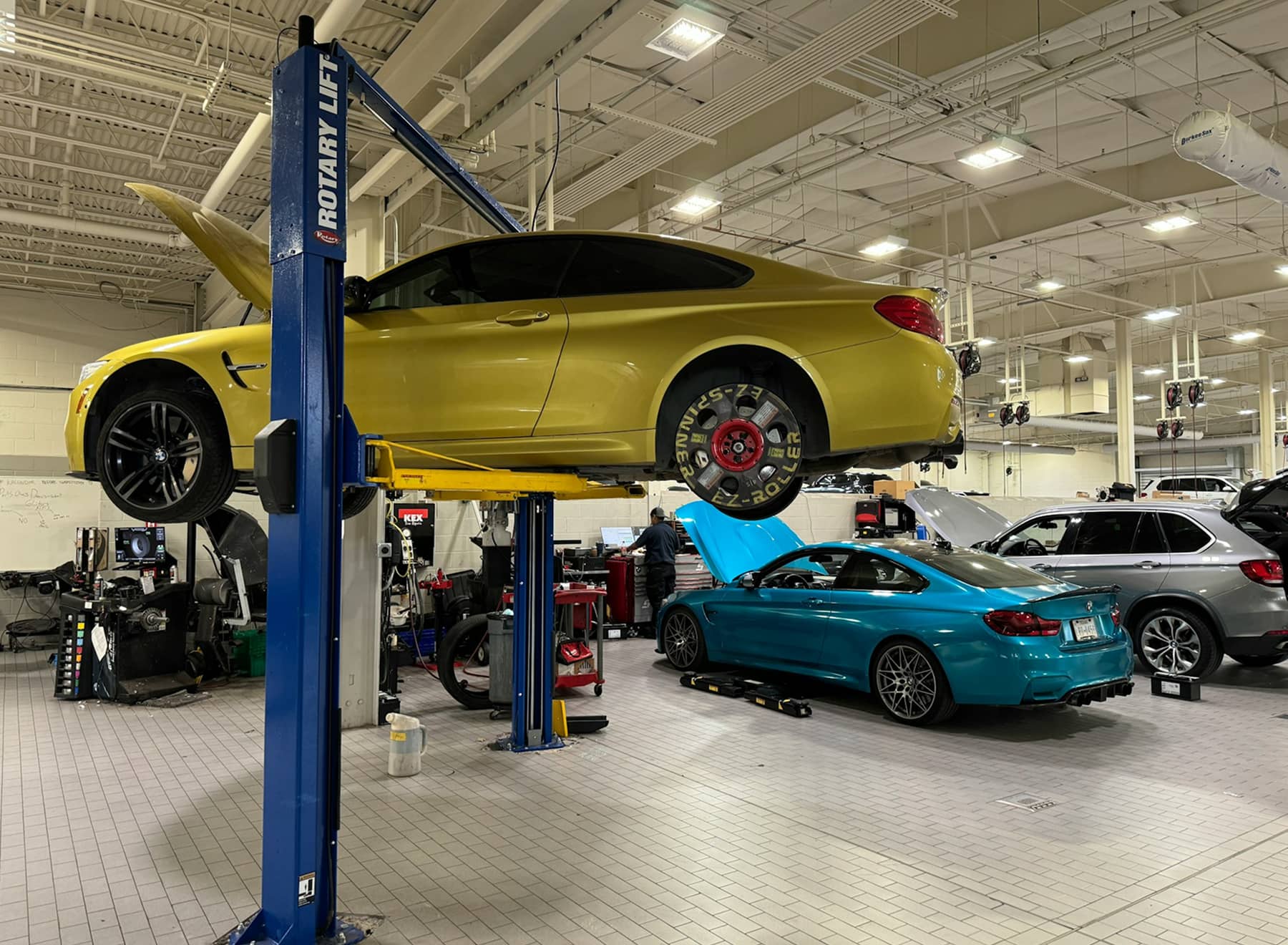
car repair shop interior showing vehicle maintenance and diagnostics

Most car repair websites fail to generate consistent service requests not because the workshop lacks expertise, but because the website lacks structure.

Visitors land on the page, scroll through visuals, and leave without clearly understanding what services are offered, who the business is for, or how to book an appointment. The problem is rarely design quality. It is almost always clarity, hierarchy, and conversion logic.

A high-performing car repair website is not built around trends or visual effects. It is built around user intent, local relevance, trust, and a structure that guides visitors toward a clear action.

Below is the structure that consistently works for local auto repair businesses.

Clear Hero Section with Local Value Proposition

The hero section is the most important part of a car repair website. It sets context in seconds.

A strong hero section should answer three questions immediately:

  • What service is offered

  • Where the business operates

  • What the visitor should do next

Local auto shop customers are not browsing. They are solving a problem. If the hero section is vague, overly visual, or generic, trust is lost instantly.

A high-converting hero includes:

  • A clear service-based headline (car repair, diagnostics, maintenance)

  • Local relevance (city or service area)

  • One primary action (call, book, or message)

This clarity reduces hesitation and keeps visitors moving instead of scrolling aimlessly.

Services Overview That Matches Real Customer Intent

Most car repair websites list services as a formality. This is a mistake.

Visitors are not looking for a full catalog. They are looking for confirmation that their specific problem can be handled.

An effective services section:

  • Groups services by problem, not by internal terminology

  • Uses clear, plain language

  • Makes each service scannable

Diagnostics, engine repair, AC systems, tires, and maintenance should be immediately recognizable. Each service should act as a reassurance, not just information.

When services are structured around real customer intent, visitors feel understood and are more likely to take action.

Proof of Expertise and Trust Signals

Car repair is a trust-based decision.

Before contacting a workshop, visitors subconsciously ask:

  • Is this place reliable?

  • Are they experienced?

  • Will I be treated fairly?

Trust is built through structure, not claims.

Effective trust sections include:

  • Clear value statements (transparent pricing, certified work, accurate diagnostics)

  • Professional tone without exaggeration

  • Consistent visual order and spacing

Trust signals work best when they feel calm and factual. Overly promotional language often has the opposite effect.

Visual Proof Through Before & After Results

Claims build interest. Proof builds belief.

Before-and-after results are one of the strongest trust elements for car repair websites. They show outcomes, not promises.

Effective visual proof:

  • Focuses on real transformations

  • Is easy to understand without explanation

  • Reinforces competence and attention to detail

This section reassures visitors that the workshop delivers tangible results and has solved similar problems before.

Simple and Predictable Repair Process

Uncertainty kills conversions.

If visitors do not understand what happens after they contact the workshop, they hesitate. A clear process removes friction.

A strong process section explains:

  • How the first contact works

  • What happens during inspection

  • How the repair is completed

Three to four simple steps are enough. The goal is not detail, but predictability.

When users know what to expect, they feel more comfortable reaching out.

Strong Local Contact and Booking Section

Every high-performing car repair website makes contacting the business effortless.

This means:

  • Clear contact options

  • Minimal steps

  • No hidden forms or distractions

Local customers often prefer fast communication. Messaging apps, phone calls, and quick contact buttons outperform complex booking systems for many workshops.

The contact section should be visible, direct, and repeated logically throughout the page without feeling aggressive.

FAQ That Removes Objections Before Contact

Frequently asked questions are not filler content. They are a conversion tool.

A good FAQ section answers:

  • Pricing concerns

  • Time expectations

  • Warranty questions

  • Logistics such as drop-off or pickup

When objections are addressed upfront, visitors feel more confident and less defensive. This often shortens the decision-making process and increases contact rates.

Putting the Structure Together

A car repair website performs best when all these elements work together as a system.

The hero sets clarity.

The services confirm relevance.

Trust signals reduce doubt.

Visual proof builds confidence.

The process removes uncertainty.

Clear contact options drive action.

When structure is intentional, the website stops being a brochure and starts working as a conversion tool.

This exact structure is already implemented in Motorium, a car repair website template designed around clarity, local intent, and conversion-first logic. Instead of assembling these elements from scratch, the structure is ready and optimized for real-world use by auto repair businesses.

Most car repair websites fail to generate consistent service requests not because the workshop lacks expertise, but because the website lacks structure.

Visitors land on the page, scroll through visuals, and leave without clearly understanding what services are offered, who the business is for, or how to book an appointment. The problem is rarely design quality. It is almost always clarity, hierarchy, and conversion logic.

A high-performing car repair website is not built around trends or visual effects. It is built around user intent, local relevance, trust, and a structure that guides visitors toward a clear action.

Below is the structure that consistently works for local auto repair businesses.

Clear Hero Section with Local Value Proposition

The hero section is the most important part of a car repair website. It sets context in seconds.

A strong hero section should answer three questions immediately:

  • What service is offered

  • Where the business operates

  • What the visitor should do next

Local auto shop customers are not browsing. They are solving a problem. If the hero section is vague, overly visual, or generic, trust is lost instantly.

A high-converting hero includes:

  • A clear service-based headline (car repair, diagnostics, maintenance)

  • Local relevance (city or service area)

  • One primary action (call, book, or message)

This clarity reduces hesitation and keeps visitors moving instead of scrolling aimlessly.

Services Overview That Matches Real Customer Intent

Most car repair websites list services as a formality. This is a mistake.

Visitors are not looking for a full catalog. They are looking for confirmation that their specific problem can be handled.

An effective services section:

  • Groups services by problem, not by internal terminology

  • Uses clear, plain language

  • Makes each service scannable

Diagnostics, engine repair, AC systems, tires, and maintenance should be immediately recognizable. Each service should act as a reassurance, not just information.

When services are structured around real customer intent, visitors feel understood and are more likely to take action.

Proof of Expertise and Trust Signals

Car repair is a trust-based decision.

Before contacting a workshop, visitors subconsciously ask:

  • Is this place reliable?

  • Are they experienced?

  • Will I be treated fairly?

Trust is built through structure, not claims.

Effective trust sections include:

  • Clear value statements (transparent pricing, certified work, accurate diagnostics)

  • Professional tone without exaggeration

  • Consistent visual order and spacing

Trust signals work best when they feel calm and factual. Overly promotional language often has the opposite effect.

Visual Proof Through Before & After Results

Claims build interest. Proof builds belief.

Before-and-after results are one of the strongest trust elements for car repair websites. They show outcomes, not promises.

Effective visual proof:

  • Focuses on real transformations

  • Is easy to understand without explanation

  • Reinforces competence and attention to detail

This section reassures visitors that the workshop delivers tangible results and has solved similar problems before.

Simple and Predictable Repair Process

Uncertainty kills conversions.

If visitors do not understand what happens after they contact the workshop, they hesitate. A clear process removes friction.

A strong process section explains:

  • How the first contact works

  • What happens during inspection

  • How the repair is completed

Three to four simple steps are enough. The goal is not detail, but predictability.

When users know what to expect, they feel more comfortable reaching out.

Strong Local Contact and Booking Section

Every high-performing car repair website makes contacting the business effortless.

This means:

  • Clear contact options

  • Minimal steps

  • No hidden forms or distractions

Local customers often prefer fast communication. Messaging apps, phone calls, and quick contact buttons outperform complex booking systems for many workshops.

The contact section should be visible, direct, and repeated logically throughout the page without feeling aggressive.

FAQ That Removes Objections Before Contact

Frequently asked questions are not filler content. They are a conversion tool.

A good FAQ section answers:

  • Pricing concerns

  • Time expectations

  • Warranty questions

  • Logistics such as drop-off or pickup

When objections are addressed upfront, visitors feel more confident and less defensive. This often shortens the decision-making process and increases contact rates.

Putting the Structure Together

A car repair website performs best when all these elements work together as a system.

The hero sets clarity.

The services confirm relevance.

Trust signals reduce doubt.

Visual proof builds confidence.

The process removes uncertainty.

Clear contact options drive action.

When structure is intentional, the website stops being a brochure and starts working as a conversion tool.

This exact structure is already implemented in Motorium, a car repair website template designed around clarity, local intent, and conversion-first logic. Instead of assembling these elements from scratch, the structure is ready and optimized for real-world use by auto repair businesses.

Most car repair websites fail to generate consistent service requests not because the workshop lacks expertise, but because the website lacks structure.

Visitors land on the page, scroll through visuals, and leave without clearly understanding what services are offered, who the business is for, or how to book an appointment. The problem is rarely design quality. It is almost always clarity, hierarchy, and conversion logic.

A high-performing car repair website is not built around trends or visual effects. It is built around user intent, local relevance, trust, and a structure that guides visitors toward a clear action.

Below is the structure that consistently works for local auto repair businesses.

Clear Hero Section with Local Value Proposition

The hero section is the most important part of a car repair website. It sets context in seconds.

A strong hero section should answer three questions immediately:

  • What service is offered

  • Where the business operates

  • What the visitor should do next

Local auto shop customers are not browsing. They are solving a problem. If the hero section is vague, overly visual, or generic, trust is lost instantly.

A high-converting hero includes:

  • A clear service-based headline (car repair, diagnostics, maintenance)

  • Local relevance (city or service area)

  • One primary action (call, book, or message)

This clarity reduces hesitation and keeps visitors moving instead of scrolling aimlessly.

Services Overview That Matches Real Customer Intent

Most car repair websites list services as a formality. This is a mistake.

Visitors are not looking for a full catalog. They are looking for confirmation that their specific problem can be handled.

An effective services section:

  • Groups services by problem, not by internal terminology

  • Uses clear, plain language

  • Makes each service scannable

Diagnostics, engine repair, AC systems, tires, and maintenance should be immediately recognizable. Each service should act as a reassurance, not just information.

When services are structured around real customer intent, visitors feel understood and are more likely to take action.

Proof of Expertise and Trust Signals

Car repair is a trust-based decision.

Before contacting a workshop, visitors subconsciously ask:

  • Is this place reliable?

  • Are they experienced?

  • Will I be treated fairly?

Trust is built through structure, not claims.

Effective trust sections include:

  • Clear value statements (transparent pricing, certified work, accurate diagnostics)

  • Professional tone without exaggeration

  • Consistent visual order and spacing

Trust signals work best when they feel calm and factual. Overly promotional language often has the opposite effect.

Visual Proof Through Before & After Results

Claims build interest. Proof builds belief.

Before-and-after results are one of the strongest trust elements for car repair websites. They show outcomes, not promises.

Effective visual proof:

  • Focuses on real transformations

  • Is easy to understand without explanation

  • Reinforces competence and attention to detail

This section reassures visitors that the workshop delivers tangible results and has solved similar problems before.

Simple and Predictable Repair Process

Uncertainty kills conversions.

If visitors do not understand what happens after they contact the workshop, they hesitate. A clear process removes friction.

A strong process section explains:

  • How the first contact works

  • What happens during inspection

  • How the repair is completed

Three to four simple steps are enough. The goal is not detail, but predictability.

When users know what to expect, they feel more comfortable reaching out.

Strong Local Contact and Booking Section

Every high-performing car repair website makes contacting the business effortless.

This means:

  • Clear contact options

  • Minimal steps

  • No hidden forms or distractions

Local customers often prefer fast communication. Messaging apps, phone calls, and quick contact buttons outperform complex booking systems for many workshops.

The contact section should be visible, direct, and repeated logically throughout the page without feeling aggressive.

FAQ That Removes Objections Before Contact

Frequently asked questions are not filler content. They are a conversion tool.

A good FAQ section answers:

  • Pricing concerns

  • Time expectations

  • Warranty questions

  • Logistics such as drop-off or pickup

When objections are addressed upfront, visitors feel more confident and less defensive. This often shortens the decision-making process and increases contact rates.

Putting the Structure Together

A car repair website performs best when all these elements work together as a system.

The hero sets clarity.

The services confirm relevance.

Trust signals reduce doubt.

Visual proof builds confidence.

The process removes uncertainty.

Clear contact options drive action.

When structure is intentional, the website stops being a brochure and starts working as a conversion tool.

This exact structure is already implemented in Motorium, a car repair website template designed around clarity, local intent, and conversion-first logic. Instead of assembling these elements from scratch, the structure is ready and optimized for real-world use by auto repair businesses.

Frequently Asked Questions

What makes a car repair website convert better than others?

Clear structure, local relevance, and trust-focused content matter more than visual effects. Visitors should immediately understand what services are offered and how to take action.

Do local auto shops really need a structured website?

Yes. Most service requests come from users with urgent or specific needs. A structured website helps them decide faster and contact the business with confidence.

Is speed important for car repair websites?

Absolutely. Slow websites increase bounce rates and reduce trust, especially on mobile devices where most local searches happen.

Do I need a full redesign to improve conversions?

Not always. Improving structure, clarity, and messaging often delivers better results than changing visuals alone.

What is the most important section of a car repair website?

The hero section. If visitors do not understand the service and next step immediately, they are unlikely to convert.

What makes a car repair website convert better than others?

Clear structure, local relevance, and trust-focused content matter more than visual effects. Visitors should immediately understand what services are offered and how to take action.

Do local auto shops really need a structured website?

Yes. Most service requests come from users with urgent or specific needs. A structured website helps them decide faster and contact the business with confidence.

Is speed important for car repair websites?

Absolutely. Slow websites increase bounce rates and reduce trust, especially on mobile devices where most local searches happen.

Do I need a full redesign to improve conversions?

Not always. Improving structure, clarity, and messaging often delivers better results than changing visuals alone.

What is the most important section of a car repair website?

The hero section. If visitors do not understand the service and next step immediately, they are unlikely to convert.

What makes a car repair website convert better than others?

Clear structure, local relevance, and trust-focused content matter more than visual effects. Visitors should immediately understand what services are offered and how to take action.

Do local auto shops really need a structured website?

Yes. Most service requests come from users with urgent or specific needs. A structured website helps them decide faster and contact the business with confidence.

Is speed important for car repair websites?

Absolutely. Slow websites increase bounce rates and reduce trust, especially on mobile devices where most local searches happen.

Do I need a full redesign to improve conversions?

Not always. Improving structure, clarity, and messaging often delivers better results than changing visuals alone.

What is the most important section of a car repair website?

The hero section. If visitors do not understand the service and next step immediately, they are unlikely to convert.