
What Makes a Yoga and Wellness Template Effective
An effective yoga or wellness website feels calm, structured, and easy to navigate from the first interaction. Most visitors arrive with a goal. They want to understand what types of classes are offered, who teaches them, how much it costs, and how they can join. If this information is difficult to find or presented in a confusing way, they leave and search elsewhere.
A strong template organizes content into logical sections that guide users step by step. It reduces visual clutter and highlights the most important actions such as viewing classes or booking a session. The goal is not decoration but clarity. When visitors understand your offer without effort, the website supports real business growth.
Essential Pages for Studios and Coaches
Every yoga and wellness website should include a structured homepage, a class overview, instructor profiles, pricing or membership plans, and a clear booking path. These pages answer the main questions clients ask before committing and remove uncertainty from the decision process while guiding visitors toward confident booking decisions.
Navigation should be simple and predictable. Visitors should be able to move from learning about your classes to checking pricing and booking without friction or unnecessary distractions across pages. When information flows logically, the website becomes a practical tool for conversions rather than just a digital brochure that only presents information.
Homepage Structure That Encourages Bookings
The homepage plays a central role in guiding visitors toward action. It should immediately communicate what your studio offers and who it is for. A calm hero section with a clear headline and a visible call to action sets direction from the first seconds. Visitors should not need to scroll far to understand how to take the next step.
Below the hero, structured previews of classes and instructors help reinforce credibility. Short descriptions, consistent imagery, and clearly labeled buttons allow users to explore naturally. A well organized homepage does not push aggressively. Instead, it supports a smooth transition from interest to booking by answering practical questions in the right order.
Example of a Structured Yoga and Wellness Template
A well built yoga and wellness template combines minimal visual design with strong content hierarchy. Class cards can include schedule details and short descriptions so visitors quickly compare options. Instructor sections should clearly present names, specialties, and credentials to build trust and transparency.
Pricing works best when presented in simple tiers with clear explanations of what is included. Clean layout, balanced spacing, and consistent typography help users understand differences between plans without confusion. Templates such as Calmio follow this structured approach, focusing on clarity, visual tone, and visible calls to action instead of unnecessary effects.
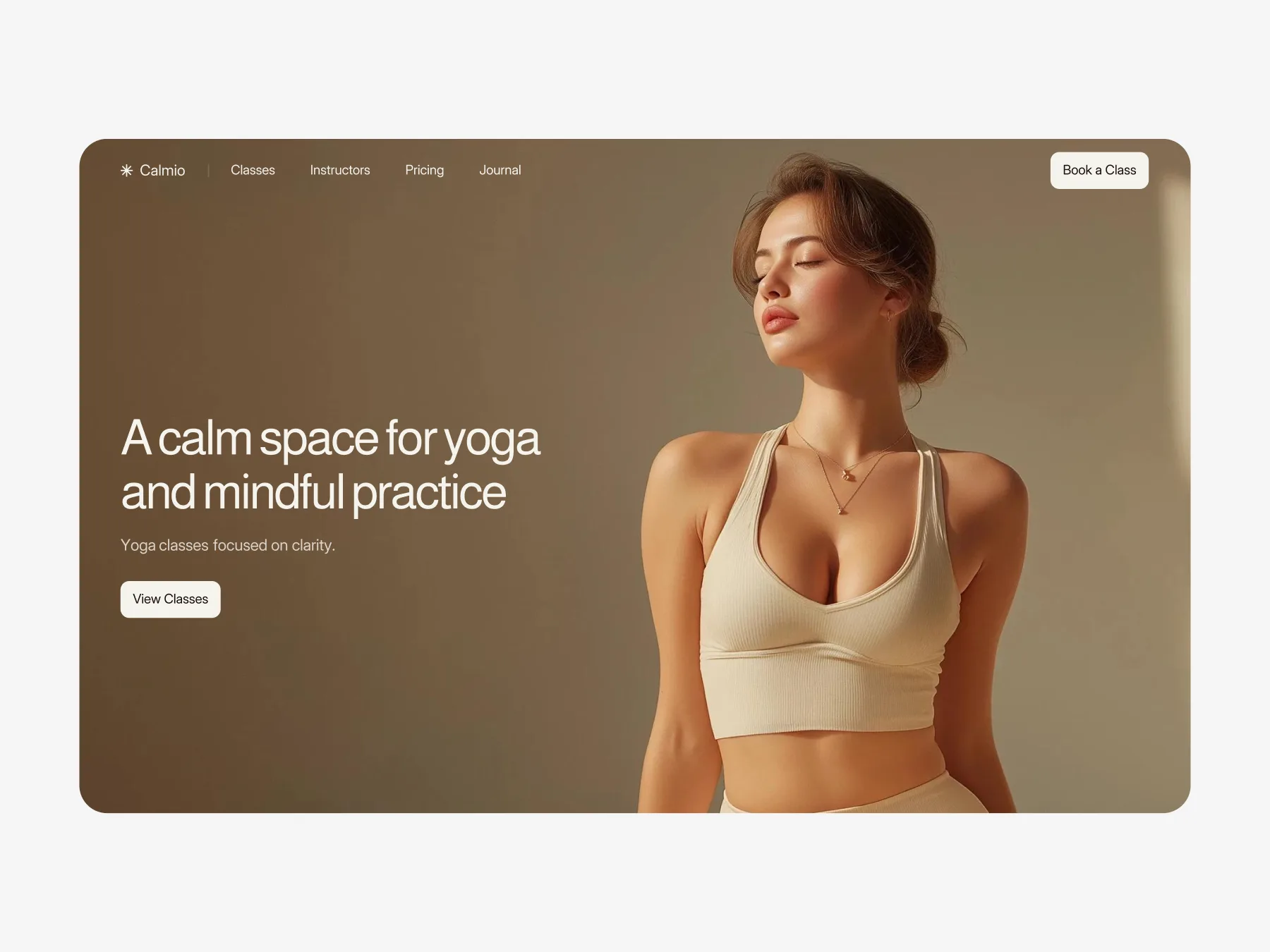
Example of a structured yoga and wellness website template with clear hierarchy, calm visual design, and visible booking action.
Design Style That Builds Trust
Design in the yoga and wellness industry should support balance and clarity across all website sections and user interactions. Neutral color palettes, soft contrast, and consistent typography create a calm and professional impression that reflects the studio atmosphere and core brand values. Overly complex layouts or heavy visual elements can distract from the message, reduce credibility, and make navigation feel less intuitive for visitors.
Spacing is equally important. When sections are clearly separated and text is easy to read, visitors feel comfortable exploring the site. Clear headings, readable body text, and visible buttons create a sense of control. Trust increases when users feel that the studio values structure and thoughtful presentation.
Booking and Membership Features
A yoga website should make booking simple and visible on every device. Whether the studio offers single sessions, class packs, or monthly memberships, the path to booking must be clear. Buttons such as “Book a Class” or “View Schedule” should be easy to find and remain consistent across pages.
Membership plans should be presented in a structured format with clear differences between tiers. Visitors need to understand what is included, how often they can attend, and what benefits each option provides. Transparent pricing and straightforward descriptions reduce hesitation and support faster decisions.
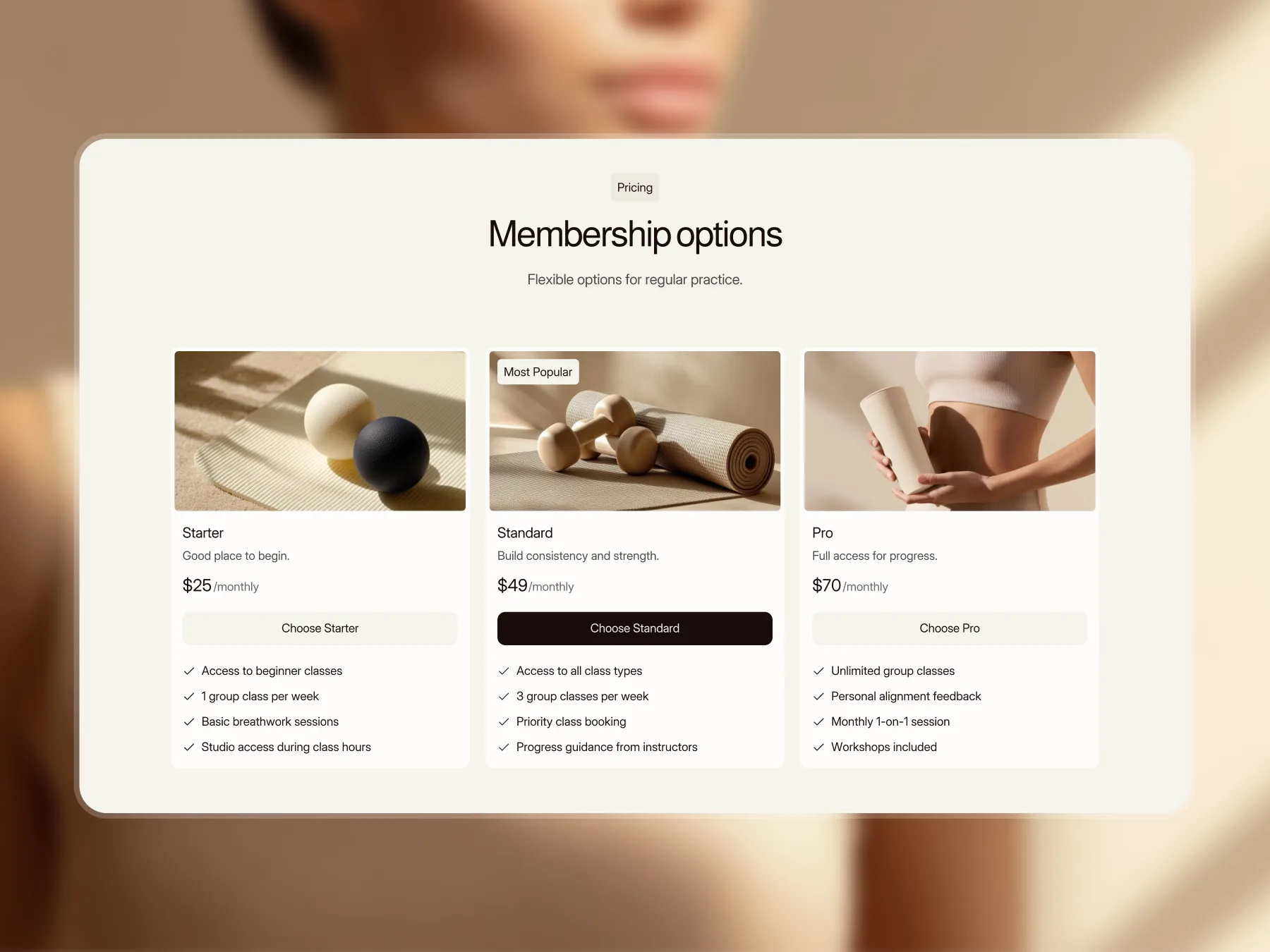
Structured membership pricing layout with clear tier comparison and visible booking actions designed to reduce hesitation and support faster decisions.
Local SEO and Visibility
Most yoga and wellness studios depend on local clients. The website should clearly state the studio location and include consistent contact information. Mentioning the city or area naturally within page content helps search engines understand where the business operates.
Dedicated pages for classes, instructors, and pricing also improve visibility. A journal section can support search traffic by answering common questions such as what to expect from a first yoga class or how to choose the right practice level. When content reflects real client concerns, the website becomes both easier to find and more useful.
How to Choose the Right Template for Your Studio
When selecting a yoga and wellness template, focus first on structure rather than visual trends. Evaluate whether the layout clearly presents classes, instructors, pricing, and booking without confusion. Consider how easily you can update schedules, add new offerings, or adjust membership plans as your studio grows.
A strong template should align with your brand but remain practical and scalable. Studios that prioritize clarity and usability are more likely to maintain consistency and improve conversion rates over time.
Conclusion
The best yoga website templates combine calm visual direction with strong structure and consistent hierarchy. Clear navigation, visible booking options, and well organized content help visitors understand your offer and take action without hesitation.
If you want to see how structured layout and clean design work in practice, explore our website templates to find a solution built for clarity, usability, and steady studio growth.