{ "@context": "https://schema.org", "@type": "FAQPage", "mainEntity": [ { "@type": "Question", "name": "What makes a car dealership website convert?", "acceptedAnswer": { "@type": "Answer", "text": "A clear structure, easy inventory browsing, visible contact options, and a simple path to inquiry help visitors take action without confusion." } }, { "@type": "Question", "name": "Why do many dealership websites fail to generate leads?", "acceptedAnswer": { "@type": "Answer", "text": "They focus on visuals instead of structure, hide important information, and overload pages with unnecessary elements." } }, { "@type": "Question", "name": "Is design more important than structure?", "acceptedAnswer": { "@type": "Answer", "text": "No. Structure matters more. Buyers need clarity and guidance at every step before they care about how the site looks." } }, { "@type": "Question", "name": "Can a template website convert as well as a custom one?", "acceptedAnswer": { "@type": "Answer", "text": "Yes. A well structured template can convert just as effectively when it is built around real dealership needs and buyer behavior." } } ] }

February 9, 2026

Car Dealership Website Example That Converts

Car Dealership Website Example That Converts

A practical example of a car dealership website designed to convert visitors into inquiries through clear structure, focused inventory presentation, trust elements, and simple user flows rather than visual effects.

A practical example of a car dealership website designed to convert visitors into inquiries through clear structure, focused inventory presentation, trust elements, and simple user flows rather than visual effects.

Blue SUV parked on a city street in front of a modern building, with a person walking past in motion blur.

Why examples matter

Many car dealerships look for website inspiration by browsing galleries or design showcases. Most of these examples focus on how modern or impressive a website looks, but they rarely explain why the site works or whether it generates inquiries. A converting website example is useful only when it shows how structure, content order, and flow support real business goals.

Dealership owners usually want clear answers. They want to know how visitors move through the site, how inventory is presented, and why users decide to contact the dealership. Looking at a real example that is built for everyday use helps remove guesswork and shows what actually matters for conversions.

What drives conversions

A car dealership website converts when visitors immediately understand what the business offers and what to do next. The homepage should clearly present the dealership, guide users to browse vehicles, and make contact options visible without forcing people to search. When visitors feel oriented and confident, they are more likely to continue.

Conversion is not created by visual effects or creative layouts. It comes from clarity. Clear navigation, readable inventory pages, and simple calls to action reduce hesitation. When the website feels easy to use and predictable, visitors spend more time exploring vehicles and are more willing to reach out.

A real website example

Below is an example of a car dealership website built with conversion in mind rather than visual trends, designed for clarity, trust, and daily use.
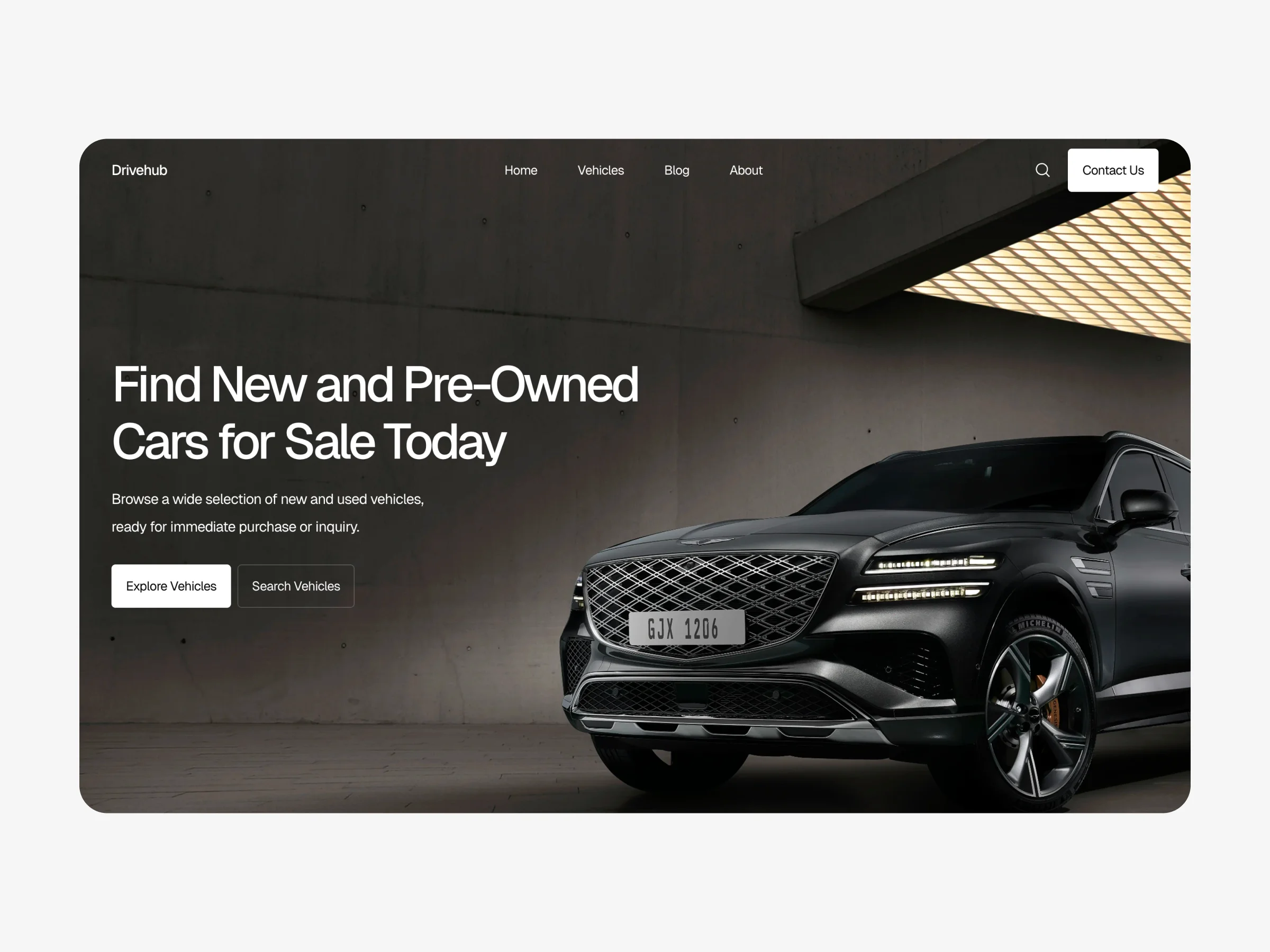

Car dealership website homepage with vehicle listings, clear hero section, and primary call to action

Example of a structured car dealership website template: https://drivehub-template.framer.website

This example shows how a dealership website can combine inventory browsing, trust elements, and inquiry actions in a single clear flow. The structure is designed to support daily business needs and guide visitors step by step.

Why this example works

The homepage immediately communicates what the dealership offers and encourages visitors to browse available vehicles. There is no confusion about where to start or how to continue. Inventory categories are visible early, which helps users narrow their interest without feeling overwhelmed.

Vehicle pages are clean and focused. Important details are easy to scan, and contact actions are always within reach. Trust is built through clear information, consistent layout, and professional visuals rather than marketing claims. This creates a calm experience that supports decision making.

Structure over visuals

Many dealership websites rely on large animations, sliders, or complex visual sections to stand out. While these elements may look impressive, they often distract visitors and slow down interaction. In contrast, a structured layout helps users move naturally through the site.

This example prioritizes predictable sections, clear spacing, and readable content. Visitors do not need to learn how the website works. They can focus on vehicles and next steps instead of navigating the design. This is what makes the site effective over time.

Who this approach fits

This type of website works best for small to mid sized car dealerships that want consistent inquiries without long development cycles. It is especially useful for businesses that need to launch quickly, update inventory often, and manage the site without technical help.

Instead of investing in a complex custom build, dealerships can use a structured foundation that supports growth. The website becomes a practical tool rather than a fixed project that is hard to change over time and scale.

Conclusion

A car dealership website that converts is built around clarity, not creativity. Clear structure, focused inventory presentation, visible trust elements, and simple inquiry paths are what turn visits into leads. The example above shows how these elements can work together without unnecessary complexity.

When a website feels clear and intentional, visitors are more likely to trust the dealership and take action. Clarity reduces hesitation, which leads to more inquiries.

Why examples matter

Many car dealerships look for website inspiration by browsing galleries or design showcases. Most of these examples focus on how modern or impressive a website looks, but they rarely explain why the site works or whether it generates inquiries. A converting website example is useful only when it shows how structure, content order, and flow support real business goals.

Dealership owners usually want clear answers. They want to know how visitors move through the site, how inventory is presented, and why users decide to contact the dealership. Looking at a real example that is built for everyday use helps remove guesswork and shows what actually matters for conversions.

What drives conversions

A car dealership website converts when visitors immediately understand what the business offers and what to do next. The homepage should clearly present the dealership, guide users to browse vehicles, and make contact options visible without forcing people to search. When visitors feel oriented and confident, they are more likely to continue.

Conversion is not created by visual effects or creative layouts. It comes from clarity. Clear navigation, readable inventory pages, and simple calls to action reduce hesitation. When the website feels easy to use and predictable, visitors spend more time exploring vehicles and are more willing to reach out.

A real website example

Below is an example of a car dealership website built with conversion in mind rather than visual trends, designed for clarity, trust, and daily use.


Car dealership website homepage with vehicle listings, clear hero section, and primary call to action

Example of a structured car dealership website template: https://drivehub-template.framer.website

This example shows how a dealership website can combine inventory browsing, trust elements, and inquiry actions in a single clear flow. The structure is designed to support daily business needs and guide visitors step by step.

Why this example works

The homepage immediately communicates what the dealership offers and encourages visitors to browse available vehicles. There is no confusion about where to start or how to continue. Inventory categories are visible early, which helps users narrow their interest without feeling overwhelmed.

Vehicle pages are clean and focused. Important details are easy to scan, and contact actions are always within reach. Trust is built through clear information, consistent layout, and professional visuals rather than marketing claims. This creates a calm experience that supports decision making.

Structure over visuals

Many dealership websites rely on large animations, sliders, or complex visual sections to stand out. While these elements may look impressive, they often distract visitors and slow down interaction. In contrast, a structured layout helps users move naturally through the site.

This example prioritizes predictable sections, clear spacing, and readable content. Visitors do not need to learn how the website works. They can focus on vehicles and next steps instead of navigating the design. This is what makes the site effective over time.

Who this approach fits

This type of website works best for small to mid sized car dealerships that want consistent inquiries without long development cycles. It is especially useful for businesses that need to launch quickly, update inventory often, and manage the site without technical help.

Instead of investing in a complex custom build, dealerships can use a structured foundation that supports growth. The website becomes a practical tool rather than a fixed project that is hard to change over time and scale.

Conclusion

A car dealership website that converts is built around clarity, not creativity. Clear structure, focused inventory presentation, visible trust elements, and simple inquiry paths are what turn visits into leads. The example above shows how these elements can work together without unnecessary complexity.

When a website feels clear and intentional, visitors are more likely to trust the dealership and take action. Clarity reduces hesitation, which leads to more inquiries.

Frequently Asked Questions

What makes a car dealership website convert?

A clear structure, easy inventory browsing, visible contact options, and a simple path to inquiry help visitors take action without confusion.

Why do many dealership websites fail to generate leads?

They focus on visuals instead of structure, hide important information, and overload pages with unnecessary elements.

Is design more important than structure?

No. Structure matters more. Buyers need clarity and guidance at every step before they care about how the site looks.

Can a template website convert as well as a custom one?

Yes. A well structured template can convert just as effectively when it is built around real dealership needs and buyer behavior.