{ "@context": "https://schema.org", "@type": "FAQPage", "mainEntity": [ { "@type": "Question", "name": "Does car repair website design really affect service requests?", "acceptedAnswer": { "@type": "Answer", "text": "Yes. Car repair website design affects service requests when it supports clarity, trust, and clear next actions. Visual appearance alone does not generate bookings if visitors cannot quickly understand services, location, and how to contact the shop." } }, { "@type": "Question", "name": "Why do many car repair websites look good but don’t generate bookings?", "acceptedAnswer": { "@type": "Answer", "text": "Because they are designed as visual showcases instead of service-focused tools. Most fail due to unclear structure, weak service pages, missing trust signals, or confusing conversion paths." } }, { "@type": "Question", "name": "What is the most important design element on a car repair website?", "acceptedAnswer": { "@type": "Answer", "text": "The hero section. It must clearly communicate what services are offered, where the shop operates, and what the visitor should do next. If this information is unclear, most visitors leave without making contact." } }, { "@type": "Question", "name": "How is conversion-focused design different from visual design?", "acceptedAnswer": { "@type": "Answer", "text": "Conversion-focused design prioritizes structure, hierarchy, and user intent over aesthetics. Its goal is to guide visitors toward contact or booking, not to impress with visuals or animations." } }, { "@type": "Question", "name": "Is it better to redesign a car repair website or use a proven structure?", "acceptedAnswer": { "@type": "Answer", "text": "In most cases, using a proven structure is more effective. It reduces guesswork and ensures the website is built around service clarity, local SEO, and conversions rather than visual trends." } } ] }

December 27, 2025

December 27, 2025

Car Repair Website Design: What Actually Brings Service Requests

Car Repair Website Design: What Actually Brings Service Requests

A good-looking car repair website does not guarantee bookings. This guide explains which design decisions actually influence trust, clarity, and service requests — and which ones don’t.

A good-looking car repair website does not guarantee bookings. This guide explains which design decisions actually influence trust, clarity, and service requests — and which ones don’t.

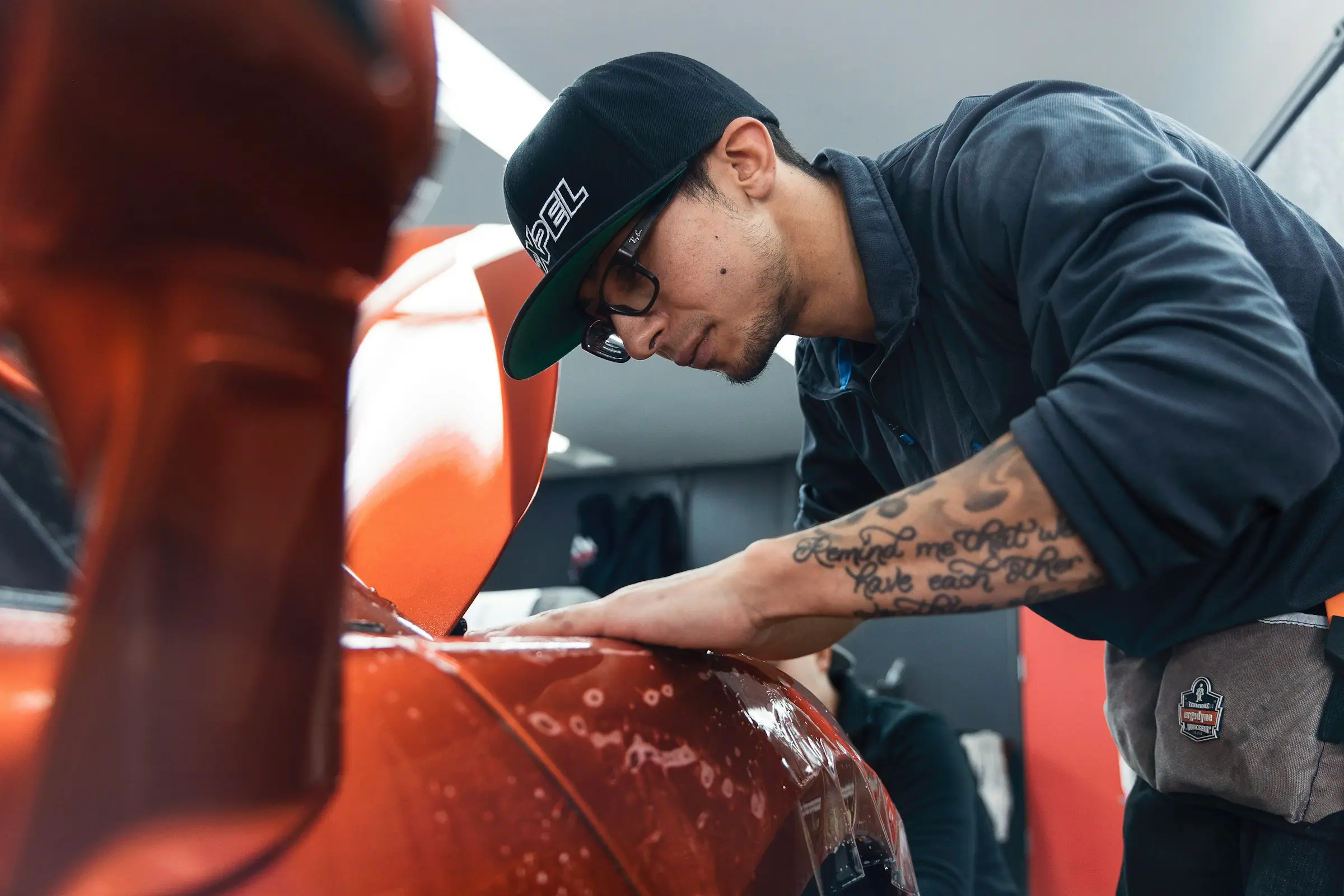
Car repair website design article cover showing an auto mechanic working on a vehicle to illustrate service-focused website design

A good-looking car repair website does not guarantee bookings. Many auto shops invest in modern visuals, animations, and trendy layouts — yet still rely on phone calls or walk-ins because their website does not generate service requests.

The problem is not design quality.

The problem is design decisions that ignore intent, structure, and trust.

This article explains which website design elements actually influence service requests for car repair shops — and which ones do not.

Why “Good Design” Often Fails for Car Repair Websites

Most car repair websites are designed as showcases, not tools.

They focus on:

  • visual style

  • brand colors

  • full-width images

  • generic slogans

But local customers do not visit a repair shop website to admire design.
They visit to answer three questions quickly:

  1. Can this shop fix my problem?

  2. Is this place trustworthy?

  3. How do I contact them right now?

If the design does not answer these questions immediately, bookings drop — regardless of how modern the website looks.

Design That Brings Requests Starts With Structure, Not Style

Effective car repair website design is structural.

That means:

  • clear hierarchy

  • predictable layout

  • service-first content

  • obvious actions

A simple layout that clearly communicates services, location, and next steps will outperform a visually complex website every time.

This is why many shops with “outdated” websites still get more requests than newly redesigned ones.

The 5 Design Decisions That Actually Influence Service Requests


  1. A Clear, Local-Focused Hero Section

The hero section is not a branding space.

It is a decision point.

It must clearly state:

  • what services you offer

  • where you operate

  • what the visitor should do next

Generic headlines like “Professional Auto Services” create hesitation.

Clear, local service statements create action.
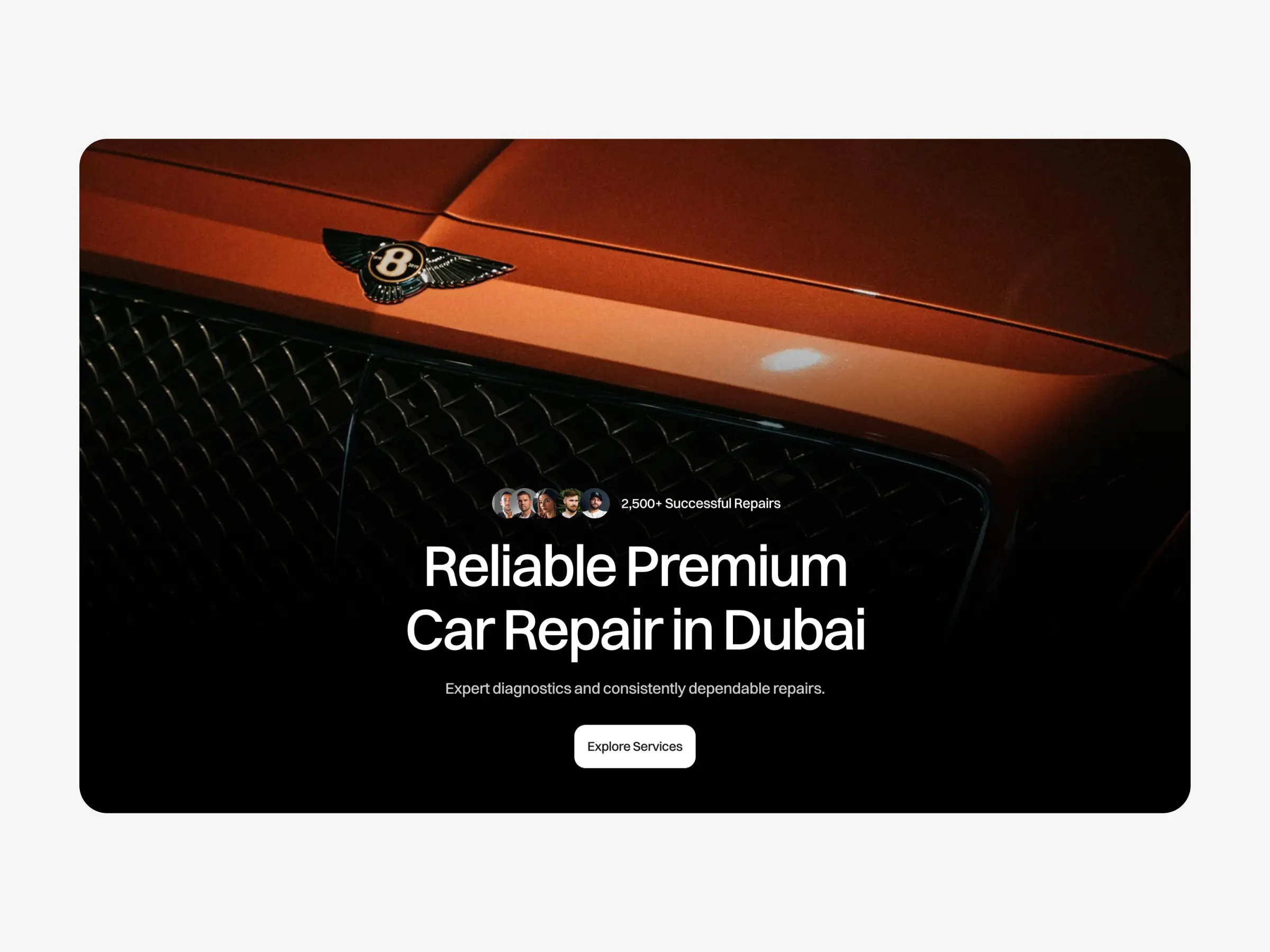

Car repair website hero section example showing clear service offer, local location, and primary call to action

Example of a car repair website hero section that clearly communicates services, location, and next action.


  1. Service Pages Designed for Customers, Not for the Business

Listing services is not enough.

Each key service should:

  • explain the problem it solves

  • show who it’s for

  • reduce uncertainty

  • lead to a clear contact action

Many design-heavy websites hide services behind sliders or icons.

That looks clean — but costs requests.

If you want a deeper breakdown of common structural issues, read Car Repair Website Mistakes That Kill Online Bookings.


  1. Visual Trust Signals in the Right Places

Trust is not created by logos and gradients.

It is created by:

  • real workshop photos

  • clear contact details

  • operating hours

  • location context

  • simple explanations of process

Design should support trust, not distract from it.

When trust signals are buried or secondary, visitors hesitate — and leave.

4. Design That Supports SEO, Not Fights It

Design and SEO are connected.

Good design:

  • supports clear headings

  • allows content depth

  • makes service pages indexable

  • avoids hiding content behind interactions

Websites designed purely for visuals often block SEO growth, which means fewer local visitors in the first place.


  1. A Single, Obvious Conversion Path

More options ≠ more bookings.

Effective car repair websites guide visitors toward:

  • call

  • form

  • booking

Design elements like multiple CTAs, competing buttons, or decorative sections dilute focus and reduce conversions.

One page. One goal. One action.

Why Most Redesigns Don’t Increase Bookings

Most redesigns focus on appearance, not behavior.

They change:

  • colors

  • fonts

  • layout

But they keep:

  • the same unclear structure

  • the same weak service pages

  • the same missing trust signals

As a result, traffic stays the same — and bookings don’t change.

Design That Converts Is Usually Boring — and That’s Good

High-converting car repair websites are:

  • predictable

  • clear

  • simple

  • easy to scan

They don’t impress designers.

They reassure customers.

And reassurance is what creates service requests.

A Practical Alternative: Start With a Proven Structure

For most shop owners, the issue is not knowing what to fix — but how to implement it correctly without rebuilding everything from scratch.

Motorium is a car repair website template designed around:

  • service-first layout

  • local SEO structure

  • clear conversion paths

  • trust-focused design

It removes guesswork and helps shops launch a website that actually brings service requests — not just compliments.

Key takeaway

Design does not bring service requests.

Structure, clarity, and intent do.

If your car repair website looks good but doesn’t generate bookings, the issue is not aesthetics — it’s design decisions that ignore how customers actually choose a repair shop.

A good-looking car repair website does not guarantee bookings. Many auto shops invest in modern visuals, animations, and trendy layouts — yet still rely on phone calls or walk-ins because their website does not generate service requests.

The problem is not design quality.

The problem is design decisions that ignore intent, structure, and trust.

This article explains which website design elements actually influence service requests for car repair shops — and which ones do not.

Why “Good Design” Often Fails for Car Repair Websites

Most car repair websites are designed as showcases, not tools.

They focus on:

  • visual style

  • brand colors

  • full-width images

  • generic slogans

But local customers do not visit a repair shop website to admire design.
They visit to answer three questions quickly:

  1. Can this shop fix my problem?

  2. Is this place trustworthy?

  3. How do I contact them right now?

If the design does not answer these questions immediately, bookings drop — regardless of how modern the website looks.

Design That Brings Requests Starts With Structure, Not Style

Effective car repair website design is structural.

That means:

  • clear hierarchy

  • predictable layout

  • service-first content

  • obvious actions

A simple layout that clearly communicates services, location, and next steps will outperform a visually complex website every time.

This is why many shops with “outdated” websites still get more requests than newly redesigned ones.

The 5 Design Decisions That Actually Influence Service Requests


  1. A Clear, Local-Focused Hero Section

The hero section is not a branding space.

It is a decision point.

It must clearly state:

  • what services you offer

  • where you operate

  • what the visitor should do next

Generic headlines like “Professional Auto Services” create hesitation.

Clear, local service statements create action.


Car repair website hero section example showing clear service offer, local location, and primary call to action

Example of a car repair website hero section that clearly communicates services, location, and next action.


  1. Service Pages Designed for Customers, Not for the Business

Listing services is not enough.

Each key service should:

  • explain the problem it solves

  • show who it’s for

  • reduce uncertainty

  • lead to a clear contact action

Many design-heavy websites hide services behind sliders or icons.

That looks clean — but costs requests.

If you want a deeper breakdown of common structural issues, read Car Repair Website Mistakes That Kill Online Bookings.


  1. Visual Trust Signals in the Right Places

Trust is not created by logos and gradients.

It is created by:

  • real workshop photos

  • clear contact details

  • operating hours

  • location context

  • simple explanations of process

Design should support trust, not distract from it.

When trust signals are buried or secondary, visitors hesitate — and leave.

4. Design That Supports SEO, Not Fights It

Design and SEO are connected.

Good design:

  • supports clear headings

  • allows content depth

  • makes service pages indexable

  • avoids hiding content behind interactions

Websites designed purely for visuals often block SEO growth, which means fewer local visitors in the first place.


  1. A Single, Obvious Conversion Path

More options ≠ more bookings.

Effective car repair websites guide visitors toward:

  • call

  • form

  • booking

Design elements like multiple CTAs, competing buttons, or decorative sections dilute focus and reduce conversions.

One page. One goal. One action.

Why Most Redesigns Don’t Increase Bookings

Most redesigns focus on appearance, not behavior.

They change:

  • colors

  • fonts

  • layout

But they keep:

  • the same unclear structure

  • the same weak service pages

  • the same missing trust signals

As a result, traffic stays the same — and bookings don’t change.

Design That Converts Is Usually Boring — and That’s Good

High-converting car repair websites are:

  • predictable

  • clear

  • simple

  • easy to scan

They don’t impress designers.

They reassure customers.

And reassurance is what creates service requests.

A Practical Alternative: Start With a Proven Structure

For most shop owners, the issue is not knowing what to fix — but how to implement it correctly without rebuilding everything from scratch.

Motorium is a car repair website template designed around:

  • service-first layout

  • local SEO structure

  • clear conversion paths

  • trust-focused design

It removes guesswork and helps shops launch a website that actually brings service requests — not just compliments.

Key takeaway

Design does not bring service requests.

Structure, clarity, and intent do.

If your car repair website looks good but doesn’t generate bookings, the issue is not aesthetics — it’s design decisions that ignore how customers actually choose a repair shop.

A good-looking car repair website does not guarantee bookings. Many auto shops invest in modern visuals, animations, and trendy layouts — yet still rely on phone calls or walk-ins because their website does not generate service requests.

The problem is not design quality.

The problem is design decisions that ignore intent, structure, and trust.

This article explains which website design elements actually influence service requests for car repair shops — and which ones do not.

Why “Good Design” Often Fails for Car Repair Websites

Most car repair websites are designed as showcases, not tools.

They focus on:

  • visual style

  • brand colors

  • full-width images

  • generic slogans

But local customers do not visit a repair shop website to admire design.
They visit to answer three questions quickly:

  1. Can this shop fix my problem?

  2. Is this place trustworthy?

  3. How do I contact them right now?

If the design does not answer these questions immediately, bookings drop — regardless of how modern the website looks.

Design That Brings Requests Starts With Structure, Not Style

Effective car repair website design is structural.

That means:

  • clear hierarchy

  • predictable layout

  • service-first content

  • obvious actions

A simple layout that clearly communicates services, location, and next steps will outperform a visually complex website every time.

This is why many shops with “outdated” websites still get more requests than newly redesigned ones.

The 5 Design Decisions That Actually Influence Service Requests


  1. A Clear, Local-Focused Hero Section

The hero section is not a branding space.

It is a decision point.

It must clearly state:

  • what services you offer

  • where you operate

  • what the visitor should do next

Generic headlines like “Professional Auto Services” create hesitation.

Clear, local service statements create action.


Car repair website hero section example showing clear service offer, local location, and primary call to action

Example of a car repair website hero section that clearly communicates services, location, and next action.


  1. Service Pages Designed for Customers, Not for the Business

Listing services is not enough.

Each key service should:

  • explain the problem it solves

  • show who it’s for

  • reduce uncertainty

  • lead to a clear contact action

Many design-heavy websites hide services behind sliders or icons.

That looks clean — but costs requests.

If you want a deeper breakdown of common structural issues, read Car Repair Website Mistakes That Kill Online Bookings.


  1. Visual Trust Signals in the Right Places

Trust is not created by logos and gradients.

It is created by:

  • real workshop photos

  • clear contact details

  • operating hours

  • location context

  • simple explanations of process

Design should support trust, not distract from it.

When trust signals are buried or secondary, visitors hesitate — and leave.

4. Design That Supports SEO, Not Fights It

Design and SEO are connected.

Good design:

  • supports clear headings

  • allows content depth

  • makes service pages indexable

  • avoids hiding content behind interactions

Websites designed purely for visuals often block SEO growth, which means fewer local visitors in the first place.


  1. A Single, Obvious Conversion Path

More options ≠ more bookings.

Effective car repair websites guide visitors toward:

  • call

  • form

  • booking

Design elements like multiple CTAs, competing buttons, or decorative sections dilute focus and reduce conversions.

One page. One goal. One action.

Why Most Redesigns Don’t Increase Bookings

Most redesigns focus on appearance, not behavior.

They change:

  • colors

  • fonts

  • layout

But they keep:

  • the same unclear structure

  • the same weak service pages

  • the same missing trust signals

As a result, traffic stays the same — and bookings don’t change.

Design That Converts Is Usually Boring — and That’s Good

High-converting car repair websites are:

  • predictable

  • clear

  • simple

  • easy to scan

They don’t impress designers.

They reassure customers.

And reassurance is what creates service requests.

A Practical Alternative: Start With a Proven Structure

For most shop owners, the issue is not knowing what to fix — but how to implement it correctly without rebuilding everything from scratch.

Motorium is a car repair website template designed around:

  • service-first layout

  • local SEO structure

  • clear conversion paths

  • trust-focused design

It removes guesswork and helps shops launch a website that actually brings service requests — not just compliments.

Key takeaway

Design does not bring service requests.

Structure, clarity, and intent do.

If your car repair website looks good but doesn’t generate bookings, the issue is not aesthetics — it’s design decisions that ignore how customers actually choose a repair shop.

Frequently Asked Questions

Does car repair website design really affect service requests?

Yes. Website design directly affects service requests when it supports clarity, trust, and clear actions. Visual style alone does not influence bookings if visitors cannot quickly understand services, location, and how to contact the shop.

Why do many car repair websites look good but don’t generate bookings?

Because they are designed as visual showcases instead of service tools. Most fail due to unclear structure, weak service pages, missing trust signals, or confusing conversion paths.

What is the most important design element on a car repair website?

The hero section. It must clearly communicate what services are offered, where the shop operates, and what the visitor should do next. If this is unclear, most visitors leave.

How is conversion-focused design different from visual design?

Conversion-focused design prioritizes structure, hierarchy, and intent over aesthetics. Its goal is to guide visitors toward contact or booking, not to impress with visuals or animations.

Is it better to redesign a car repair website or use a proven structure?

In most cases, using a proven structure is more effective. It reduces guesswork and ensures the website is built around service clarity, local SEO, and conversions rather than visual trends.

Does car repair website design really affect service requests?

Yes. Website design directly affects service requests when it supports clarity, trust, and clear actions. Visual style alone does not influence bookings if visitors cannot quickly understand services, location, and how to contact the shop.

Why do many car repair websites look good but don’t generate bookings?

Because they are designed as visual showcases instead of service tools. Most fail due to unclear structure, weak service pages, missing trust signals, or confusing conversion paths.

What is the most important design element on a car repair website?

The hero section. It must clearly communicate what services are offered, where the shop operates, and what the visitor should do next. If this is unclear, most visitors leave.

How is conversion-focused design different from visual design?

Conversion-focused design prioritizes structure, hierarchy, and intent over aesthetics. Its goal is to guide visitors toward contact or booking, not to impress with visuals or animations.

Is it better to redesign a car repair website or use a proven structure?

In most cases, using a proven structure is more effective. It reduces guesswork and ensures the website is built around service clarity, local SEO, and conversions rather than visual trends.

Does car repair website design really affect service requests?

Yes. Website design directly affects service requests when it supports clarity, trust, and clear actions. Visual style alone does not influence bookings if visitors cannot quickly understand services, location, and how to contact the shop.

Why do many car repair websites look good but don’t generate bookings?

Because they are designed as visual showcases instead of service tools. Most fail due to unclear structure, weak service pages, missing trust signals, or confusing conversion paths.

What is the most important design element on a car repair website?

The hero section. It must clearly communicate what services are offered, where the shop operates, and what the visitor should do next. If this is unclear, most visitors leave.

How is conversion-focused design different from visual design?

Conversion-focused design prioritizes structure, hierarchy, and intent over aesthetics. Its goal is to guide visitors toward contact or booking, not to impress with visuals or animations.

Is it better to redesign a car repair website or use a proven structure?

In most cases, using a proven structure is more effective. It reduces guesswork and ensures the website is built around service clarity, local SEO, and conversions rather than visual trends.