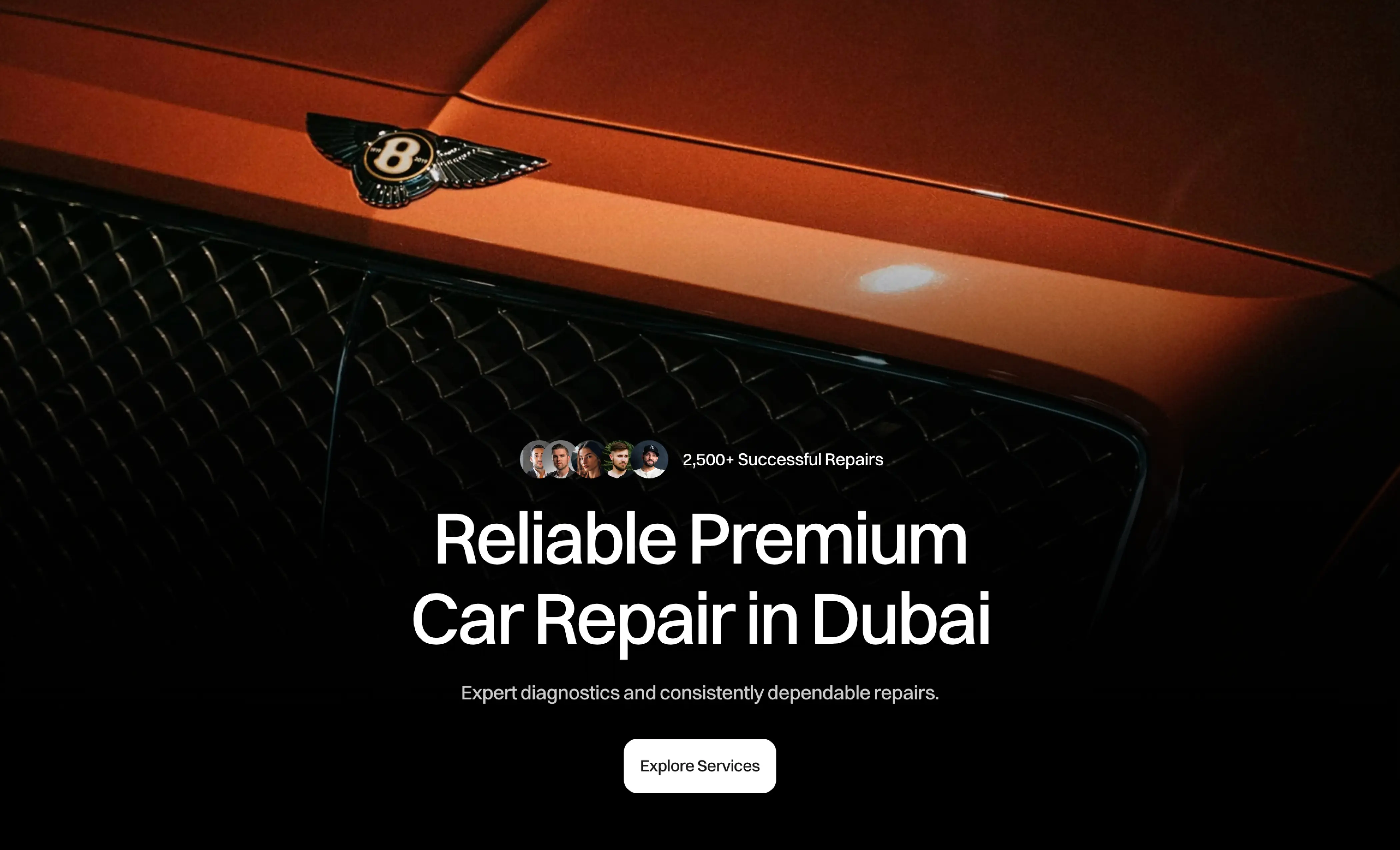
December 31, 2025
December 31, 2025
Car Repair Website Template for Auto Repair Businesses
A conversion focused website solution for auto repair businesses that rely on organic search and inbound service requests. Built around search intent, clear structure, and trust rather than decorative design.


Why Car Repair Websites Underperform
Many car repair websites do not bring consistent service requests even when traffic exists. The issue is rarely related to demand or competition. In most cases, visitors leave because the website does not clearly communicate relevance, reliability, or next steps.
Unclear service descriptions, generic messaging, weak structure, and slow performance create hesitation. When people search for automotive services, they want certainty. If the website does not provide it quickly, they continue searching elsewhere.
A detailed breakdown of these structural problems is covered in Car Repair Website Mistakes That Kill Online Bookings.
Search Intent
Automotive search intent is direct and problem focused. Users are not browsing or comparing brands visually. They are looking to solve a specific issue and want fast confirmation that the business can help.
An effective car repair website must immediately show what services are offered, where the business operates, and how to make contact. When this information is clear, visitors feel confident moving forward. When it is not, they return to search results.
Structure First
Conversion depends on structure, not visual complexity. A website should guide attention, organize information logically, and make the next step obvious without forcing it.
Motorium is built around a conversion oriented structure where each section has a clear role. Services are grouped logically, information follows a predictable flow, and contact options remain visible. This allows visitors to understand the offering quickly and reach out with confidence.
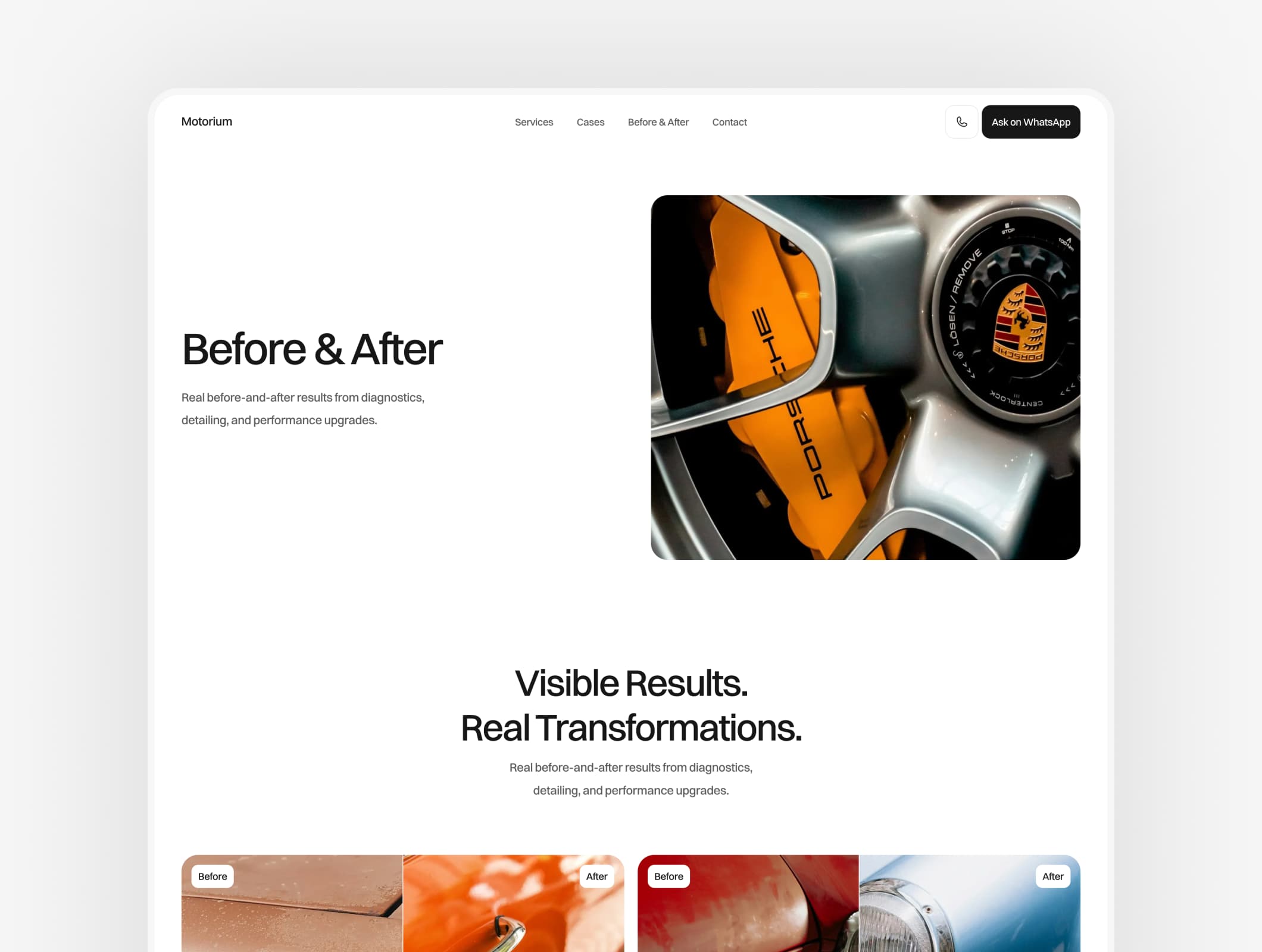
Example of a conversion focused website structure where before and after results are clearly presented, helping visitors quickly understand service quality and outcomes.
SEO Foundation
Search visibility depends on more than keywords. Many car repair websites struggle in organic search because pages lack hierarchy, headings do not reflect real queries, and performance issues limit discoverability.
This website structure is built with SEO as a foundation. Clean heading logic, fast loading pages, and CMS based content help search engines understand services, relevance, and intent. This supports long term organic growth without relying entirely on paid traffic.
Trust Signals
Trust is established before contact happens. Visitors evaluate credibility based on clarity, consistency, and transparency. They want to understand what the business does, how the process works, and what to expect next.
The layout focuses on service explanations, real use cases, workflow clarity, and predictable structure. This reduces uncertainty and improves the quality of incoming inquiries.
Easy Management
A website should remain useful after launch. Automotive businesses need to update services, add examples, and adjust content without technical barriers.
Content is managed through CMS, allowing updates while preserving structure and SEO integrity. This ensures the website can grow over time without losing clarity or performance.
Who It’s For
This website solution is suitable for car repair centers, auto detailing studios, body shops, restoration services, PPF and wrapping providers, window tinting businesses, and independent automotive service professionals who depend on inbound service requests and search visibility.
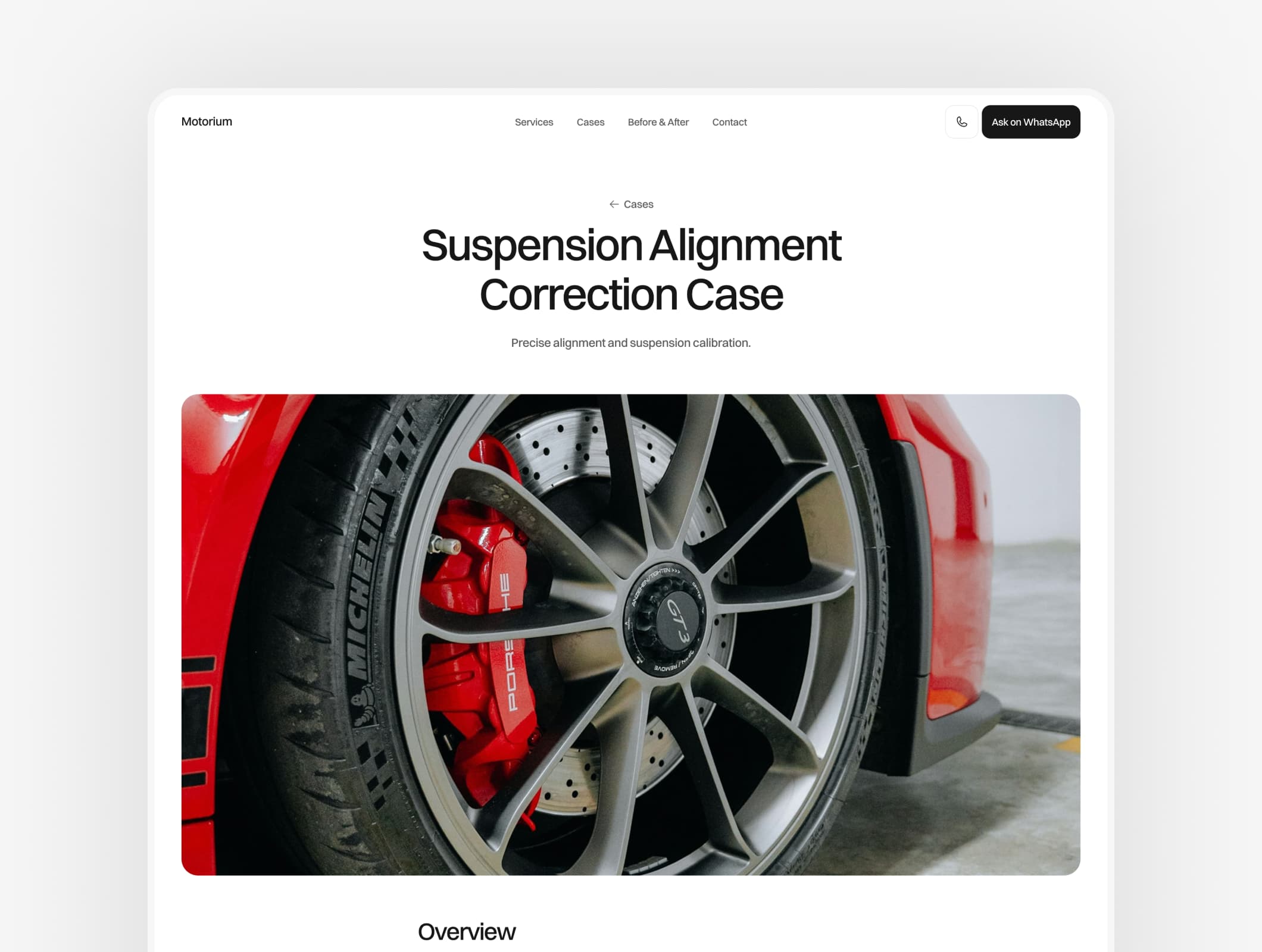
Example of a case study page where a specific repair service is clearly documented, helping visitors understand the type of work performed and build trust through transparency.
Car Repair Website Template Built for Real Service Requests
A car repair website should help customers understand the service, trust the process, and reach out without hesitation. When clarity, structure, and search intent are aligned, conversion becomes a natural outcome.
View the Motorium car repair website template: https://motorium.framer.website
Conclusion
A car repair website should do more than look professional. It should clearly explain services, reflect search intent, and guide visitors toward contact without friction.
When structure, SEO foundation, and clarity work together, a website becomes a reliable source of service requests rather than a static online presence.
Why Car Repair Websites Underperform
Many car repair websites do not bring consistent service requests even when traffic exists. The issue is rarely related to demand or competition. In most cases, visitors leave because the website does not clearly communicate relevance, reliability, or next steps.
Unclear service descriptions, generic messaging, weak structure, and slow performance create hesitation. When people search for automotive services, they want certainty. If the website does not provide it quickly, they continue searching elsewhere.
A detailed breakdown of these structural problems is covered in Car Repair Website Mistakes That Kill Online Bookings.
Search Intent
Automotive search intent is direct and problem focused. Users are not browsing or comparing brands visually. They are looking to solve a specific issue and want fast confirmation that the business can help.
An effective car repair website must immediately show what services are offered, where the business operates, and how to make contact. When this information is clear, visitors feel confident moving forward. When it is not, they return to search results.
Structure First
Conversion depends on structure, not visual complexity. A website should guide attention, organize information logically, and make the next step obvious without forcing it.
Motorium is built around a conversion oriented structure where each section has a clear role. Services are grouped logically, information follows a predictable flow, and contact options remain visible. This allows visitors to understand the offering quickly and reach out with confidence.

Example of a conversion focused website structure where before and after results are clearly presented, helping visitors quickly understand service quality and outcomes.
SEO Foundation
Search visibility depends on more than keywords. Many car repair websites struggle in organic search because pages lack hierarchy, headings do not reflect real queries, and performance issues limit discoverability.
This website structure is built with SEO as a foundation. Clean heading logic, fast loading pages, and CMS based content help search engines understand services, relevance, and intent. This supports long term organic growth without relying entirely on paid traffic.
Trust Signals
Trust is established before contact happens. Visitors evaluate credibility based on clarity, consistency, and transparency. They want to understand what the business does, how the process works, and what to expect next.
The layout focuses on service explanations, real use cases, workflow clarity, and predictable structure. This reduces uncertainty and improves the quality of incoming inquiries.
Easy Management
A website should remain useful after launch. Automotive businesses need to update services, add examples, and adjust content without technical barriers.
Content is managed through CMS, allowing updates while preserving structure and SEO integrity. This ensures the website can grow over time without losing clarity or performance.
Who It’s For
This website solution is suitable for car repair centers, auto detailing studios, body shops, restoration services, PPF and wrapping providers, window tinting businesses, and independent automotive service professionals who depend on inbound service requests and search visibility.

Example of a case study page where a specific repair service is clearly documented, helping visitors understand the type of work performed and build trust through transparency.
Car Repair Website Template Built for Real Service Requests
A car repair website should help customers understand the service, trust the process, and reach out without hesitation. When clarity, structure, and search intent are aligned, conversion becomes a natural outcome.
View the Motorium car repair website template: https://motorium.framer.website
Conclusion
A car repair website should do more than look professional. It should clearly explain services, reflect search intent, and guide visitors toward contact without friction.
When structure, SEO foundation, and clarity work together, a website becomes a reliable source of service requests rather than a static online presence.
Why Car Repair Websites Underperform
Many car repair websites do not bring consistent service requests even when traffic exists. The issue is rarely related to demand or competition. In most cases, visitors leave because the website does not clearly communicate relevance, reliability, or next steps.
Unclear service descriptions, generic messaging, weak structure, and slow performance create hesitation. When people search for automotive services, they want certainty. If the website does not provide it quickly, they continue searching elsewhere.
A detailed breakdown of these structural problems is covered in Car Repair Website Mistakes That Kill Online Bookings.
Search Intent
Automotive search intent is direct and problem focused. Users are not browsing or comparing brands visually. They are looking to solve a specific issue and want fast confirmation that the business can help.
An effective car repair website must immediately show what services are offered, where the business operates, and how to make contact. When this information is clear, visitors feel confident moving forward. When it is not, they return to search results.
Structure First
Conversion depends on structure, not visual complexity. A website should guide attention, organize information logically, and make the next step obvious without forcing it.
Motorium is built around a conversion oriented structure where each section has a clear role. Services are grouped logically, information follows a predictable flow, and contact options remain visible. This allows visitors to understand the offering quickly and reach out with confidence.

Example of a conversion focused website structure where before and after results are clearly presented, helping visitors quickly understand service quality and outcomes.
SEO Foundation
Search visibility depends on more than keywords. Many car repair websites struggle in organic search because pages lack hierarchy, headings do not reflect real queries, and performance issues limit discoverability.
This website structure is built with SEO as a foundation. Clean heading logic, fast loading pages, and CMS based content help search engines understand services, relevance, and intent. This supports long term organic growth without relying entirely on paid traffic.
Trust Signals
Trust is established before contact happens. Visitors evaluate credibility based on clarity, consistency, and transparency. They want to understand what the business does, how the process works, and what to expect next.
The layout focuses on service explanations, real use cases, workflow clarity, and predictable structure. This reduces uncertainty and improves the quality of incoming inquiries.
Easy Management
A website should remain useful after launch. Automotive businesses need to update services, add examples, and adjust content without technical barriers.
Content is managed through CMS, allowing updates while preserving structure and SEO integrity. This ensures the website can grow over time without losing clarity or performance.
Who It’s For
This website solution is suitable for car repair centers, auto detailing studios, body shops, restoration services, PPF and wrapping providers, window tinting businesses, and independent automotive service professionals who depend on inbound service requests and search visibility.

Example of a case study page where a specific repair service is clearly documented, helping visitors understand the type of work performed and build trust through transparency.
Car Repair Website Template Built for Real Service Requests
A car repair website should help customers understand the service, trust the process, and reach out without hesitation. When clarity, structure, and search intent are aligned, conversion becomes a natural outcome.
View the Motorium car repair website template: https://motorium.framer.website
Conclusion
A car repair website should do more than look professional. It should clearly explain services, reflect search intent, and guide visitors toward contact without friction.
When structure, SEO foundation, and clarity work together, a website becomes a reliable source of service requests rather than a static online presence.
Frequently Asked Questions
Why do many car repair websites get traffic but no service requests?
Most car repair websites lose potential customers because visitors do not immediately understand what services are offered, where the business operates, or how to get in touch. Even with traffic, unclear structure, weak trust signals, and confusing navigation prevent users from taking action.
Is design quality the main factor that affects conversion on car repair websites?
No. Conversion issues are usually caused by structure, not visual quality. A clean website with clear service presentation, logical flow, and visible contact options often performs better than a visually complex site that lacks clarity.
What pages should a car repair website include to perform well in search?
A strong car repair website typically includes clear service pages, a location focused homepage, contact or booking pages, and supporting content that explains processes or common customer questions. Proper page structure helps search engines understand relevance and improves visibility.
How important is SEO for auto repair businesses compared to paid advertising?
SEO provides long term visibility and consistent inbound traffic without ongoing ad spend. While paid ads can generate short term results, an SEO ready website structure helps auto repair businesses build sustainable traffic and service requests over time.
Can a website template perform as well as a custom built car repair website?
Yes, if the template is built around search intent, structure, and performance. A well designed car repair website template can outperform custom websites when it prioritizes clarity, SEO foundation, and conversion rather than visual customization.
Why do many car repair websites get traffic but no service requests?
Most car repair websites lose potential customers because visitors do not immediately understand what services are offered, where the business operates, or how to get in touch. Even with traffic, unclear structure, weak trust signals, and confusing navigation prevent users from taking action.
Is design quality the main factor that affects conversion on car repair websites?
No. Conversion issues are usually caused by structure, not visual quality. A clean website with clear service presentation, logical flow, and visible contact options often performs better than a visually complex site that lacks clarity.
What pages should a car repair website include to perform well in search?
A strong car repair website typically includes clear service pages, a location focused homepage, contact or booking pages, and supporting content that explains processes or common customer questions. Proper page structure helps search engines understand relevance and improves visibility.
How important is SEO for auto repair businesses compared to paid advertising?
SEO provides long term visibility and consistent inbound traffic without ongoing ad spend. While paid ads can generate short term results, an SEO ready website structure helps auto repair businesses build sustainable traffic and service requests over time.
Can a website template perform as well as a custom built car repair website?
Yes, if the template is built around search intent, structure, and performance. A well designed car repair website template can outperform custom websites when it prioritizes clarity, SEO foundation, and conversion rather than visual customization.
Why do many car repair websites get traffic but no service requests?
Most car repair websites lose potential customers because visitors do not immediately understand what services are offered, where the business operates, or how to get in touch. Even with traffic, unclear structure, weak trust signals, and confusing navigation prevent users from taking action.
Is design quality the main factor that affects conversion on car repair websites?
No. Conversion issues are usually caused by structure, not visual quality. A clean website with clear service presentation, logical flow, and visible contact options often performs better than a visually complex site that lacks clarity.
What pages should a car repair website include to perform well in search?
A strong car repair website typically includes clear service pages, a location focused homepage, contact or booking pages, and supporting content that explains processes or common customer questions. Proper page structure helps search engines understand relevance and improves visibility.
How important is SEO for auto repair businesses compared to paid advertising?
SEO provides long term visibility and consistent inbound traffic without ongoing ad spend. While paid ads can generate short term results, an SEO ready website structure helps auto repair businesses build sustainable traffic and service requests over time.
Can a website template perform as well as a custom built car repair website?
Yes, if the template is built around search intent, structure, and performance. A well designed car repair website template can outperform custom websites when it prioritizes clarity, SEO foundation, and conversion rather than visual customization.