
Define Your Studio Offer Clearly
A yoga and wellness website must communicate what your studio offers within the first seconds of a visit. Many studios lose potential clients because their message is vague or too general. Visitors should immediately understand what type of classes you provide, who they are for, and what makes your studio different. Clear headlines and short supporting descriptions help remove uncertainty and guide users toward the next step.
Instead of listing too many ideas on the homepage, focus on your core services. Whether you specialize in beginner yoga, small group sessions, or wellness programs, clarity increases confidence. When visitors clearly understand your offer, they are more likely to explore your classes and consider booking.
Build a Structured Homepage
The homepage should guide visitors through a logical flow. Start with a calm hero section that includes a clear headline and a visible booking button. This is followed by sections that introduce your classes, instructors, and pricing structure in an organized way. Each section should answer a specific question and lead naturally to the next one.
Avoid overwhelming users with long text blocks. Use balanced spacing, consistent typography, and clear calls to action to maintain focus. A structured homepage does not push aggressively but creates a smooth journey from interest to action. When navigation feels simple and predictable, conversion rates improve.
Create Clear Class and Schedule Pages
Class pages should clearly explain what each session includes, who it is suitable for, and when it takes place. Visitors often compare options before making a decision, so structured class descriptions help them choose confidently. Including short explanations, difficulty levels, and schedule information reduces hesitation.
A visible schedule page is equally important. Clients should be able to check availability quickly and move toward booking without searching through multiple pages. When class and schedule information is easy to find, the website becomes a practical tool rather than a static brochure.
Add Trust Elements
Trust plays a central role in wellness businesses. Visitors want to feel confident about the instructor, the atmosphere, and the overall experience. Instructor profiles with professional photos and clear credentials help establish credibility. Testimonials from real clients can further reinforce trust when presented in a structured and authentic way.
Clear contact information, studio location, and transparent pricing also support credibility. When visitors see complete and organized details, they perceive the studio as reliable and professional. Trust reduces friction and increases the likelihood of booking.
Example of a Structured Yoga and Wellness Website
A structured yoga and wellness website combines calm visual design with clear content hierarchy. Class previews, instructor sections, and pricing blocks are presented in consistent layouts that guide visitors naturally toward booking. Each section answers practical questions without overwhelming the user.
Templates such as Calmio demonstrate how minimal design and strong structure work together. The homepage clearly introduces the studio focus, class cards present information in a balanced way, and pricing plans are displayed in simple tiers. This type of structured approach supports clarity and encourages visitors to move from browsing to booking.
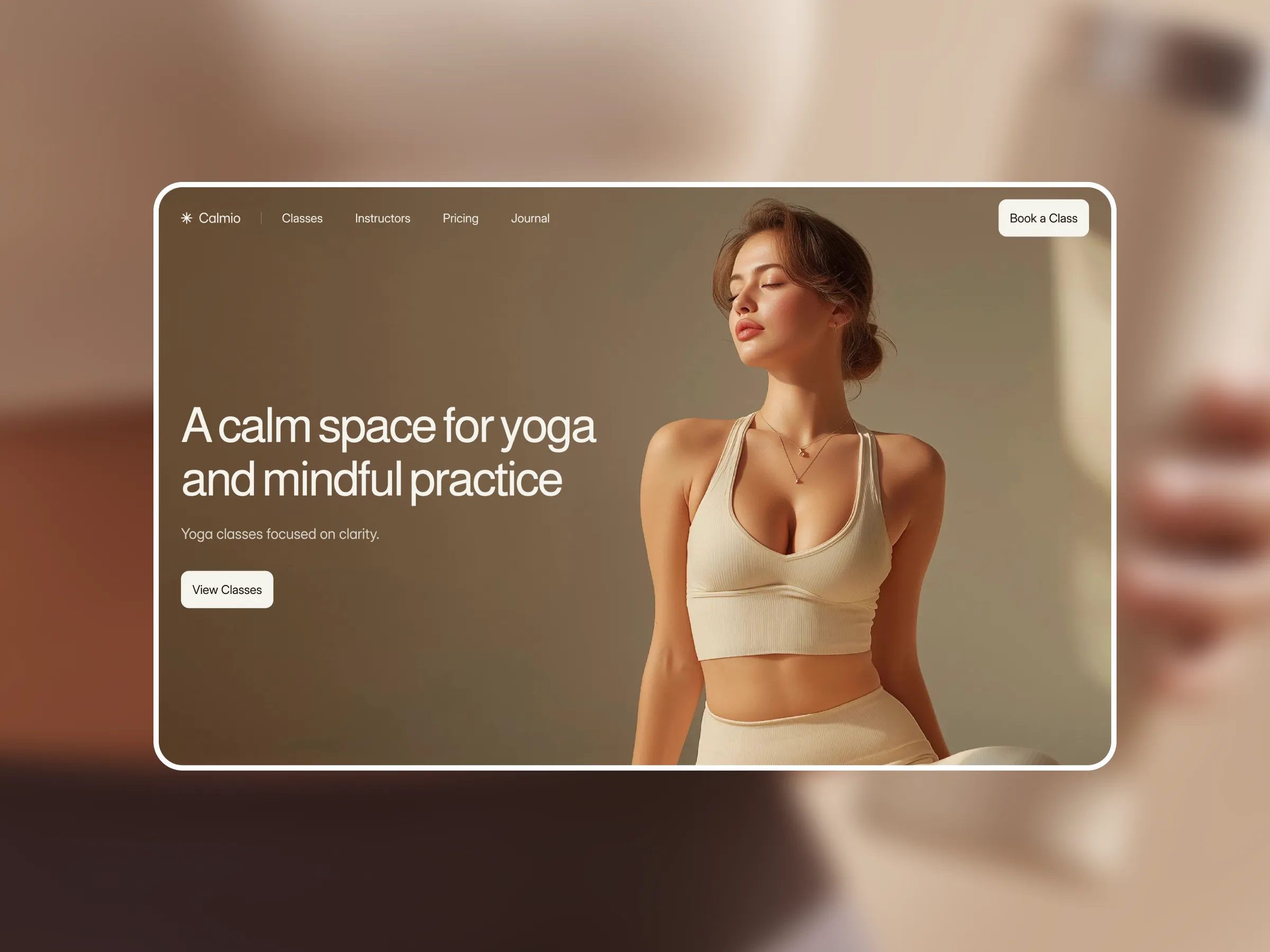
Example of a structured yoga website layout with calm design, clear hierarchy, and visible call to action.
Simplify Booking and Membership
Booking should be visible and easy on every page. Whether clients are reserving individual classes or purchasing membership plans, the process must feel straightforward. Clear buttons such as “Book a Class” should remain consistent and easy to find.
Membership options should be presented in simple tiers with transparent explanations. Visitors need to understand what is included and how often they can attend. When the booking process feels simple and secure, hesitation decreases and completed reservations increase.
Optimize for Local Visibility
Most yoga and wellness studios rely on local clients. The website should clearly state the studio location and include consistent contact details across pages. Mentioning the city naturally within content helps search engines understand where your services are available.
Creating dedicated pages for classes, instructors, and pricing increases the number of indexed pages. Adding helpful articles that answer common client questions can further improve visibility. A website built with structure and relevant content supports steady local growth.
Improve Mobile Experience
Many visitors browse yoga websites on their phones. Mobile layout must be clean, readable, and easy to navigate. Buttons should be large enough to tap comfortably, and text should remain clear without requiring zoom.
Fast loading speed is also essential. If pages take too long to load, visitors leave before exploring your offer. A mobile optimized website ensures that booking remains simple regardless of device.
Conclusion
Building a yoga and wellness website that converts requires clarity, structure, and visible actions. When your homepage communicates your offer clearly, your class pages answer practical questions, and your booking flow remains simple, visitors are more likely to become regular clients.
If you want to see how structured layout and calm design work together in practice, explore our website templates to find a solution built for clarity, usability, and consistent studio growth.