
What Car Dealerships Need from a Website
A car dealership website must do more than display vehicles. It needs to help buyers compare options, review pricing, check specifications, and contact the dealership without friction. Most customers visit several dealership websites before making a decision, so clarity, speed, and structured information directly affect whether a visitor becomes a lead.
Dealership websites must support browsing. Visitors filter by price, vehicle type, fuel type, or model year, and may return before submitting an inquiry. If navigation feels confusing or the site loads slowly, buyers move to competitors. Local visibility is essential because many searches include phrases such as used cars near me or SUVs for sale in city name.
A well built dealership website should combine organized inventory, visible calls to action, fast performance, and mobile usability. Without these elements, even strong traffic does not convert into test drive requests or quote inquiries.
What Framer Offers for Dealerships
Framer is a modern website builder focused on performance and layout flexibility. For car dealerships, this means you can create structured inventory pages, landing pages for specific vehicle categories, and clear lead forms without relying on complex backend systems.
Framer includes CMS collections that allow dealerships to manage vehicle listings dynamically. Each vehicle can have its own page with consistent layout, specifications, pricing, image gallery, and contact form. This structure helps maintain clarity while making updates simple for the business owner or marketing team.
Because Framer provides full design control, dealerships are not locked into rigid layouts. This allows the website to match the brand identity while maintaining usability.
Inventory and Vehicle Listings
Inventory presentation is the core of any dealership website. Framer supports structured CMS collections that make it possible to build organized vehicle listing pages with consistent formatting. Each listing can include price, mileage, engine type, transmission, features, and multiple images without breaking layout consistency.
Categories can be created for different vehicle types such as SUVs, sedans, electric vehicles, or certified used cars. This makes browsing easier and encourages users to explore multiple listings instead of leaving after viewing one page. Clear navigation reduces friction and increases the chances of inquiry submissions.
While Framer does not replace a full dealership management system, it works well as a marketing layer where vehicles are displayed clearly and optimized for search visibility.
Lead Generation and Calls to Action
A dealership website must guide visitors toward action and clear next steps. Clear buttons such as Request a Quote, Book a Test Drive, or Check Availability should appear on vehicle pages and remain visible during scrolling. Framer allows consistent placement of calls to action across templates and landing pages.
Short and simple contact forms improve completion rates. Visitors should not be required to fill in unnecessary details before submitting an inquiry. When the process feels direct and secure, more users complete the form rather than postponing contact.
Strong call to action placement combined with clear vehicle information helps transform browsing into leads. When pricing, specifications, and availability are presented next to the inquiry button, visitors feel more confident taking the next step. Reducing hesitation increases the number of qualified inquiries from the website.
SEO and Local Visibility
Car dealerships rely heavily on local search traffic because most buyers look for vehicles within their city. Framer provides control over page titles, meta descriptions, structured content, and clean URLs, which allows dealerships to target phrases such as used cars in city name or affordable SUVs near me. With structured headings and descriptive vehicle pages, each listing becomes an opportunity to appear in relevant search results.
Each vehicle page can be optimized individually, increasing the total number of indexed pages and improving visibility across different search queries. Fast loading performance also supports better user engagement and reduces bounce rates, which strengthens overall site quality. For dealerships focused on local growth, structured content and strong performance are essential for turning search traffic into inquiries.
Visual Focus Approach: Autohaus
Autohaus demonstrates how a dealership website can focus on visual presentation while remaining conversion oriented. The layout emphasizes high quality vehicle imagery and refined branding, which supports trust and premium perception. At the same time, calls to action remain clearly visible, ensuring that visitors can request information without confusion.
This type of implementation works well for dealerships that want to highlight design and build strong brand identity while maintaining usability.
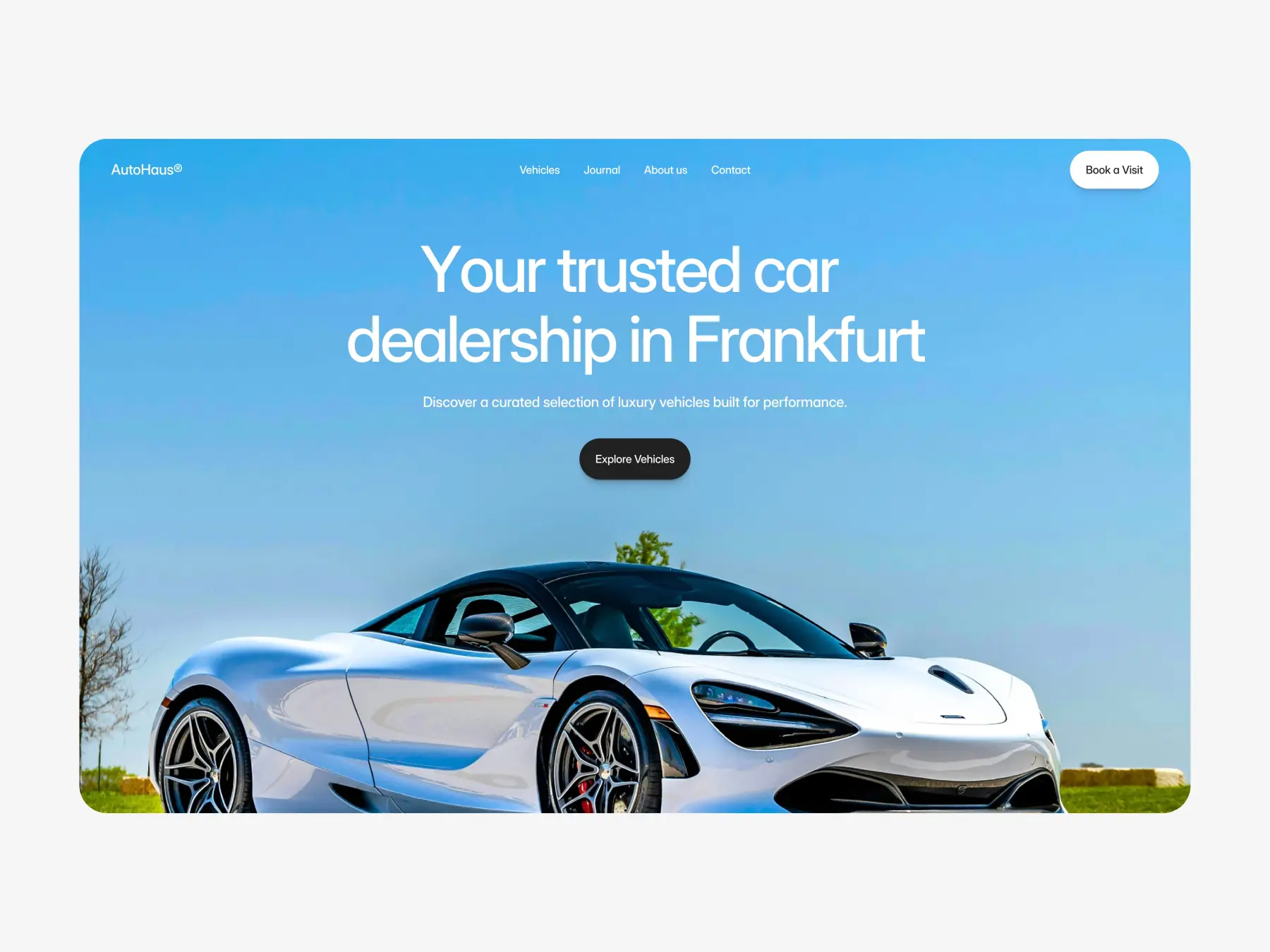
Example of the Autohaus dealership website built with Framer, featuring strong visual presentation, clear headline messaging, and visible call to action.
Structured Inventory Approach: Drivehub
Drivehub shows a more structured and category driven approach to inventory presentation. Vehicles are organized clearly, and navigation allows visitors to explore by type or model without difficulty. This improves browsing efficiency and encourages users to compare multiple listings before submitting an inquiry.
The structured layout makes inventory management simpler and supports better user flow from category page to vehicle page to contact form. This approach works particularly well for dealerships with larger or frequently updated inventory.
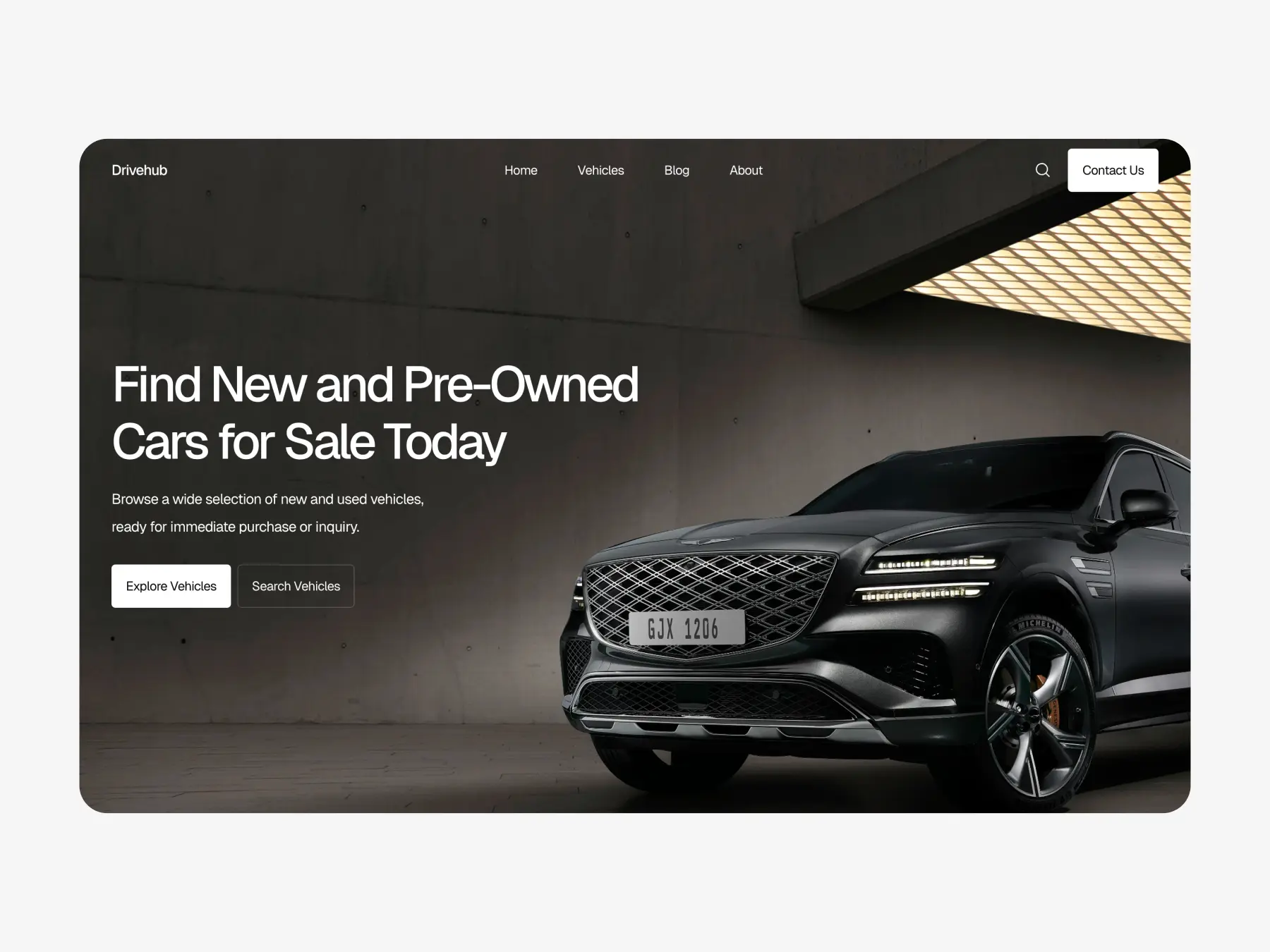
Example of the Drivehub dealership website built with Framer, featuring organized categories, vehicle listings, and clear browsing paths for easier inventory exploration.
Limitations to Consider
Framer is not a full dealership management system. It does not automatically sync with external inventory databases unless integrations are configured. Dealerships that rely on real time stock updates, advanced reporting, or complex internal workflows may need separate tools for inventory management and CRM operations. In these cases, Framer works best as the public facing website while backend systems handle data processing and tasks.
However, for independent dealerships or small to mid sized businesses that want a fast, modern marketing website, Framer provides sufficient flexibility without unnecessary complexity. It allows clear vehicle presentation, strong calls to action, and easy content updates without managing heavy plugins or technical maintenance. For many businesses, this balance between control and simplicity is more valuable than a fully integrated system.
Who Should Use Framer
Framer is well suited for independent dealerships, used car sellers, and boutique automotive brands that prioritize design control, performance, and structured listings. It is also a strong option for businesses that want to update inventory quickly without managing complex plugins or heavy technical maintenance requirements.
Larger dealership networks with advanced backend requirements may need additional systems alongside the website. In those cases, Framer can still serve as the public facing marketing layer that focuses on visibility and lead generation.
Conclusion
Framer is a strong option for car dealership websites when the focus is on structured inventory, fast performance, and effective lead generation. With dynamic vehicle pages, visible calls to action, and flexible design control, dealerships can create professional websites that support local search visibility and consistent inquiries.
When implemented with clear structure and thoughtful content, it becomes a practical platform for turning vehicle searches into confirmed leads and test drive requests. If you are exploring ready made solutions, review our guide to Best Automotive Website Templates to see structured examples designed for performance and conversion.