{ "@context": "https://schema.org", "@type": "FAQPage", "mainEntity": [ { "@type": "Question", "name": "What should a lounge website focus on first?", "acceptedAnswer": { "@type": "Answer", "text": "A lounge website should focus on atmosphere and clarity. Strong visuals, refined typography, and a visible reservation button help guests understand the mood of the venue while keeping booking simple." } }, { "@type": "Question", "name": "How important are events on a lounge website?", "acceptedAnswer": { "@type": "Answer", "text": "Events are very important because many guests choose lounges based on live music or themed nights. A clear and structured event section encourages visitors to plan ahead and reserve a table in advance." } }, { "@type": "Question", "name": "Does design really affect lounge reservations?", "acceptedAnswer": { "@type": "Answer", "text": "Yes. When the website feels professional, organized, and easy to navigate, guests trust the venue more and are more likely to complete a reservation instead of leaving." } } ] }

March 8, 2026

Lounge Website Design Ideas That Drive More Bookings

Lounge Website Design Ideas That Drive More Bookings

A strong lounge website shapes how guests perceive the venue before they arrive. The right design choices help communicate atmosphere clearly while guiding visitors toward reservations.

A strong lounge website shapes how guests perceive the venue before they arrive. The right design choices help communicate atmosphere clearly while guiding visitors toward reservations.

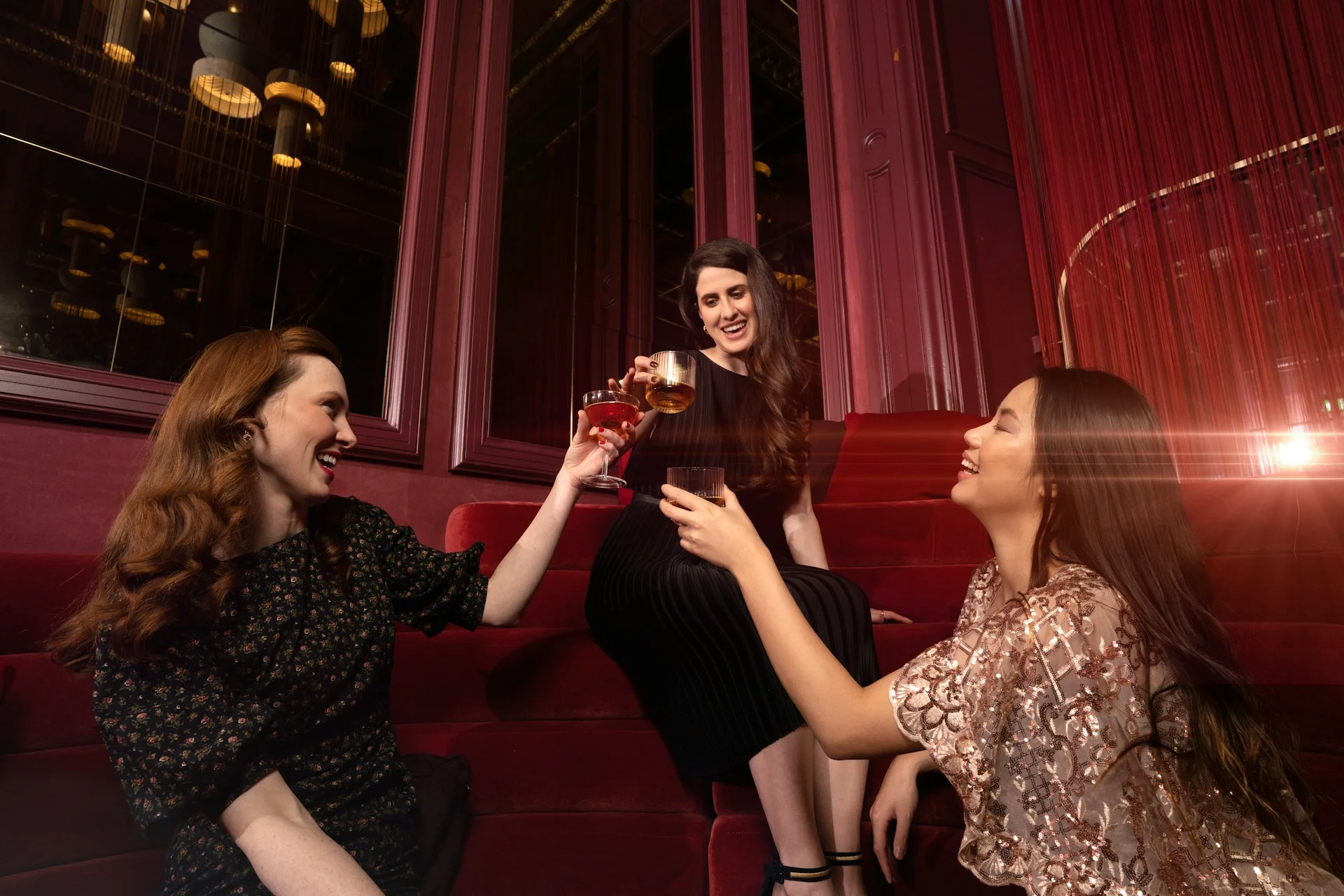
Three women enjoying cocktails together in a stylish red lounge interior with evening lighting.

Distinctive Typography

Typography plays a major role in lounge website design because it sets the emotional tone of the brand. Elegant serif fonts such as Instrument Serif create a refined and timeless impression that fits evening venues focused on mood and experience. Large headlines combined with generous spacing allow the text to breathe and feel intentional, which mirrors the calm and curated atmosphere of a lounge.
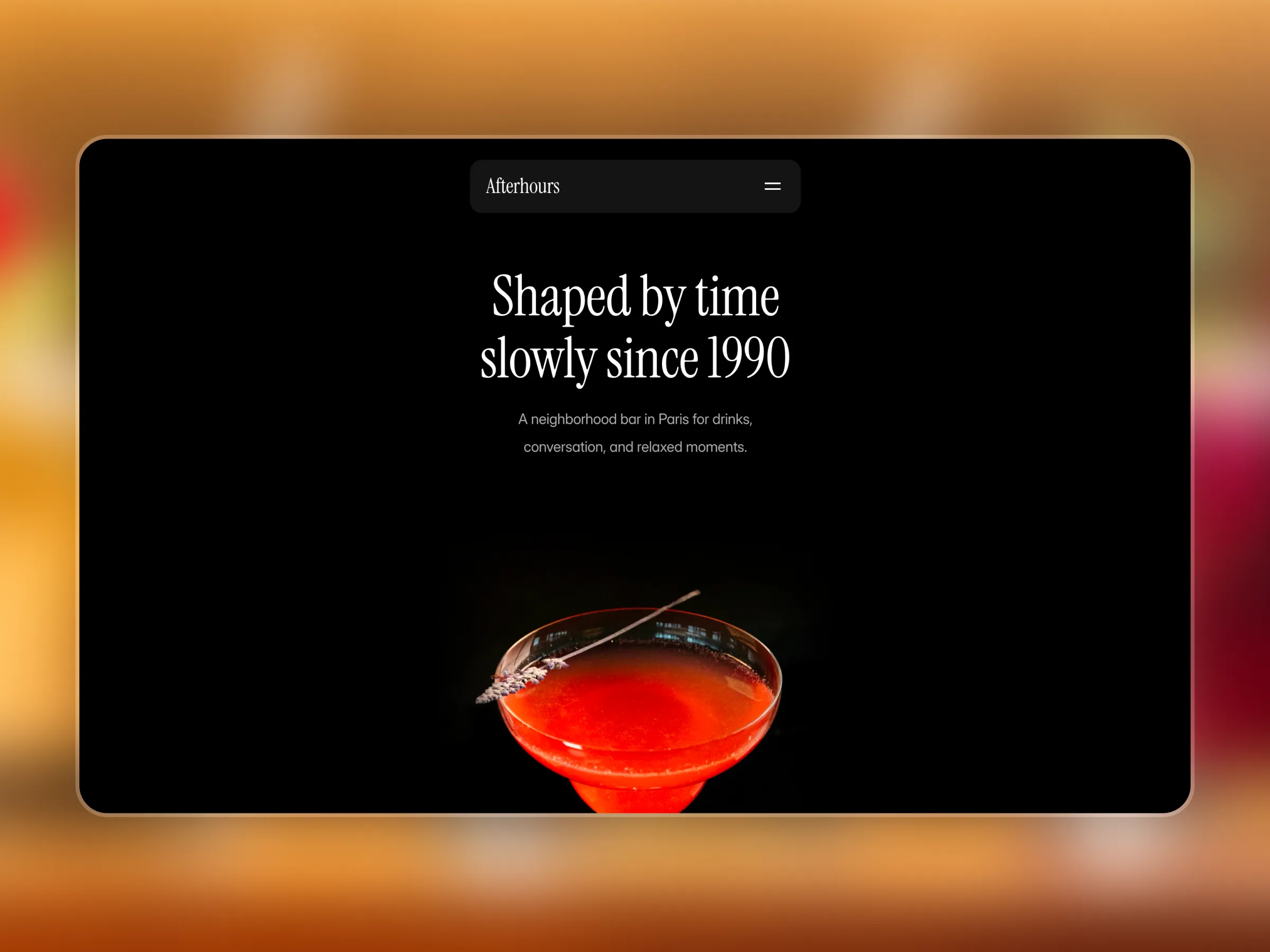
Lounge website about section with elegant serif typography, dark layout, and featured cocktail image.

Example of lounge website design using the Afterhours template.

When typography is chosen carefully and used consistently across headings, menus, and buttons, the website feels cohesive and professional. This consistency increases trust and encourages guests to stay longer on the page, which supports stronger engagement and higher chances of reservation.

Atmosphere First

Lounge websites should prioritize atmosphere from the very first screen. Dark backgrounds, controlled lighting in photography, and minimal interface elements help visitors immediately understand the mood of the venue. Instead of overwhelming users with too much information, the hero section should combine a strong headline, a short supporting line, and a clear call to action such as View Menu or Book a Table.

High quality images of drinks, interiors, and guests enjoying the space help visitors imagine themselves there. This emotional connection increases confidence in the venue and supports stronger booking decisions.
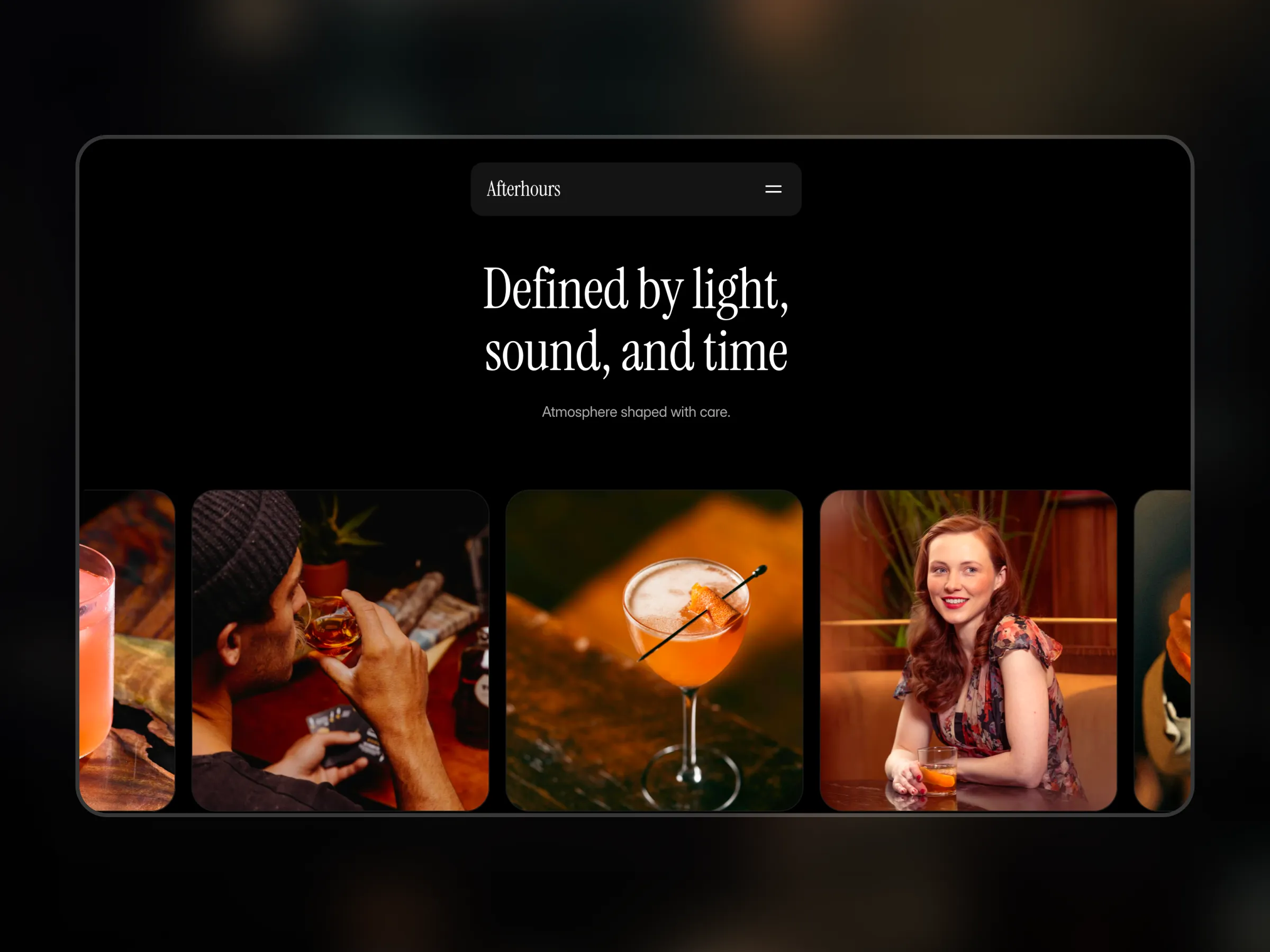
Lounge website section with dark layout, elegant serif headline, lifestyle images, and immersive evening atmosphere.

Example of lounge website atmosphere design in the Afterhours template.

Structured Drink Menu

For lounges, the drink menu is often the central attraction, so its presentation must feel curated and organized. A clean grid layout with clear drink names, short descriptions, and visible pricing makes browsing simple while preserving the aesthetic feel of the brand. Text based content is important not only for clarity but also for helping the website appear in search results when guests look for cocktail lounges or specific drinks in their city.
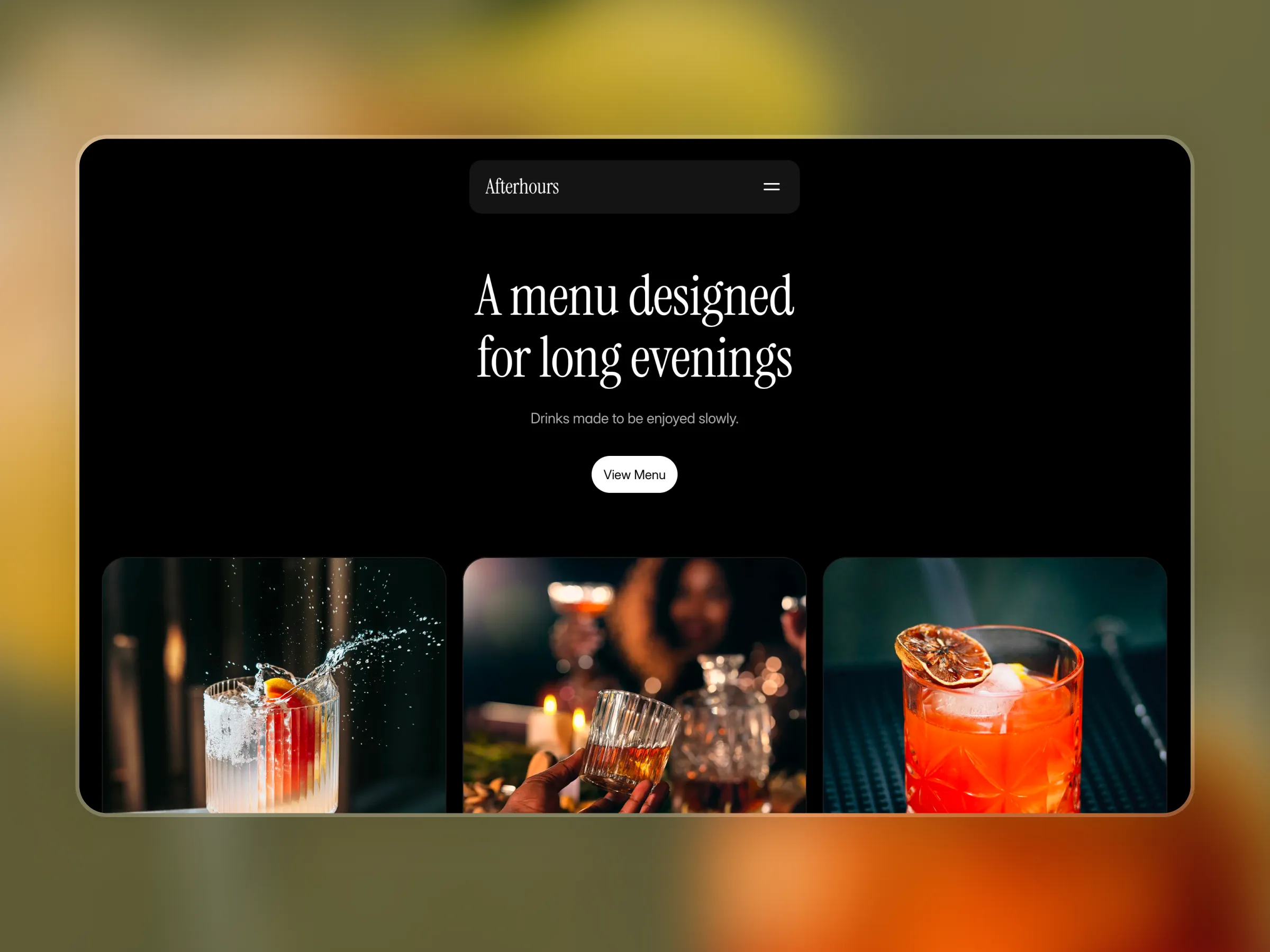
Lounge website drink menu section with dark layout, serif headline, cocktail images, and visible View Menu button.

Structured cocktail menu design in the Afterhours lounge website template.

Organized categories such as signature cocktails, classics, and seasonal specials allow visitors to quickly understand the concept. When the menu is structured clearly, guests can explore options comfortably and move naturally toward making a reservation.

Event Highlights

Many lounges rely on live music, themed nights, or curated DJ sets to attract guests on specific days. A dedicated event section with dates, short descriptions, and clear titles helps visitors plan their visit in advance. Presenting events in a structured layout rather than scattered posts creates a sense of professionalism and reliability.

When guests can easily see what is happening this week or next weekend, they are more likely to choose the lounge for their evening plans. Clear event visibility encourages early decisions and increases the chances of confirmed table reservations.

Clear Reservation Path

Even the most atmospheric design must support a smooth booking process. Reservation buttons should be visible in the header and repeated in key sections so guests do not have to search for them. The booking form should request only essential details such as date, time, and number of guests to reduce friction.

On mobile devices, the form must load quickly and function smoothly because many users search for lounges while already outside. A clear and accessible reservation path turns visual interest into confirmed bookings and prevents potential guests from leaving the site.
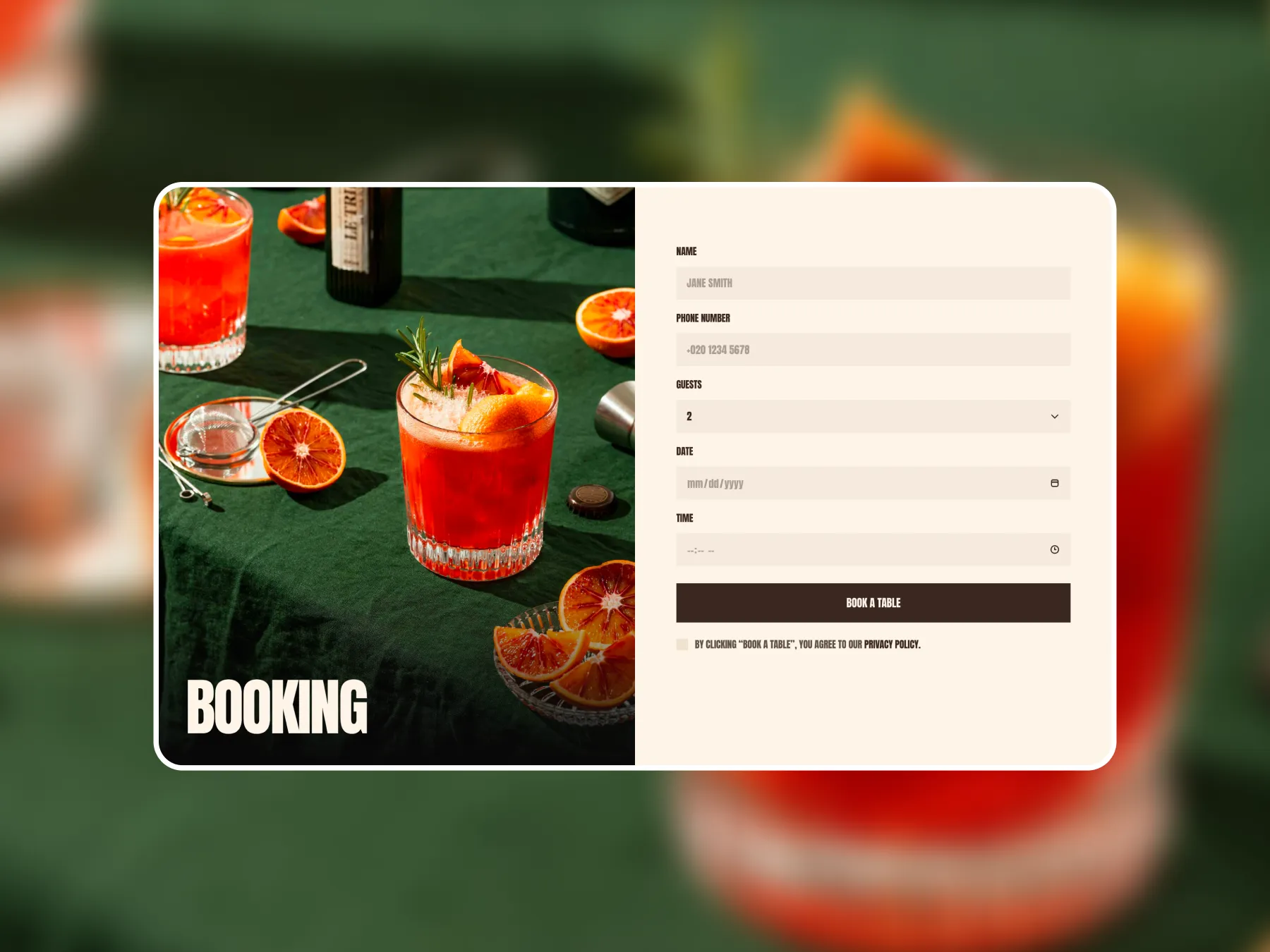
Restaurant booking page with visible reservation form, date and time fields, guest selection, and clear Book a Table button.

Example of a structured booking page in the Marlund restaurant website template.

Consistent Mood

Consistency across colors, images, typography, and layout creates a strong brand presence. When every section of the website reflects the same tone and atmosphere, visitors feel confident that the physical venue will match their expectations.

Inconsistent design choices can weaken perception and create hesitation. A well structured lounge website keeps the experience focused and calm, which supports trust and encourages guests to complete their reservation.

Conclusion

Lounge website design should combine atmosphere with structure to drive more bookings. Distinctive typography, immersive visuals, organized menus, clear event sections, and visible reservation actions work together to guide visitors from interest to confirmed tables.

When design choices support both mood and usability, the website becomes a reliable tool for steady growth. A structured and intentional design makes it easier for guests to decide, reserve, and return.

Distinctive Typography

Typography plays a major role in lounge website design because it sets the emotional tone of the brand. Elegant serif fonts such as Instrument Serif create a refined and timeless impression that fits evening venues focused on mood and experience. Large headlines combined with generous spacing allow the text to breathe and feel intentional, which mirrors the calm and curated atmosphere of a lounge.

Lounge website about section with elegant serif typography, dark layout, and featured cocktail image.

Example of lounge website design using the Afterhours template.

When typography is chosen carefully and used consistently across headings, menus, and buttons, the website feels cohesive and professional. This consistency increases trust and encourages guests to stay longer on the page, which supports stronger engagement and higher chances of reservation.

Atmosphere First

Lounge websites should prioritize atmosphere from the very first screen. Dark backgrounds, controlled lighting in photography, and minimal interface elements help visitors immediately understand the mood of the venue. Instead of overwhelming users with too much information, the hero section should combine a strong headline, a short supporting line, and a clear call to action such as View Menu or Book a Table.

High quality images of drinks, interiors, and guests enjoying the space help visitors imagine themselves there. This emotional connection increases confidence in the venue and supports stronger booking decisions.

Lounge website section with dark layout, elegant serif headline, lifestyle images, and immersive evening atmosphere.

Example of lounge website atmosphere design in the Afterhours template.

Structured Drink Menu

For lounges, the drink menu is often the central attraction, so its presentation must feel curated and organized. A clean grid layout with clear drink names, short descriptions, and visible pricing makes browsing simple while preserving the aesthetic feel of the brand. Text based content is important not only for clarity but also for helping the website appear in search results when guests look for cocktail lounges or specific drinks in their city.

Lounge website drink menu section with dark layout, serif headline, cocktail images, and visible View Menu button.

Structured cocktail menu design in the Afterhours lounge website template.

Organized categories such as signature cocktails, classics, and seasonal specials allow visitors to quickly understand the concept. When the menu is structured clearly, guests can explore options comfortably and move naturally toward making a reservation.

Event Highlights

Many lounges rely on live music, themed nights, or curated DJ sets to attract guests on specific days. A dedicated event section with dates, short descriptions, and clear titles helps visitors plan their visit in advance. Presenting events in a structured layout rather than scattered posts creates a sense of professionalism and reliability.

When guests can easily see what is happening this week or next weekend, they are more likely to choose the lounge for their evening plans. Clear event visibility encourages early decisions and increases the chances of confirmed table reservations.

Clear Reservation Path

Even the most atmospheric design must support a smooth booking process. Reservation buttons should be visible in the header and repeated in key sections so guests do not have to search for them. The booking form should request only essential details such as date, time, and number of guests to reduce friction.

On mobile devices, the form must load quickly and function smoothly because many users search for lounges while already outside. A clear and accessible reservation path turns visual interest into confirmed bookings and prevents potential guests from leaving the site.

Restaurant booking page with visible reservation form, date and time fields, guest selection, and clear Book a Table button.

Example of a structured booking page in the Marlund restaurant website template.

Consistent Mood

Consistency across colors, images, typography, and layout creates a strong brand presence. When every section of the website reflects the same tone and atmosphere, visitors feel confident that the physical venue will match their expectations.

Inconsistent design choices can weaken perception and create hesitation. A well structured lounge website keeps the experience focused and calm, which supports trust and encourages guests to complete their reservation.

Conclusion

Lounge website design should combine atmosphere with structure to drive more bookings. Distinctive typography, immersive visuals, organized menus, clear event sections, and visible reservation actions work together to guide visitors from interest to confirmed tables.

When design choices support both mood and usability, the website becomes a reliable tool for steady growth. A structured and intentional design makes it easier for guests to decide, reserve, and return.

Frequently Asked Questions

What should a lounge website focus on first?

A lounge website should focus on atmosphere and clarity. Strong visuals, refined typography, and a visible reservation button help guests understand the mood of the venue while keeping booking simple.

How important are events on a lounge website?

Events are very important because many guests choose lounges based on live music or themed nights. A clear and structured event section encourages visitors to plan ahead and reserve a table in advance.

Does design really affect lounge reservations?

Yes. When the website feels professional, organized, and easy to navigate, guests trust the venue more and are more likely to complete a reservation instead of leaving.