Introduction
Restaurant websites must do two things at the same time: attract visitors through search engines and convince them to book a table. Many restaurant sites focus heavily on visuals but ignore structure, page hierarchy, and search optimization. As a result, they look good but struggle to rank or generate consistent reservations.
SEO for restaurants is not about complex tactics. It starts with clear page structure, optimized content, fast loading speed, and strong local signals. A well structured restaurant website template makes this process easier by combining visual presentation with logical hierarchy and optimized pages. When these fundamentals are in place, your website becomes a reliable channel for long term growth.
Clear Page Structure
Search engines need to understand what your restaurant offers. Your website should include clearly defined pages such as: Homepage, Menu, About, Contact, Events or Private Dining, Reservation page.
Each page should have a specific purpose and focused content. A structured hierarchy helps search engines index your site properly and helps visitors move naturally from browsing to booking.
Avoid combining everything on a single long homepage. Separate pages create stronger signals and improve visibility for specific searches such as “restaurant menu in [city]” or “private dining restaurant”.
Local SEO Foundations
Restaurants depend heavily on local search. Most customers search using phrases like:
“restaurant near me”
“Italian restaurant in London”
“best cocktail bar in [city]”
To compete for these searches, your website must clearly display:
Restaurant name
Address
Phone number
Opening hours
City references in key headings
Your contact page and footer should match your Google Business listing exactly. Consistency improves trust and strengthens local visibility.
Optimized Menu Pages
Your menu is one of the most important SEO assets. Instead of uploading a PDF only, create a structured menu page with text based content. This allows search engines to read dish names, categories, and descriptions.
For example, sections like “Starters”, “Main Courses”, and “Signature Dishes” can rank for specific food related searches in your local area. Clear headings and readable content improve both visibility and user experience.
Performance and Speed
Restaurant visitors expect fast access to menus and booking options. Heavy images, unoptimized galleries, and slow hosting reduce performance and can negatively affect rankings and lower overall user engagement significantly.
Compress images properly, avoid unnecessary animations, and make sure booking buttons are visible without scrolling too far. Speed supports both user experience and search visibility.
Visual Focus with Structure
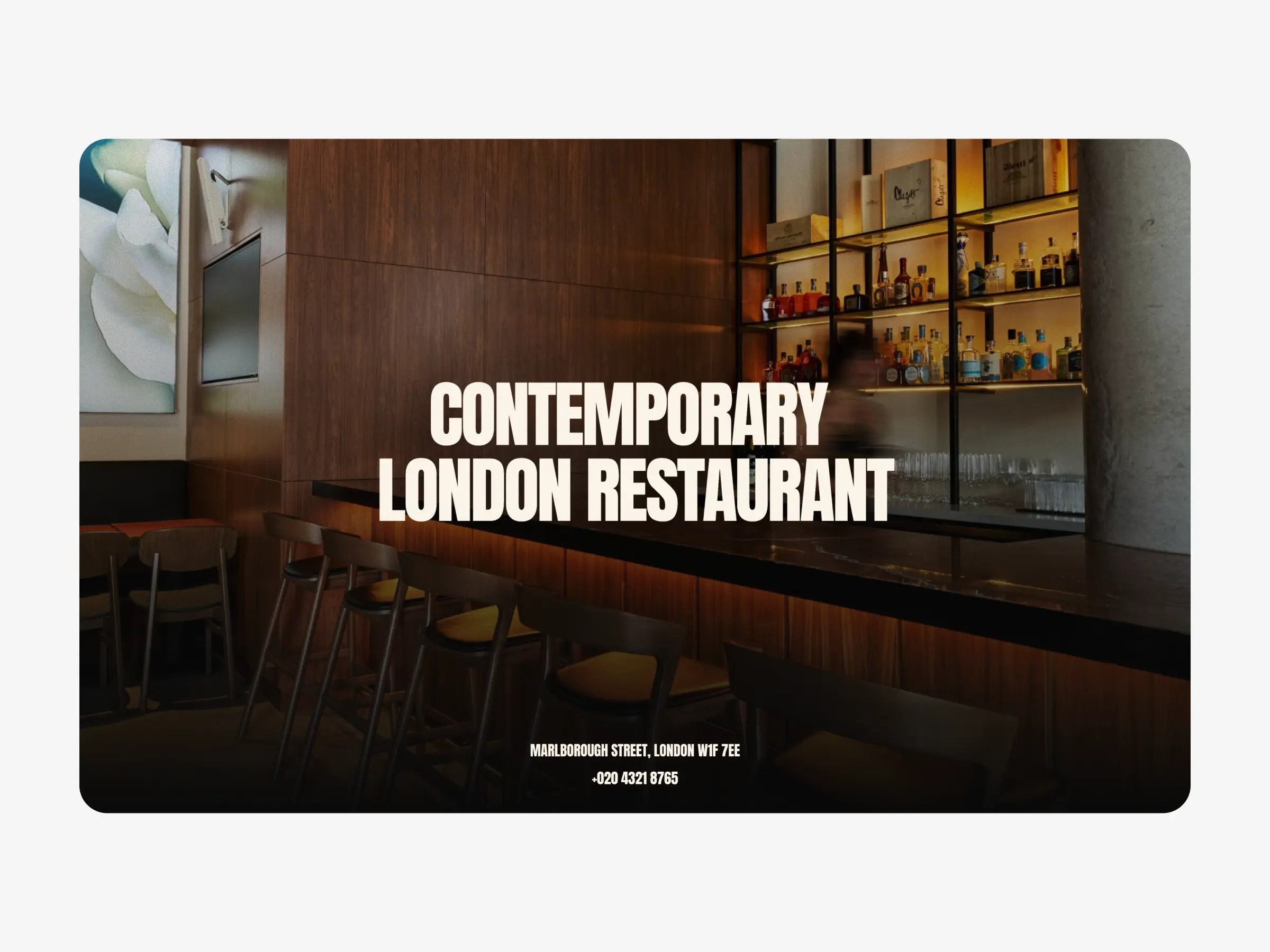
In the restaurant industry, visuals play a major role in decision making. Interior atmosphere, plating, cocktails, and dining space often influence booking behavior more than text. However, strong imagery must be supported by clear structure.
Marlund is an example of a restaurant website that combines visual presentation with organized sections and clear navigation.
The homepage highlights atmosphere through large imagery, while the menu and booking options remain easy to access. Sections such as About, Events, and Kitchen Highlights are separated logically, which supports both engagement and search performance.
Instead of relying only on visuals, the structure guides visitors toward viewing the menu or making a reservation.
⭢ Marlund Restaurant Website Template
Clear Booking Path
Every restaurant website must make reservations simple and easy for visitors to complete quickly. Booking buttons should be visible in the header and repeated throughout the page. The process should require as few steps as possible.
If visitors cannot quickly understand how to reserve a table, they will leave and choose another restaurant. SEO brings traffic, but clarity converts visitors into guests.
Conclusion
Restaurant website SEO starts with structure, local optimization, readable menu pages, and fast performance. Strong visuals are important, but they must work together with clear navigation and organized content.
When your restaurant website is built around clarity and logical hierarchy, search visibility improves and visitors feel confident booking a table. Over time, this structured foundation becomes a steady source of reservations and long term growth. If you are looking for structured solutions built around these principles, you can explore the full collection of restaurant website templates designed for performance and clarity.