
January 7, 2026
January 7, 2026
What Pages Every Car Rental Website Must Have to Convert
A practical breakdown of the essential pages every car rental website needs to build trust, improve usability, and turn visitors into online bookings.


Essential Pages
A car rental website is not just a list of available vehicles. It is a conversion system where each page plays a specific role in moving visitors from initial interest to a completed booking. When key pages are missing or poorly structured, users lose clarity, hesitate, and leave before taking action. To convert consistently, a car rental website must cover the main user intents at every stage of the decision-making process.
Below are the pages that directly influence usability, trust, and online reservations.
Homepage
The homepage frames the entire rental experience. Visitors should immediately understand what cars are available, where the service operates, and how to start a booking. Clear positioning, visible locations, vehicle categories, and a strong booking entry point help users orient themselves within seconds and reduce early drop-offs.
When the homepage lacks structure or clear hierarchy, users often leave without exploring further. Many of the issues discussed in Car Rental Website Mistakes That Prevent Online Reservations stem from weak homepage layouts and unclear first impressions.
Fleet Pages
Fleet and vehicle listing pages are where most commercial intent is expressed. Users compare options, evaluate pricing, and decide whether a rental service fits their needs. These pages must present vehicles clearly with consistent layouts, essential specifications, pricing visibility, and availability information.
A well structured fleet page allows visitors to scan available cars, filter by key criteria, and move naturally toward booking without friction. You can see an example of how a clear vehicle listing with filters and pricing hierarchy works in practice in this fleet page preview.
From an SEO perspective, fleet pages target high intent searches related to specific car types and rental use cases. From a conversion perspective, they reduce hesitation and help users move confidently toward booking instead of leaving to compare competitors.
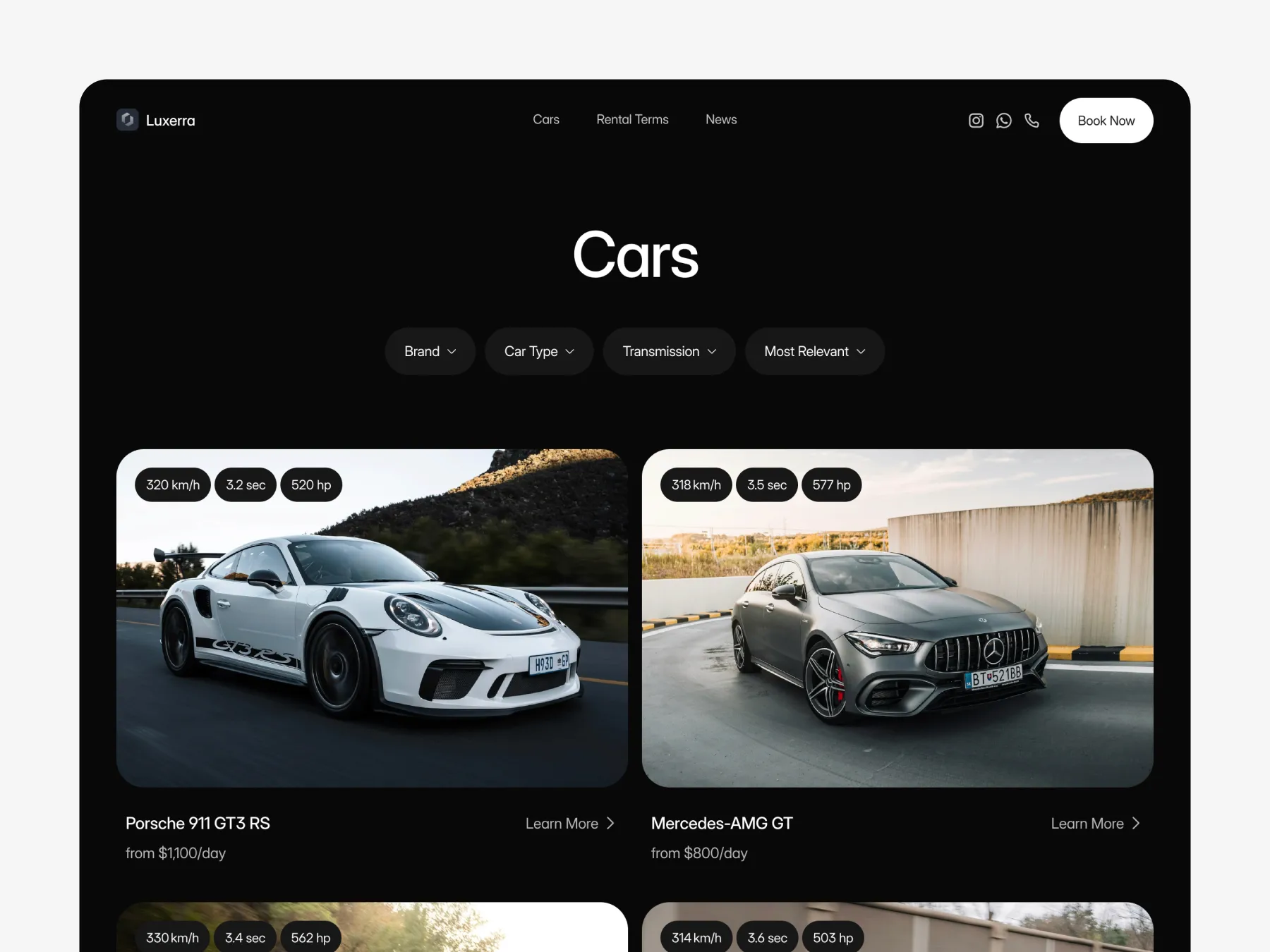
A clear fleet page layout with vehicle filters and visible pricing.
Booking Flow
The booking flow is the core conversion point of any car rental website. It must be simple, predictable, and transparent. Users expect to select dates, locations, and vehicles while clearly understanding the total cost and rental conditions. Any hidden fees, unclear steps, or unnecessary form fields increase abandonment.
Insights from Why Most Car Rental Websites Don’t Get Online Bookings show that even small usability issues inside the reservation flow can significantly reduce completed bookings.
Contact Access
Even with a streamlined booking system, users want to know they can reach the business if questions arise. Clear and visible contact access reassures visitors, especially first-time renters or users booking from abroad.
Easy access to contact information removes last-minute hesitation and supports trust at the final decision stage. When users feel supported, they are more likely to complete the reservation instead of postponing or abandoning it.
Conclusion
A high-converting car rental website is built on structure and clarity, not visual complexity. Each page serves a specific purpose: the homepage sets direction, fleet pages support comparison, booking pages simplify action, and contact access removes uncertainty. When these elements work together, conversions become a natural outcome rather than a forced one.
Covering these essential pages creates a strong foundation for both SEO performance and long-term online bookings.
Essential Pages
A car rental website is not just a list of available vehicles. It is a conversion system where each page plays a specific role in moving visitors from initial interest to a completed booking. When key pages are missing or poorly structured, users lose clarity, hesitate, and leave before taking action. To convert consistently, a car rental website must cover the main user intents at every stage of the decision-making process.
Below are the pages that directly influence usability, trust, and online reservations.
Homepage
The homepage frames the entire rental experience. Visitors should immediately understand what cars are available, where the service operates, and how to start a booking. Clear positioning, visible locations, vehicle categories, and a strong booking entry point help users orient themselves within seconds and reduce early drop-offs.
When the homepage lacks structure or clear hierarchy, users often leave without exploring further. Many of the issues discussed in Car Rental Website Mistakes That Prevent Online Reservations stem from weak homepage layouts and unclear first impressions.
Fleet Pages
Fleet and vehicle listing pages are where most commercial intent is expressed. Users compare options, evaluate pricing, and decide whether a rental service fits their needs. These pages must present vehicles clearly with consistent layouts, essential specifications, pricing visibility, and availability information.
A well structured fleet page allows visitors to scan available cars, filter by key criteria, and move naturally toward booking without friction. You can see an example of how a clear vehicle listing with filters and pricing hierarchy works in practice in this fleet page preview.
From an SEO perspective, fleet pages target high intent searches related to specific car types and rental use cases. From a conversion perspective, they reduce hesitation and help users move confidently toward booking instead of leaving to compare competitors.

A clear fleet page layout with vehicle filters and visible pricing.
Booking Flow
The booking flow is the core conversion point of any car rental website. It must be simple, predictable, and transparent. Users expect to select dates, locations, and vehicles while clearly understanding the total cost and rental conditions. Any hidden fees, unclear steps, or unnecessary form fields increase abandonment.
Insights from Why Most Car Rental Websites Don’t Get Online Bookings show that even small usability issues inside the reservation flow can significantly reduce completed bookings.
Contact Access
Even with a streamlined booking system, users want to know they can reach the business if questions arise. Clear and visible contact access reassures visitors, especially first-time renters or users booking from abroad.
Easy access to contact information removes last-minute hesitation and supports trust at the final decision stage. When users feel supported, they are more likely to complete the reservation instead of postponing or abandoning it.
Conclusion
A high-converting car rental website is built on structure and clarity, not visual complexity. Each page serves a specific purpose: the homepage sets direction, fleet pages support comparison, booking pages simplify action, and contact access removes uncertainty. When these elements work together, conversions become a natural outcome rather than a forced one.
Covering these essential pages creates a strong foundation for both SEO performance and long-term online bookings.
Essential Pages
A car rental website is not just a list of available vehicles. It is a conversion system where each page plays a specific role in moving visitors from initial interest to a completed booking. When key pages are missing or poorly structured, users lose clarity, hesitate, and leave before taking action. To convert consistently, a car rental website must cover the main user intents at every stage of the decision-making process.
Below are the pages that directly influence usability, trust, and online reservations.
Homepage
The homepage frames the entire rental experience. Visitors should immediately understand what cars are available, where the service operates, and how to start a booking. Clear positioning, visible locations, vehicle categories, and a strong booking entry point help users orient themselves within seconds and reduce early drop-offs.
When the homepage lacks structure or clear hierarchy, users often leave without exploring further. Many of the issues discussed in Car Rental Website Mistakes That Prevent Online Reservations stem from weak homepage layouts and unclear first impressions.
Fleet Pages
Fleet and vehicle listing pages are where most commercial intent is expressed. Users compare options, evaluate pricing, and decide whether a rental service fits their needs. These pages must present vehicles clearly with consistent layouts, essential specifications, pricing visibility, and availability information.
A well structured fleet page allows visitors to scan available cars, filter by key criteria, and move naturally toward booking without friction. You can see an example of how a clear vehicle listing with filters and pricing hierarchy works in practice in this fleet page preview.
From an SEO perspective, fleet pages target high intent searches related to specific car types and rental use cases. From a conversion perspective, they reduce hesitation and help users move confidently toward booking instead of leaving to compare competitors.

A clear fleet page layout with vehicle filters and visible pricing.
Booking Flow
The booking flow is the core conversion point of any car rental website. It must be simple, predictable, and transparent. Users expect to select dates, locations, and vehicles while clearly understanding the total cost and rental conditions. Any hidden fees, unclear steps, or unnecessary form fields increase abandonment.
Insights from Why Most Car Rental Websites Don’t Get Online Bookings show that even small usability issues inside the reservation flow can significantly reduce completed bookings.
Contact Access
Even with a streamlined booking system, users want to know they can reach the business if questions arise. Clear and visible contact access reassures visitors, especially first-time renters or users booking from abroad.
Easy access to contact information removes last-minute hesitation and supports trust at the final decision stage. When users feel supported, they are more likely to complete the reservation instead of postponing or abandoning it.
Conclusion
A high-converting car rental website is built on structure and clarity, not visual complexity. Each page serves a specific purpose: the homepage sets direction, fleet pages support comparison, booking pages simplify action, and contact access removes uncertainty. When these elements work together, conversions become a natural outcome rather than a forced one.
Covering these essential pages creates a strong foundation for both SEO performance and long-term online bookings.
Frequently Asked Questions
What pages are essential for a car rental website?
A car rental website must include a clear homepage, fleet or vehicle listing pages, a transparent booking flow, and visible contact access. These pages cover the main user intents and directly influence online reservations and conversions.
Why is the fleet page important for conversions?
The fleet page is where users compare vehicles, pricing, and availability. A well structured fleet page reduces friction, builds confidence, and helps visitors move naturally toward booking instead of leaving to compare competitors.
What makes a car rental booking flow effective?
An effective booking flow is simple, predictable, and transparent. Users should clearly understand dates, locations, vehicle selection, total cost, and rental conditions. Any hidden fees or unnecessary steps increase abandonment.
How does website structure affect car rental SEO?
Clear website structure helps search engines understand page hierarchy and user intent. Pages like fleet listings target high intent search queries, while a structured homepage and booking flow improve engagement signals that support SEO performance.
What pages are essential for a car rental website?
A car rental website must include a clear homepage, fleet or vehicle listing pages, a transparent booking flow, and visible contact access. These pages cover the main user intents and directly influence online reservations and conversions.
Why is the fleet page important for conversions?
The fleet page is where users compare vehicles, pricing, and availability. A well structured fleet page reduces friction, builds confidence, and helps visitors move naturally toward booking instead of leaving to compare competitors.
What makes a car rental booking flow effective?
An effective booking flow is simple, predictable, and transparent. Users should clearly understand dates, locations, vehicle selection, total cost, and rental conditions. Any hidden fees or unnecessary steps increase abandonment.
How does website structure affect car rental SEO?
Clear website structure helps search engines understand page hierarchy and user intent. Pages like fleet listings target high intent search queries, while a structured homepage and booking flow improve engagement signals that support SEO performance.
What pages are essential for a car rental website?
A car rental website must include a clear homepage, fleet or vehicle listing pages, a transparent booking flow, and visible contact access. These pages cover the main user intents and directly influence online reservations and conversions.
Why is the fleet page important for conversions?
The fleet page is where users compare vehicles, pricing, and availability. A well structured fleet page reduces friction, builds confidence, and helps visitors move naturally toward booking instead of leaving to compare competitors.
What makes a car rental booking flow effective?
An effective booking flow is simple, predictable, and transparent. Users should clearly understand dates, locations, vehicle selection, total cost, and rental conditions. Any hidden fees or unnecessary steps increase abandonment.
How does website structure affect car rental SEO?
Clear website structure helps search engines understand page hierarchy and user intent. Pages like fleet listings target high intent search queries, while a structured homepage and booking flow improve engagement signals that support SEO performance.