
{ "@context": "https://schema.org", "@type": "FAQPage", "mainEntity": [ { "@type": "Question", "name": "Do small restaurants really need a website?", "acceptedAnswer": { "@type": "Answer", "text": "Yes. Even small restaurants benefit from having a website because it improves search visibility, builds trust, and provides a clear booking process. Many guests search online before choosing where to eat, and a website helps capture those reservations." } }, { "@type": "Question", "name": "Can a restaurant rely only on Instagram?", "acceptedAnswer": { "@type": "Answer", "text": "Instagram can attract attention and showcase food and atmosphere, but it does not offer full control over visibility or booking flow. Relying only on social media may limit long term growth and consistent reservations." } }, { "@type": "Question", "name": "What is the main advantage of a restaurant website?", "acceptedAnswer": { "@type": "Answer", "text": "The main advantage is control. A website allows restaurants to manage their menu, reservations, contact information, and structure without depending on platform algorithms, which supports stable and predictable bookings." } } ] }

March 3, 2026

Why a Website Matters More Than Ever for Restaurants

Why a Website Matters More Than Ever for Restaurants

Many restaurants rely on social media, but this often limits long term growth and reservations. This article explains why a website strengthens visibility, builds trust, and supports consistent booking performance.

Many restaurants rely on social media, but this often limits long term growth and reservations. This article explains why a website strengthens visibility, builds trust, and supports consistent booking performance.

Two business women sitting at a café table, smiling and looking at a laptop together while discussing work over coffee and food.

Changing Guest Behavior

The way people choose restaurants has changed significantly in recent years. Guests no longer rely only on recommendations or walking past a location. They search online, compare options, read reviews, check menus, and often make a reservation within minutes. In this process, a clear and structured website plays a central role because it gives visitors immediate access to essential information without distractions.

Social media helps create interest, but most guests still turn to search engines when they are ready to make a decision. When someone types phrases like restaurant near me or best sushi restaurant in a specific area, they are actively looking to book. A restaurant with a well organized website has a much higher chance of appearing in these results and capturing visitors who are ready to reserve a table.

Full Control

A website is fully controlled by the restaurant owner. You decide how your brand is presented, how the menu is structured, how reservations are handled, and how information is displayed. There are no sudden changes in visibility caused by external algorithms, and no risk that your communication will be limited by platform updates or account restrictions.

Relying only on social media means building your business presence on rented space. If reach decreases or technical issues occur, reservations may drop without warning. A website provides stability because it remains accessible and consistent regardless of changes on social platforms. This level of control becomes more important as competition increases and marketing costs rise.

Search Visibility

Search engines remain one of the main sources of restaurant traffic. When guests look for dining options in a specific city or neighborhood, they expect clear and reliable information. A structured website with optimized pages such as menu, reservation, and contact improves the chances of appearing in local search results.

Without a website, restaurants depend almost entirely on social media discovery. This limits exposure to users who are actively searching with clear intent to book. A website expands reach beyond followers and helps capture guests who are not yet familiar with the brand but are ready to make a reservation.

Professional Trust

Trust plays a decisive role in booking behavior. A website that clearly displays contact details, opening hours, location, and reservation options signals professionalism and stability. Guests feel more confident when information is organized logically and easy to access.

When a restaurant relies only on Instagram, important details may be scattered across posts, highlights, and captions. This can create confusion and reduce credibility. A dedicated website presents all essential information in one structured environment, making it easier for visitors to decide and complete a booking.

Booking Efficiency

The main goal of a restaurant website is to convert visitors into confirmed reservations. A clear booking button placed in the header and repeated on key sections reduces friction and guides guests directly to the reservation form. Fewer steps and simple fields increase the likelihood that users complete the process.
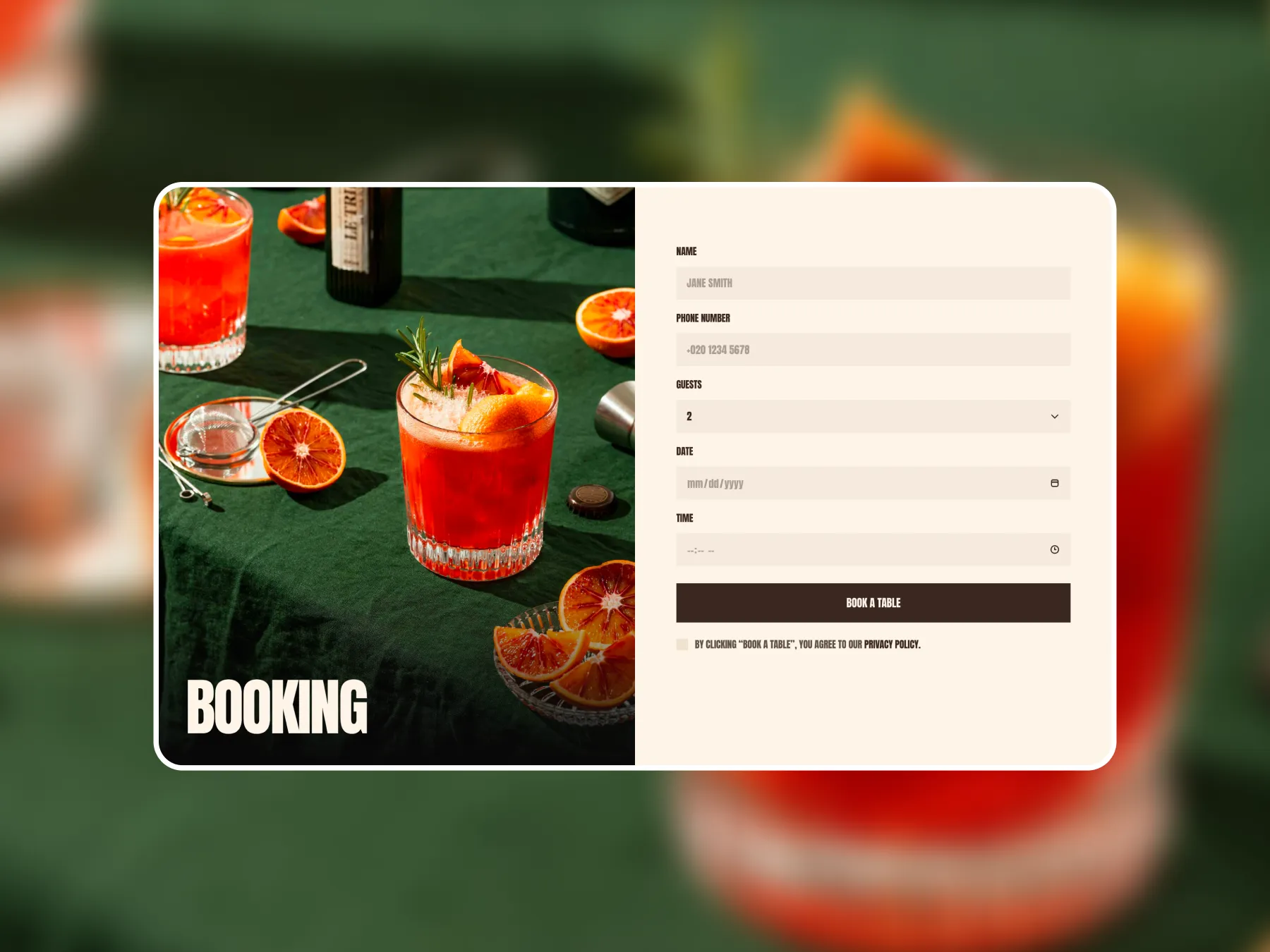
Restaurant booking page with visible reservation form, date and time selection, guest fields, and prominent Book a Table button next to cocktail imagery.

Example of a structured restaurant booking page with visible reservation form and confirmation flow designed for fast and seamless table reservations.

⭢ Live Preview
⭢ View Restaurant Website Template

On social media, reservations often depend on direct messages or links in a profile bio. This adds steps and increases the risk of missed inquiries. A website provides a direct booking path, which supports higher reservation rates and reduces lost opportunities.

Long Term Growth

Digital trends change quickly, and social media engagement can fluctuate from week to week. A post that performs well today may not deliver the same results tomorrow. This makes long term planning difficult when social media is the only channel.

A website contributes to steady growth because it continues to appear in search results over time. As more pages are added and content improves, visibility increases and traffic becomes more stable. This creates a foundation that supports consistent reservations without constant dependence on paid promotion.

Conclusion

A website matters more than ever for restaurants because it gives full control over content, search visibility, and the reservation process. While social media helps attract attention and showcase atmosphere, it cannot replace a structured platform that consistently turns visitors into confirmed bookings.

Restaurants that combine visibility with a clear booking system build a more stable foundation for growth. If you want to understand how a website compares directly to social media, read our article Restaurant Website vs Instagram: What Works Better? to see how each channel influences reservations and long term performance.

Changing Guest Behavior

The way people choose restaurants has changed significantly in recent years. Guests no longer rely only on recommendations or walking past a location. They search online, compare options, read reviews, check menus, and often make a reservation within minutes. In this process, a clear and structured website plays a central role because it gives visitors immediate access to essential information without distractions.

Social media helps create interest, but most guests still turn to search engines when they are ready to make a decision. When someone types phrases like restaurant near me or best sushi restaurant in a specific area, they are actively looking to book. A restaurant with a well organized website has a much higher chance of appearing in these results and capturing visitors who are ready to reserve a table.

Full Control

A website is fully controlled by the restaurant owner. You decide how your brand is presented, how the menu is structured, how reservations are handled, and how information is displayed. There are no sudden changes in visibility caused by external algorithms, and no risk that your communication will be limited by platform updates or account restrictions.

Relying only on social media means building your business presence on rented space. If reach decreases or technical issues occur, reservations may drop without warning. A website provides stability because it remains accessible and consistent regardless of changes on social platforms. This level of control becomes more important as competition increases and marketing costs rise.

Search Visibility

Search engines remain one of the main sources of restaurant traffic. When guests look for dining options in a specific city or neighborhood, they expect clear and reliable information. A structured website with optimized pages such as menu, reservation, and contact improves the chances of appearing in local search results.

Without a website, restaurants depend almost entirely on social media discovery. This limits exposure to users who are actively searching with clear intent to book. A website expands reach beyond followers and helps capture guests who are not yet familiar with the brand but are ready to make a reservation.

Professional Trust

Trust plays a decisive role in booking behavior. A website that clearly displays contact details, opening hours, location, and reservation options signals professionalism and stability. Guests feel more confident when information is organized logically and easy to access.

When a restaurant relies only on Instagram, important details may be scattered across posts, highlights, and captions. This can create confusion and reduce credibility. A dedicated website presents all essential information in one structured environment, making it easier for visitors to decide and complete a booking.

Booking Efficiency

The main goal of a restaurant website is to convert visitors into confirmed reservations. A clear booking button placed in the header and repeated on key sections reduces friction and guides guests directly to the reservation form. Fewer steps and simple fields increase the likelihood that users complete the process.

Restaurant booking page with visible reservation form, date and time selection, guest fields, and prominent Book a Table button next to cocktail imagery.

Example of a structured restaurant booking page with visible reservation form and confirmation flow designed for fast and seamless table reservations.

⭢ Live Preview
⭢ View Restaurant Website Template

On social media, reservations often depend on direct messages or links in a profile bio. This adds steps and increases the risk of missed inquiries. A website provides a direct booking path, which supports higher reservation rates and reduces lost opportunities.

Long Term Growth

Digital trends change quickly, and social media engagement can fluctuate from week to week. A post that performs well today may not deliver the same results tomorrow. This makes long term planning difficult when social media is the only channel.

A website contributes to steady growth because it continues to appear in search results over time. As more pages are added and content improves, visibility increases and traffic becomes more stable. This creates a foundation that supports consistent reservations without constant dependence on paid promotion.

Conclusion

A website matters more than ever for restaurants because it gives full control over content, search visibility, and the reservation process. While social media helps attract attention and showcase atmosphere, it cannot replace a structured platform that consistently turns visitors into confirmed bookings.

Restaurants that combine visibility with a clear booking system build a more stable foundation for growth. If you want to understand how a website compares directly to social media, read our article Restaurant Website vs Instagram: What Works Better? to see how each channel influences reservations and long term performance.

Frequently Asked Questions

Do small restaurants really need a website?

Yes. Even small restaurants benefit from having a website because it improves search visibility, builds trust, and provides a clear booking process. Many guests search online before choosing where to eat, and a website helps capture those reservations.

Can a restaurant rely only on Instagram?

Instagram can attract attention and showcase food and atmosphere, but it does not offer full control over visibility or booking flow. Relying only on social media may limit long term growth and consistent reservations.

What is the main advantage of a restaurant website?

The main advantage is control. A website allows restaurants to manage their menu, reservations, contact information, and structure without depending on platform algorithms, which supports stable and predictable bookings.