
The purpose of the About page
The main purpose of an About page is not to tell a long story or impress visitors with history and awards. Its real goal is to increase trust. When users open this page, they want to confirm that the dealership is legitimate, professional, and easy to work with. If the page feels unclear, overly promotional, or confusing, trust drops immediately.
A strong About page reassures visitors that there are real people behind the business, that the dealership has experience, and that it operates transparently. This confidence supports every other page on the site, especially vehicle listings, financing pages, and contact forms.
Start with a clear introduction
The first section of the About page should clearly state who the dealership is and what it does. Visitors should not have to scroll or read multiple paragraphs to understand this. A short headline and a simple supporting sentence are enough to set context and remove uncertainty.
Avoid vague slogans or emotional language. Instead, focus on clarity and credibility. Mention the dealership name, area of focus, and core value in a calm and direct way. This helps visitors quickly confirm they are in the right place.
Tell a simple story
An About page does not need a long company history. Most visitors are not interested in timelines or detailed background. What matters is a short, readable story that explains how the dealership operates and what it stands for.
A simple story builds trust by showing consistency and intention. Explain why the dealership exists, what it prioritizes, and how it approaches customer relationships. Keep this section concise and structured so it supports confidence rather than distracts from it.
Show real people
Showing the team behind the dealership is one of the strongest trust signals an About page can offer. Real photos, names, and roles help humanize the business and reduce hesitation. Visitors feel more comfortable reaching out when they can see who they will be dealing with.
This section should feel professional and balanced. Avoid large teams, exaggerated titles, or overly casual presentation. A small, focused team with clear roles is often more reassuring than a long list of faces without context.
Explain values without exaggeration
Values matter, but they should be communicated calmly. Instead of bold claims or marketing phrases, explain how the dealership works and what customers can expect during the buying process. Reliability, transparency, and care are more convincing when described simply.
This section works best when it connects values to behavior. Explain how those principles influence service, communication, and long term relationships. This makes the dealership feel dependable rather than promotional.
Use visuals with purpose
Images on the About page should support trust, not draw attention to themselves. Clean vehicle photography, calm settings, and realistic scenes help maintain a professional tone and reinforce credibility. When visuals stay consistent with the overall design and structure of the website, they quietly strengthen confidence instead of distracting from the message.
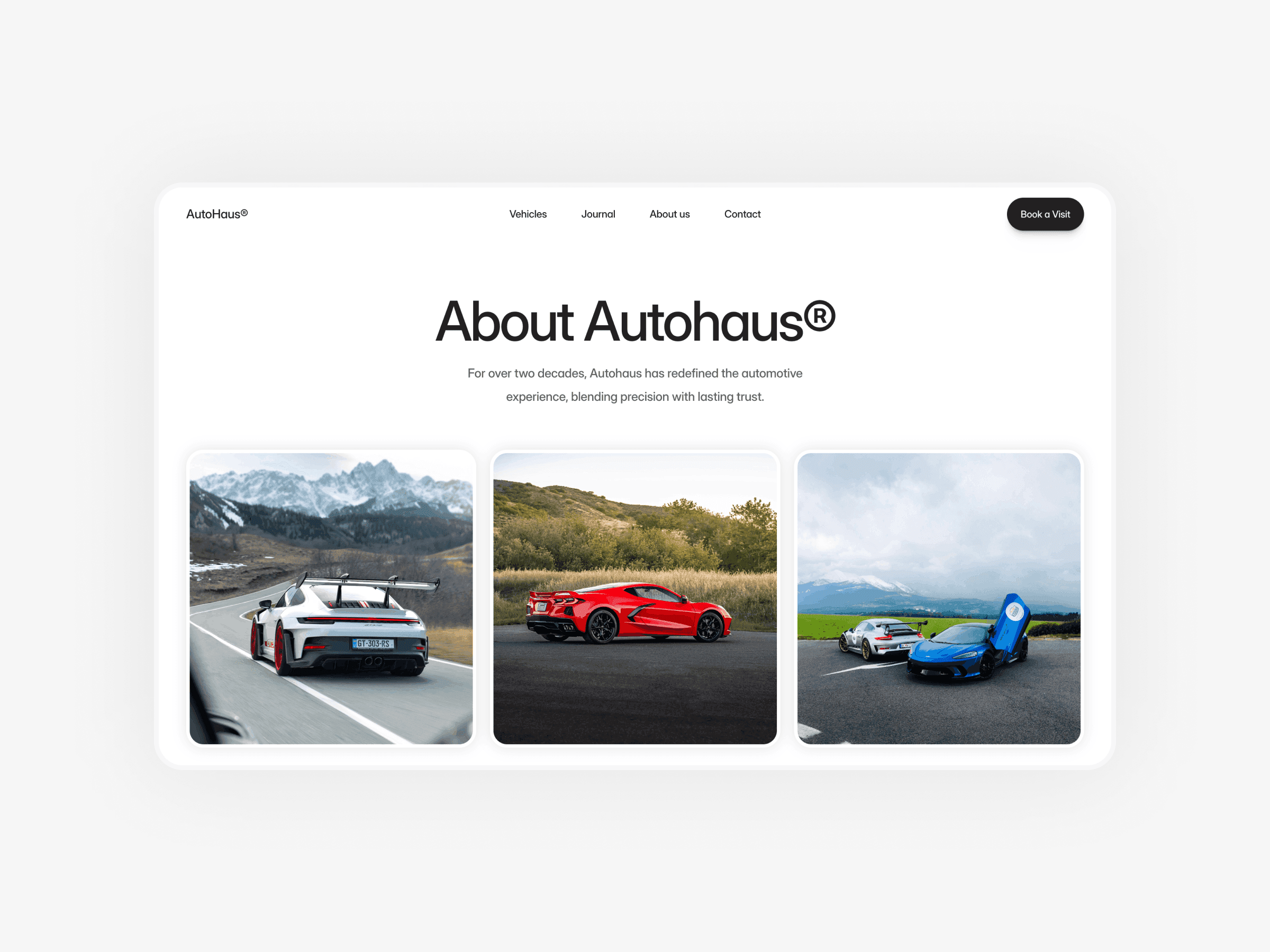
A well structured About page example that uses clean visuals and a focused layout: https://autohaus.framer.website
Keep the page focused
The About page should not try to do everything. Its role is not to sell vehicles directly or explain detailed services. Overloading this page with too much information weakens its impact and makes it harder for visitors to understand the core message.
A focused About page supports the rest of the website by quietly building confidence. When visitors trust the business, they are more likely to explore inventory, financing options, or contact the dealership.
Add a clear call to action
Even though the About page is informational, it should still guide visitors forward. A simple call to action at the end helps connect trust with action. This can be an invitation to view available vehicles, book a visit, or contact the dealership.
The call to action should feel natural and low pressure. It works best when it follows a clear and confident page structure. When visitors reach the end of the About page feeling informed and reassured, a gentle next step feels appropriate and effective.
Conclusion
A well structured About page is not about telling a long story. It is about building trust through clarity, simplicity, and consistency. By starting with a clear introduction, showing real people, explaining values calmly, and keeping the page focused, car dealership websites can strengthen credibility and support conversions.
When the About page feels organized and intentional, it reinforces confidence across the entire website and helps visitors move forward with fewer doubts. To see how this trust then turns into action on key conversion pages, read How to Present Financing and Trade-In Options Clearly, where the next step of the buyer journey is explained in detail.