Why Dealerships Compare Custom vs Templates
Most car dealerships face this decision at the same moment. The current website feels outdated, leads are inconsistent, or the business has grown and needs a more structured online presence. At this point, dealerships usually hear two options. One is a fully custom website built by an agency. The other is a ready-made template adapted to their needs.
This comparison is not about design taste. It is about budget, speed, control, and long term usability. Understanding the real difference helps avoid overpaying, delays, and websites that look good but do not perform.
Custom dealership websites
A custom website is built from scratch, usually by an agency or a freelance team. The main advantage is flexibility. In theory, everything can be designed and structured exactly to match internal processes, branding, and unique ideas.
In practice, custom websites often come with high costs and long timelines. Projects take months, not weeks. Changes require additional budget. Simple updates depend on developers. For many dealerships, the result looks unique but becomes hard to manage day to day. Over time, the website turns into a fixed asset that is expensive to adjust.
Custom solutions make sense for large dealer groups with complex systems, integrations, and in-house teams. For smaller or growing dealerships, this level of complexity is often unnecessary and difficult to justify long term.
Template dealership websites
Template websites are pre-structured solutions designed specifically for car dealerships. They already include the key pages, layouts, and user flows needed to present inventory, build trust, and collect inquiries.
The main benefit of templates is speed and clarity. A dealership can launch quickly, test performance, and make improvements without starting from zero. Costs are predictable and significantly lower than custom builds. Editing content and images is usually simple and does not require technical skills.
A good template is not generic. It is structured around real dealership needs and buyer behavior. When done right, a template focuses less on visual uniqueness and more on conversion, clarity, and usability.
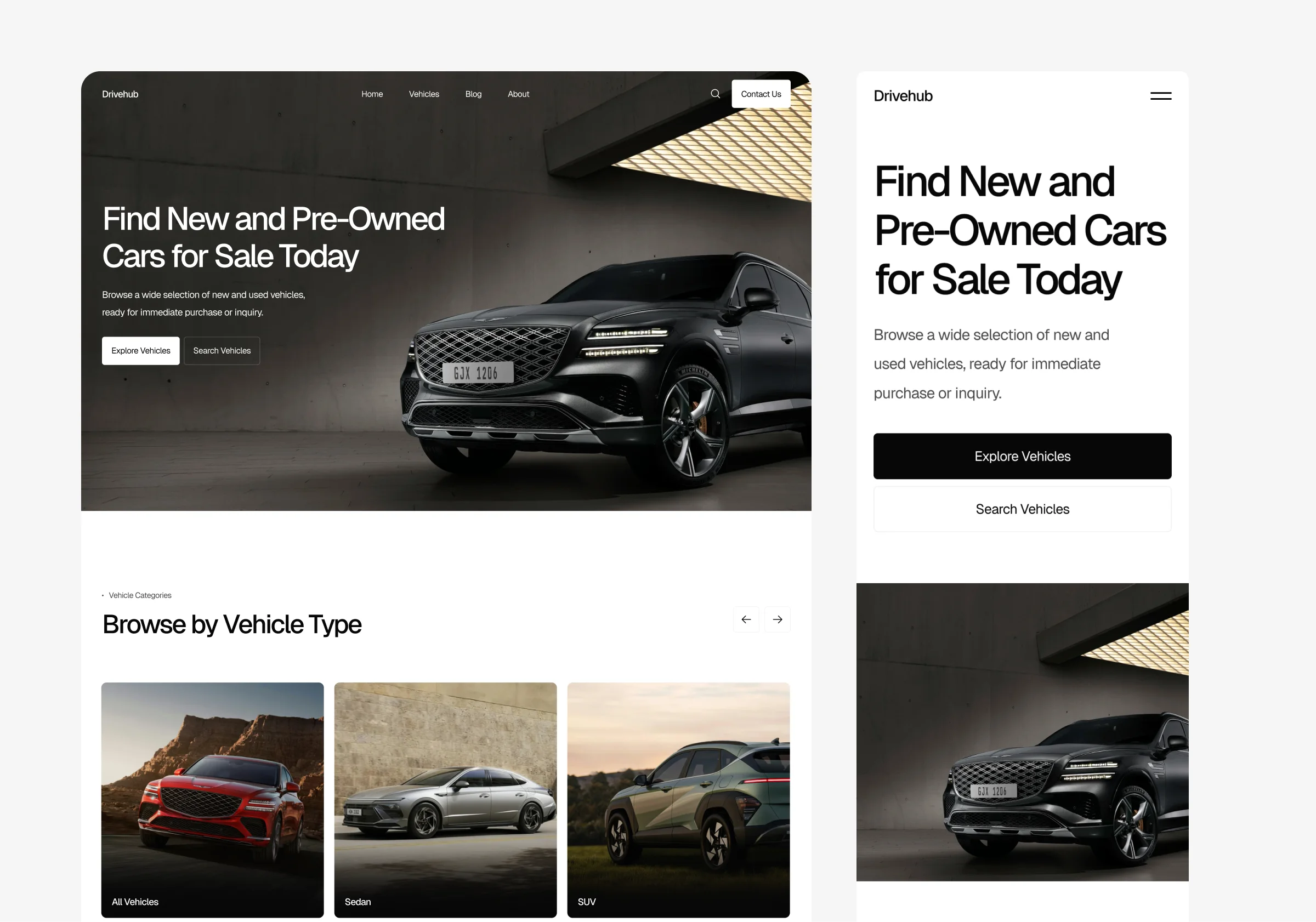
Example of a structured car dealership website template: https://drivehub-template.framer.website
Cost and time comparison
Custom websites usually require a large upfront investment. Design, development, revisions, and project management add up quickly. Launch timelines often stretch due to feedback cycles and technical complexity.
Template websites reduce both cost and time. The structure is already tested, so the focus shifts to content and setup instead of rebuilding common elements. For dealerships that want results sooner rather than later, templates offer a more efficient path.
Maintenance and control
After launch, maintenance becomes critical. Custom websites often rely on external teams for updates, fixes, or changes. This slows down marketing and increases long term expenses.
Templates are built to be managed internally. Updating inventory pages, changing text, or adding sections is straightforward. This gives dealerships more control and flexibility without ongoing costs or delays.
Design vs performance
Custom websites often prioritize visual uniqueness. While this can look impressive, it does not automatically improve performance. Buyers care more about clarity, trust, and ease of navigation than complex layouts.
Template websites are usually designed with performance in mind. Clear structure, predictable layouts, and focused calls to action help visitors move forward without confusion. For most dealerships, performance matters more than standing out visually.
When a template makes more sense
For most small to mid-sized car dealerships, a template solution is the practical choice. It allows faster launch, lower costs, and easier management. Templates are especially effective when the goal is to generate leads, not to experiment with design concepts.
A well built template provides enough flexibility to feel professional and trustworthy while avoiding unnecessary complexity. It supports growth without locking the dealership into expensive long term commitments.
Conclusion
Choosing between a custom and a template car dealership website is a business decision, not a design preference. Custom websites offer flexibility but come with higher costs, longer timelines, and dependencies. Template websites offer speed, control, and proven structure.
For most dealerships, a template solution provides everything needed to build trust, present inventory clearly, and collect inquiries effectively. When clarity and performance matter more than uniqueness, templates are often the smarter choice. To understand which elements build confidence across the entire site, see What Makes a Car Dealership Website Trustworthy, where trust-focused structure is explained in detail.