
{ "@context": "https://schema.org", "@type": "FAQPage", "mainEntity": [ { "@type": "Question", "name": "What makes a car dealership website trustworthy?", "acceptedAnswer": { "@type": "Answer", "text": "A car dealership website becomes trustworthy when it clearly shows who the business is, where it operates, and how it works. Clear ownership, complete inventory, detailed vehicle pages, and consistent information help buyers feel confident and safe." } }, { "@type": "Question", "name": "Why is location important on dealership websites?", "acceptedAnswer": { "@type": "Answer", "text": "Clear location information shows that the dealership is a real, accountable business serving a specific area. Buyers are more likely to trust a website when the city and physical presence are visible and easy to confirm." } }, { "@type": "Question", "name": "How does inventory presentation affect buyer trust?", "acceptedAnswer": { "@type": "Answer", "text": "Well organized and complete inventory listings signal professionalism and control. When buyers can easily browse vehicles with clear details and consistent layouts, they are more likely to trust the dealership and continue exploring." } }, { "@type": "Question", "name": "Why does consistency across pages matter for trust?", "acceptedAnswer": { "@type": "Answer", "text": "Consistency helps buyers feel oriented and confident. When navigation, titles, contact details, and actions stay the same across pages, the website feels reliable and professionally managed." } } ] }

February 2, 2026

What Makes a Car Dealership Website Trustworthy

What Makes a Car Dealership Website Trustworthy

Buyers look for clear signals that confirm a car dealership is real, professional, and reliable. This article explains which website elements create trust and why they matter for buyer decisions.

Buyers look for clear signals that confirm a car dealership is real, professional, and reliable. This article explains which website elements create trust and why they matter for buyer decisions.

A gray sports car driving at high speed on a road, with blurred palm trees and a clear sky in the background.

Trust Is Built Through Proof

A trustworthy car dealership website does not rely on promises or persuasive language. It builds trust by showing clear proof that the business is real, active, and well organized. Buyers want to verify information through what they see on the page, not interpret marketing claims or emotional statements.

Trust grows when a website answers practical questions directly and early. When location, inventory focus, and next steps are visible without effort, buyers feel grounded and in control. Proof based websites reduce uncertainty by making the dealership easy to understand before any contact is made.

Clear Ownership and Location

One of the strongest trust signals is clear ownership and location. Buyers want to see the dealership name and city immediately, not hidden deep in a footer or contact page. A website that clearly states where the business operates feels more credible than one that stays generic and easier to verify for visitors.

When ownership and location are visible from the start, the dealership feels accountable. Buyers know there is a real place behind the website and that the business serves a specific area. This clarity removes doubt and prevents the website from feeling like a placeholder or template built without local context or responsibility.

Complete Inventory Information

Inventory quality strongly affects trust. Buyers expect vehicle listings to feel complete, current, and intentionally organized. Clear availability, consistent layouts, and a visible focus on vehicles help visitors understand what the dealership actually offers.

An organized inventory signals operational discipline. When listings are structured and easy to browse, buyers assume the dealership manages its vehicles carefully. This sense of order builds confidence and makes continued browsing feel worthwhile rather than risky.

Detailed Vehicle Pages

Vehicle pages are where trust is tested most directly. Buyers look for specifications, mileage, condition details, and images that clearly represent the vehicle. Pages that feel rushed or incomplete raise questions about transparency.

Detailed vehicle pages show confidence in the inventory. When information is presented clearly and without exaggeration, buyers feel respected. This clarity helps them evaluate options calmly and reduces the need for immediate reassurance through contact.

Consistent Information Across Pages

Trust breaks quickly when information changes from page to page. Navigation labels, page titles, contact details, and calls to action should remain consistent throughout the website. Inconsistencies create friction and make the business feel disorganized.

Consistency shows control. A website that repeats the same structure and information patterns across sections feels predictable and reliable. Buyers associate this stability with professional standards and responsible management.
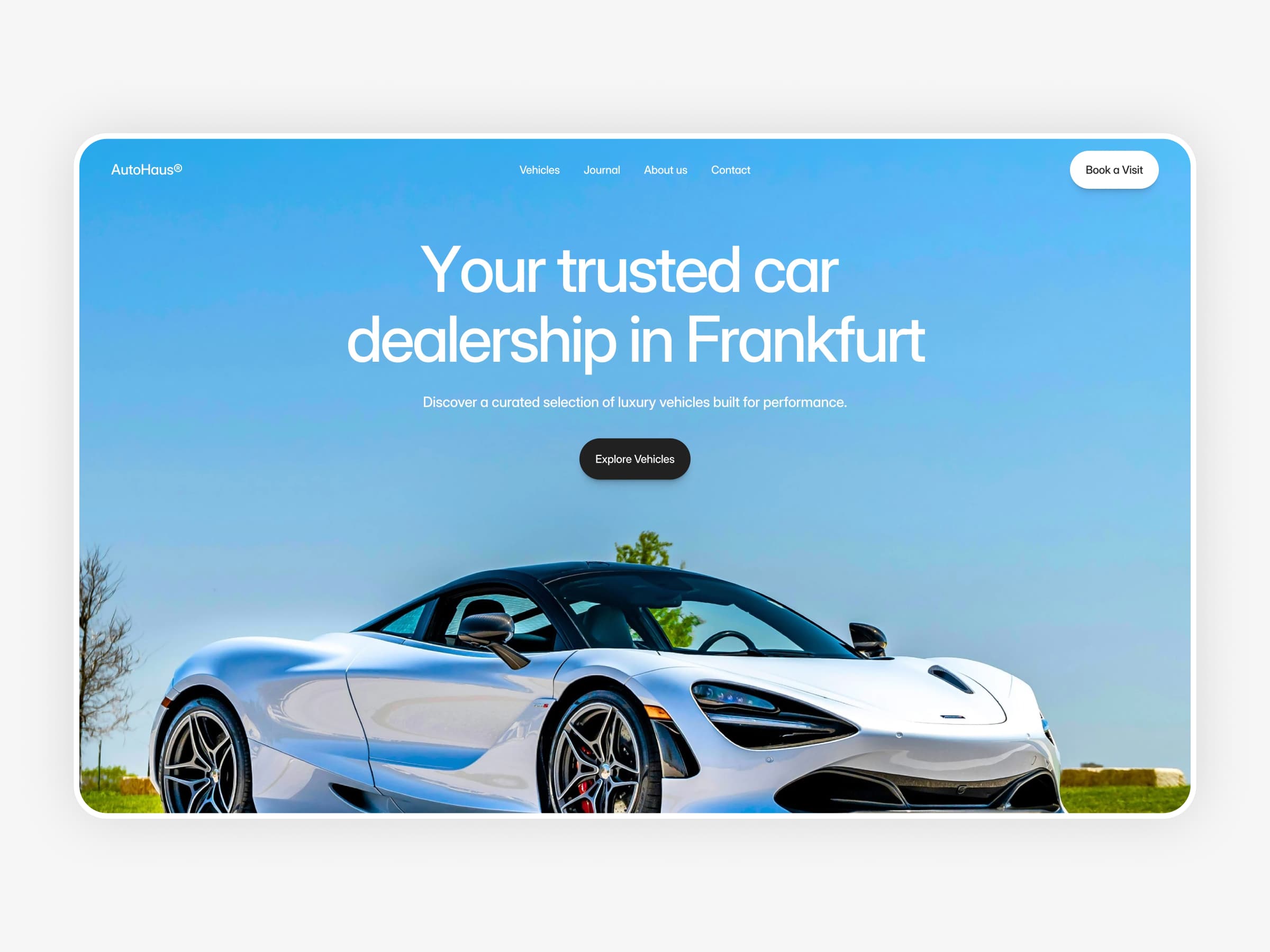

Car dealership website homepage showing consistent layout, navigation, and messaging across pages

Good example of consistent layout and information across the website: https://autohaus.framer.website

Clear Contact Paths

A trustworthy website makes contact options visible without forcing them too early. Buyers should always know how to get in touch, while still feeling free to explore inventory first. Contact actions should be clear, simple, and easy to understand.

Clear contact paths reduce hesitation. When buyers know exactly what will happen after clicking a button or submitting a form, they feel safer taking that step. Transparency at this stage reinforces the impression that the dealership operates openly and professionally.

Conclusion

A car dealership website earns trust by being clear, structured, and transparent. Visible ownership, complete inventory, detailed vehicle pages, consistent information, and understandable contact paths help buyers verify the business and feel confident moving forward without unnecessary hesitation or confusion.

Trust is not created by strong claims or visual effects. It comes from structure and clarity that allow buyers to understand the dealership and make decisions without pressure. If you want to see how clear structure also improves browsing and usability, read How Vehicle Category Pages Improve Inventory Navigation, where this topic is explored in more detail.

Trust Is Built Through Proof

A trustworthy car dealership website does not rely on promises or persuasive language. It builds trust by showing clear proof that the business is real, active, and well organized. Buyers want to verify information through what they see on the page, not interpret marketing claims or emotional statements.

Trust grows when a website answers practical questions directly and early. When location, inventory focus, and next steps are visible without effort, buyers feel grounded and in control. Proof based websites reduce uncertainty by making the dealership easy to understand before any contact is made.

Clear Ownership and Location

One of the strongest trust signals is clear ownership and location. Buyers want to see the dealership name and city immediately, not hidden deep in a footer or contact page. A website that clearly states where the business operates feels more credible than one that stays generic and easier to verify for visitors.

When ownership and location are visible from the start, the dealership feels accountable. Buyers know there is a real place behind the website and that the business serves a specific area. This clarity removes doubt and prevents the website from feeling like a placeholder or template built without local context or responsibility.

Complete Inventory Information

Inventory quality strongly affects trust. Buyers expect vehicle listings to feel complete, current, and intentionally organized. Clear availability, consistent layouts, and a visible focus on vehicles help visitors understand what the dealership actually offers.

An organized inventory signals operational discipline. When listings are structured and easy to browse, buyers assume the dealership manages its vehicles carefully. This sense of order builds confidence and makes continued browsing feel worthwhile rather than risky.

Detailed Vehicle Pages

Vehicle pages are where trust is tested most directly. Buyers look for specifications, mileage, condition details, and images that clearly represent the vehicle. Pages that feel rushed or incomplete raise questions about transparency.

Detailed vehicle pages show confidence in the inventory. When information is presented clearly and without exaggeration, buyers feel respected. This clarity helps them evaluate options calmly and reduces the need for immediate reassurance through contact.

Consistent Information Across Pages

Trust breaks quickly when information changes from page to page. Navigation labels, page titles, contact details, and calls to action should remain consistent throughout the website. Inconsistencies create friction and make the business feel disorganized.

Consistency shows control. A website that repeats the same structure and information patterns across sections feels predictable and reliable. Buyers associate this stability with professional standards and responsible management.


Car dealership website homepage showing consistent layout, navigation, and messaging across pages

Good example of consistent layout and information across the website: https://autohaus.framer.website

Clear Contact Paths

A trustworthy website makes contact options visible without forcing them too early. Buyers should always know how to get in touch, while still feeling free to explore inventory first. Contact actions should be clear, simple, and easy to understand.

Clear contact paths reduce hesitation. When buyers know exactly what will happen after clicking a button or submitting a form, they feel safer taking that step. Transparency at this stage reinforces the impression that the dealership operates openly and professionally.

Conclusion

A car dealership website earns trust by being clear, structured, and transparent. Visible ownership, complete inventory, detailed vehicle pages, consistent information, and understandable contact paths help buyers verify the business and feel confident moving forward without unnecessary hesitation or confusion.

Trust is not created by strong claims or visual effects. It comes from structure and clarity that allow buyers to understand the dealership and make decisions without pressure. If you want to see how clear structure also improves browsing and usability, read How Vehicle Category Pages Improve Inventory Navigation, where this topic is explored in more detail.

Frequently Asked Questions

What makes a car dealership website trustworthy?

A car dealership website becomes trustworthy when it clearly shows who the business is, where it operates, and how it works. Clear ownership, complete inventory, detailed vehicle pages, and consistent information help buyers feel confident and safe.

Why is location important on dealership websites?

Clear location information shows that the dealership is a real, accountable business serving a specific area. Buyers are more likely to trust a website when the city and physical presence are visible and easy to confirm.

How does inventory presentation affect buyer trust?

Well organized and complete inventory listings signal professionalism and control. When buyers can easily browse vehicles with clear details and consistent layouts, they are more likely to trust the dealership and continue exploring.

Why does consistency across pages matter for trust?

Consistency helps buyers feel oriented and confident. When navigation, titles, contact details, and actions stay the same across pages, the website feels reliable and professionally managed.