{ "@context": "https://schema.org", "@type": "FAQPage", "mainEntity": [ { "@type": "Question", "name": "How fast should a restaurant website load?", "acceptedAnswer": { "@type": "Answer", "text": "A restaurant website should ideally load within two to three seconds. Faster loading improves user experience and reduces the risk of visitors leaving before viewing the menu or booking a table." } }, { "@type": "Question", "name": "Does website speed really affect reservations?", "acceptedAnswer": { "@type": "Answer", "text": "Yes. Slow websites increase bounce rates and reduce the number of visitors who reach the reservation page. Faster performance improves engagement and supports higher booking rates." } }, { "@type": "Question", "name": "How can I check my restaurant website speed?", "acceptedAnswer": { "@type": "Answer", "text": "You can test your website using free tools such as Google PageSpeed Insights. These tools show loading performance and provide suggestions for improvement." } }, { "@type": "Question", "name": "What slows down restaurant websites the most?", "acceptedAnswer": { "@type": "Answer", "text": "Large image files, background videos, too many scripts, and unoptimized design elements are common causes of slow loading. Compressing images and simplifying layout often improves performance significantly." } } ] }

February 25, 2026

How Fast Websites Affect Restaurant Bookings

How Fast Websites Affect Restaurant Bookings

Website speed directly affects restaurant reservations, customer behavior, and search visibility. This article explains how loading time impacts bookings and how owners can avoid losing potential guests.

Website speed directly affects restaurant reservations, customer behavior, and search visibility. This article explains how loading time impacts bookings and how owners can avoid losing potential guests.

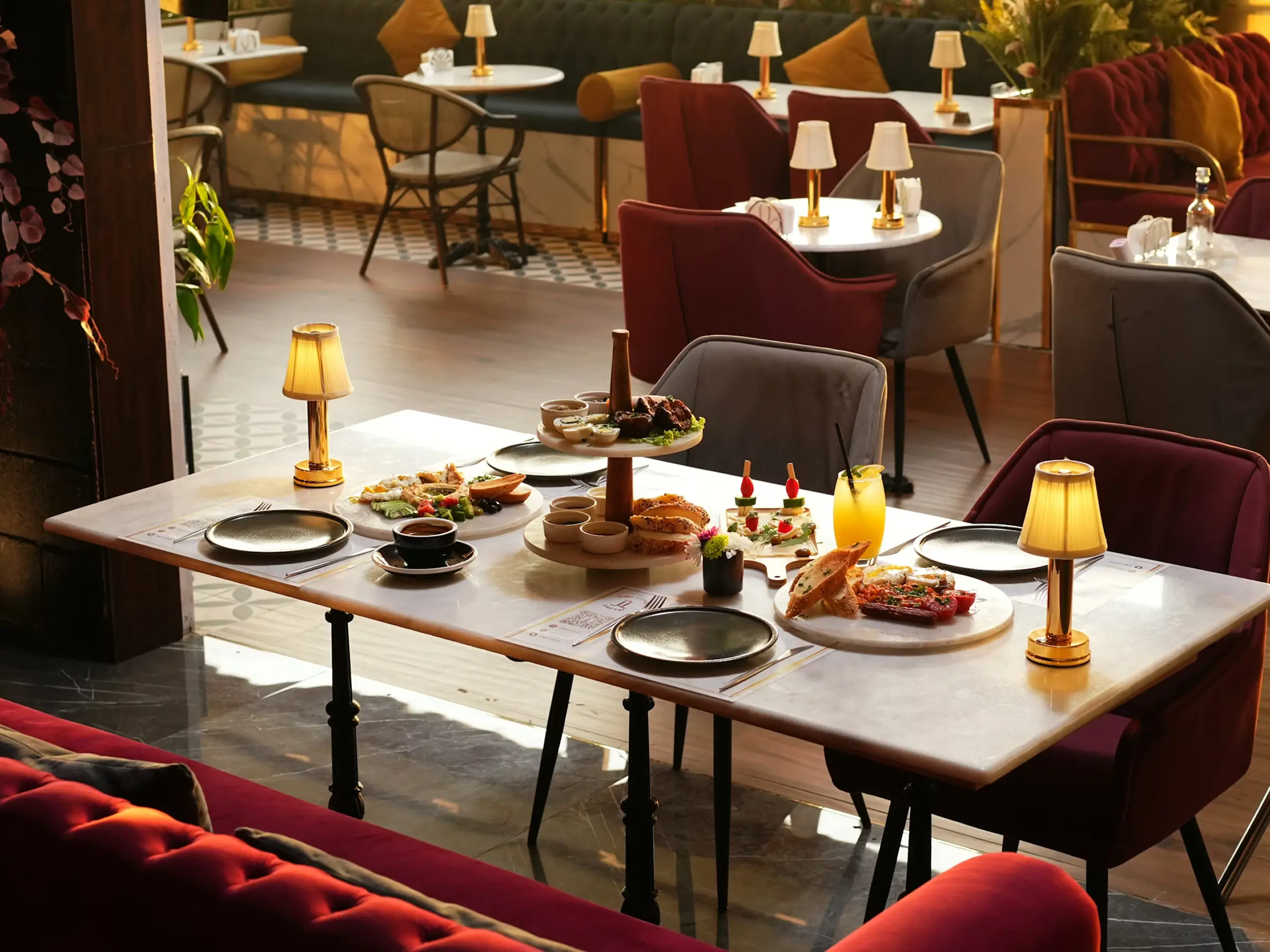
Modern restaurant interior with elegant table setting, plated dishes, warm table lamps, and comfortable seating creating a welcoming dining atmosphere.

Introduction

When people search for a restaurant, they are usually ready to make a decision quickly. They open a website to check the menu, see photos, confirm opening hours, and often book a table within minutes. If the website loads slowly, most visitors will not wait. They close the page and choose another restaurant. Speed is not a technical detail for developers. It directly affects how many guests complete a reservation.

Why Speed Matters

Modern users expect websites to load almost instantly. If a restaurant website takes more than a few seconds to appear, visitors begin to lose trust and patience. Many searches happen on mobile devices while people are walking, traveling, or comparing nearby restaurants. In these situations, even a small delay feels frustrating.

A fast website creates a sense of professionalism and reliability, while a slow one signals poor quality before the guest even sees the menu. First impressions are formed quickly, and performance plays a key role in how trustworthy and established a restaurant appears online.

User Behavior

Website speed directly influences how people behave on a page. When loading is delayed, bounce rates increase and users leave before exploring the menu or reading about the concept. This means fewer visitors reach the reservation button.

Even a one or two second delay can reduce engagement because people quickly assume the experience will continue to feel slow. Fewer page views and shorter visit duration lead to fewer completed bookings. Slow loading leads to early exits, and early exits lead to fewer reservations and lower overall conversion rates.

Mobile Impact

Restaurants receive a large share of traffic from mobile devices. People search for places to eat while already outside or planning the same day. In these situations, decisions are made quickly and expectations for speed are high.
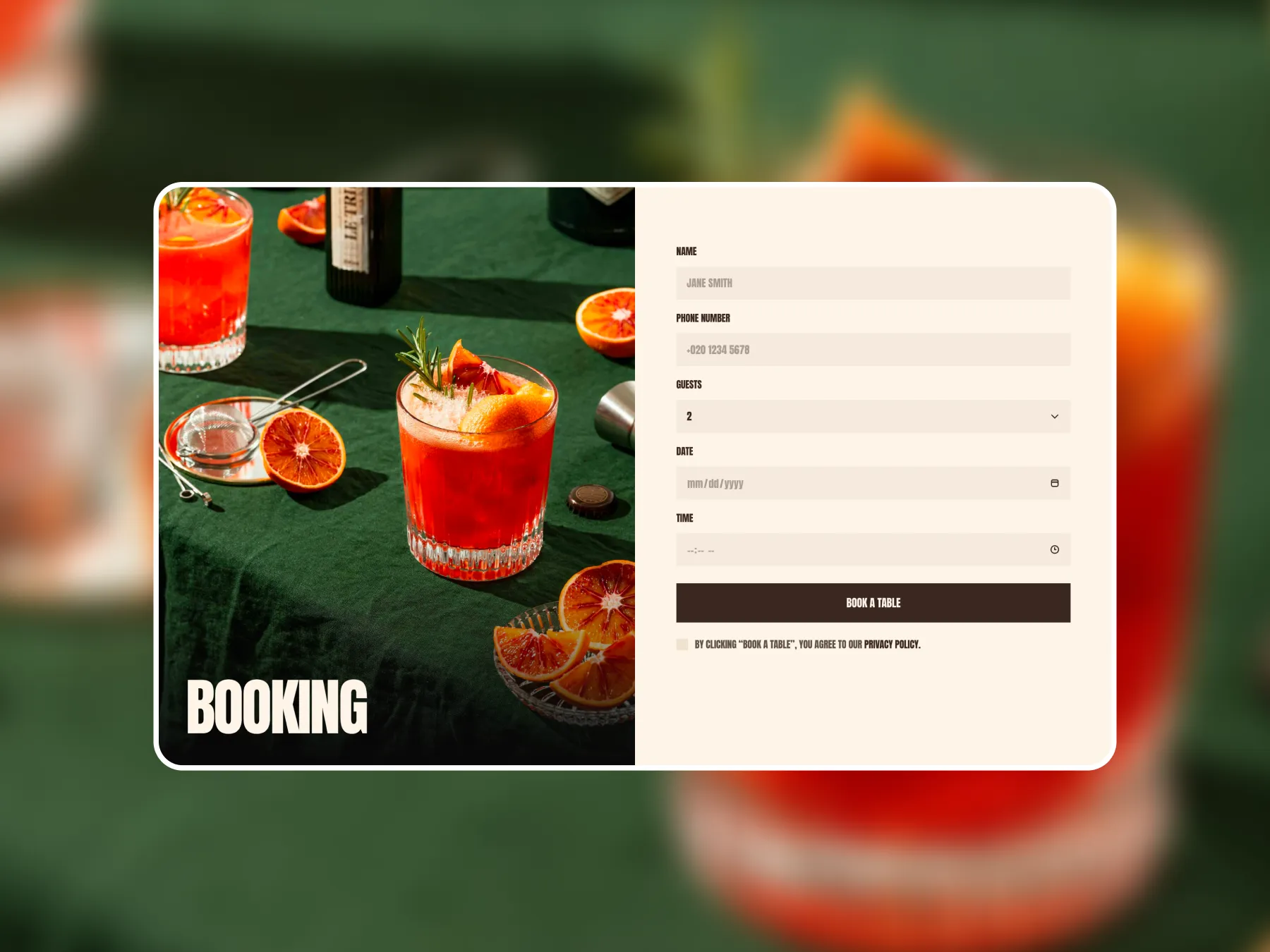
Restaurant mobile booking page with reservation form, date and time selection, guest input fields, and prominent “Book a Table” button displayed next to cocktail imagery.

Example of a responsive restaurant website where mobile performance is fast, smooth, and optimized for easy table booking (Marlund — Restaurant Website Template)

If the mobile version of a restaurant website loads slowly, the visitor rarely retries. Instead, they return to search results and open a competitor’s site. Fast mobile performance increases the chances that users scroll through the menu, check availability, and tap the booking button without hesitation or unnecessary delays.

Search Visibility

Search engines such as Google consider website performance as part of overall page quality. While speed alone does not guarantee high rankings, very slow websites often struggle to compete against faster sites offering similar menus and content.

When two restaurants provide comparable information, the website that loads faster usually delivers a better experience, which search engines are more likely to favor. Better visibility brings more visitors, and more visitors create more opportunities for reservations.

Financial Impact

The impact of speed becomes clearer when looking at numbers. Imagine a restaurant website receives one thousand visitors per month. If twenty percent leave because the site loads too slowly, that means two hundred potential guests disappear before exploring the menu.

Even if only five to ten percent of those visitors would have made a reservation, the restaurant could be losing ten to twenty bookings each month. Over time, this translates into meaningful lost revenue, especially for restaurants with higher average spending per table.

Common Problems

Many restaurant websites become slow due to large image files, heavy video backgrounds, unoptimized design elements, and outdated hosting. High resolution food photography is important, but if images are not compressed properly, they can increase loading time.

Auto playing videos in hero sections may look impressive, yet they often delay the first visible content. Too many scripts and third party tools can also slow performance without adding real value to the booking process.

How to Improve Speed

Improving speed does not require complex technical skills. Restaurant owners can optimize images before uploading them, avoid unnecessary animations, limit heavy background videos, and choose reliable hosting.

Clear page structure also helps because visitors find what they need faster and the site loads more efficiently. Modern platforms with built in performance optimization make it easier to maintain good speed without constant maintenance work.

Structured Websites

A well structured restaurant website tends to load faster because it avoids unnecessary design elements and focuses on clarity. Pages such as homepage, menu, reservation, and contact are organized logically, which improves both user experience and performance. Structured templates built for restaurants already include optimized layouts and responsive behavior, reducing the risk of slow loading.

If you want to see how this works in practice, you can explore restaurant website templates designed with performance and clear booking flow in mind. When speed and structure work together, guests move smoothly from discovery to reservation.

Conclusion

Website speed directly affects restaurant bookings by influencing user behavior, search visibility, and overall trust. Slow loading pages increase exits and reduce the number of visitors who reach the reservation form. Fast websites create confidence, improve engagement, and support higher booking rates.

For restaurant owners, investing in performance is not about technology. It is about protecting revenue and ensuring that every potential guest has a smooth path to reserving a table. If you want to understand how page structure supports this process, you can also read our guide on Key Pages for a High Performing Restaurant Website, where we explain how proper layout improves both visibility and reservations.

Introduction

When people search for a restaurant, they are usually ready to make a decision quickly. They open a website to check the menu, see photos, confirm opening hours, and often book a table within minutes. If the website loads slowly, most visitors will not wait. They close the page and choose another restaurant. Speed is not a technical detail for developers. It directly affects how many guests complete a reservation.

Why Speed Matters

Modern users expect websites to load almost instantly. If a restaurant website takes more than a few seconds to appear, visitors begin to lose trust and patience. Many searches happen on mobile devices while people are walking, traveling, or comparing nearby restaurants. In these situations, even a small delay feels frustrating.

A fast website creates a sense of professionalism and reliability, while a slow one signals poor quality before the guest even sees the menu. First impressions are formed quickly, and performance plays a key role in how trustworthy and established a restaurant appears online.

User Behavior

Website speed directly influences how people behave on a page. When loading is delayed, bounce rates increase and users leave before exploring the menu or reading about the concept. This means fewer visitors reach the reservation button.

Even a one or two second delay can reduce engagement because people quickly assume the experience will continue to feel slow. Fewer page views and shorter visit duration lead to fewer completed bookings. Slow loading leads to early exits, and early exits lead to fewer reservations and lower overall conversion rates.

Mobile Impact

Restaurants receive a large share of traffic from mobile devices. People search for places to eat while already outside or planning the same day. In these situations, decisions are made quickly and expectations for speed are high.

Restaurant mobile booking page with reservation form, date and time selection, guest input fields, and prominent “Book a Table” button displayed next to cocktail imagery.

Example of a responsive restaurant website where mobile performance is fast, smooth, and optimized for easy table booking (Marlund — Restaurant Website Template)

If the mobile version of a restaurant website loads slowly, the visitor rarely retries. Instead, they return to search results and open a competitor’s site. Fast mobile performance increases the chances that users scroll through the menu, check availability, and tap the booking button without hesitation or unnecessary delays.

Search Visibility

Search engines such as Google consider website performance as part of overall page quality. While speed alone does not guarantee high rankings, very slow websites often struggle to compete against faster sites offering similar menus and content.

When two restaurants provide comparable information, the website that loads faster usually delivers a better experience, which search engines are more likely to favor. Better visibility brings more visitors, and more visitors create more opportunities for reservations.

Financial Impact

The impact of speed becomes clearer when looking at numbers. Imagine a restaurant website receives one thousand visitors per month. If twenty percent leave because the site loads too slowly, that means two hundred potential guests disappear before exploring the menu.

Even if only five to ten percent of those visitors would have made a reservation, the restaurant could be losing ten to twenty bookings each month. Over time, this translates into meaningful lost revenue, especially for restaurants with higher average spending per table.

Common Problems

Many restaurant websites become slow due to large image files, heavy video backgrounds, unoptimized design elements, and outdated hosting. High resolution food photography is important, but if images are not compressed properly, they can increase loading time.

Auto playing videos in hero sections may look impressive, yet they often delay the first visible content. Too many scripts and third party tools can also slow performance without adding real value to the booking process.

How to Improve Speed

Improving speed does not require complex technical skills. Restaurant owners can optimize images before uploading them, avoid unnecessary animations, limit heavy background videos, and choose reliable hosting.

Clear page structure also helps because visitors find what they need faster and the site loads more efficiently. Modern platforms with built in performance optimization make it easier to maintain good speed without constant maintenance work.

Structured Websites

A well structured restaurant website tends to load faster because it avoids unnecessary design elements and focuses on clarity. Pages such as homepage, menu, reservation, and contact are organized logically, which improves both user experience and performance. Structured templates built for restaurants already include optimized layouts and responsive behavior, reducing the risk of slow loading.

If you want to see how this works in practice, you can explore restaurant website templates designed with performance and clear booking flow in mind. When speed and structure work together, guests move smoothly from discovery to reservation.

Conclusion

Website speed directly affects restaurant bookings by influencing user behavior, search visibility, and overall trust. Slow loading pages increase exits and reduce the number of visitors who reach the reservation form. Fast websites create confidence, improve engagement, and support higher booking rates.

For restaurant owners, investing in performance is not about technology. It is about protecting revenue and ensuring that every potential guest has a smooth path to reserving a table. If you want to understand how page structure supports this process, you can also read our guide on Key Pages for a High Performing Restaurant Website, where we explain how proper layout improves both visibility and reservations.

Frequently Asked Questions

How fast should a restaurant website load?

A restaurant website should ideally load within two to three seconds. Faster loading improves user experience and reduces the risk of visitors leaving before viewing the menu or booking a table.

Does website speed really affect reservations?

Yes. Slow websites increase bounce rates and reduce the number of visitors who reach the reservation page. Faster performance improves engagement and supports higher booking rates.

How can I check my restaurant website speed?

You can test your website using free tools such as Google PageSpeed Insights. These tools show loading performance and provide suggestions for improvement.

What slows down restaurant websites the most?

Large image files, background videos, too many scripts, and unoptimized design elements are common causes of slow loading. Compressing images and simplifying layout often improves performance significantly.