
{ "@context": "https://schema.org", "@type": "FAQPage", "mainEntity": [ { "@type": "Question", "name": "How much does a car dealership website usually cost?", "acceptedAnswer": { "@type": "Answer", "text": "A car dealership website can cost from a few hundred dollars for a template setup to 30,000 dollars or more for a custom build, depending on complexity and integrations." } }, { "@type": "Question", "name": "Why are custom dealership websites so expensive?", "acceptedAnswer": { "@type": "Answer", "text": "Custom websites require design from scratch, development, revisions, and often ongoing developer support, which increases both initial and long term costs." } }, { "@type": "Question", "name": "Are template websites reliable for dealerships?", "acceptedAnswer": { "@type": "Answer", "text": "Yes. A well structured template can support inventory, trust elements, and inquiry forms effectively at a much lower cost than custom development." } }, { "@type": "Question", "name": "What ongoing costs should dealerships expect?", "acceptedAnswer": { "@type": "Answer", "text": "Dealerships should budget for hosting, domain renewal, maintenance, and optional marketing tools, which can add monthly expenses beyond the initial build." } } ] }

February 11, 2026

How Much Does a Car Dealership Website Cost?

How Much Does a Car Dealership Website Cost?

A clear breakdown of car dealership website costs, including custom builds, templates, and ongoing expenses. This guide explains what affects pricing and how to choose the most cost effective option.

A clear breakdown of car dealership website costs, including custom builds, templates, and ongoing expenses. This guide explains what affects pricing and how to choose the most cost effective option.

White luxury sedan parked on a quiet street surrounded by trees and modern residential buildings in warm evening light.

Why costs vary

The cost of a car dealership website can range from a few hundred dollars to tens of thousands. The difference depends on how the site is built, who builds it, and how complex the structure is. Many dealerships receive very different quotes because agencies include design, development, revisions, integrations, and long term support in different ways. Without understanding what is included, it is easy to overpay for features that do not directly increase inquiries or vehicle sales.

The real question is not just how much a website costs, but what the dealership actually needs. A small dealership with standard inventory and basic lead forms does not require the same investment as a large dealer group with multiple locations and custom systems. The structure and purpose of the site should define the budget, not visual preferences alone.

Custom website costs

A fully custom dealership website built by an agency usually costs between 5,000 and 30,000 dollars, and sometimes more. This price often includes design from scratch, custom development, revisions, and project management. If special integrations are required such as inventory feeds, CRM systems, or finance applications, the cost increases further.

Custom projects also require time. Development can take several months, especially when feedback cycles are long or when technical issues appear. After launch, updates and changes often depend on the same agency or developer, which creates ongoing monthly or hourly costs. For some large dealerships this approach makes sense, but for many small to mid sized businesses it creates unnecessary financial pressure.

Template website costs

Template based websites are significantly more affordable. A high quality dealership template usually costs between 50 and 300 dollars for the template itself, with additional costs for hosting and a domain name. Even when professional setup or customization is added, the total investment is often a small fraction of a custom build.

Templates reduce both cost and risk because the structure is already designed and tested. Instead of paying for weeks of design exploration, dealerships can focus on content, vehicle photos, and clear contact options. Editing text, updating inventory, and adjusting sections can usually be done internally without technical skills, which lowers long term expenses.

Ongoing expenses

The initial build is not the only cost to consider. Every dealership website includes ongoing expenses such as hosting, domain renewal, maintenance, and possible marketing tools. Hosting can range from 10 to 50 dollars per month depending on the platform and traffic. Additional tools for analytics, chat, or advertising may add to the total.

Custom websites often include higher maintenance costs because changes require developer support. Template websites are typically easier to manage, which reduces dependency and keeps monthly costs predictable. Over time, this difference can save thousands of dollars.

What actually increases cost

Several factors raise the price of a dealership website. Complex inventory filters, advanced integrations with third party systems, custom design elements, and multilingual content all require more time and development. The more unique the build, the more expensive and slower it becomes.

However, complexity does not always improve performance. A clear structure, readable vehicle pages, visible contact actions, and strong trust elements are what drive inquiries. Many dealerships can achieve these goals without investing in heavy customization.

Example of a cost effective approach

Below is an example of a structured car dealership website template designed to support inventory browsing and lead generation without unnecessary development costs.
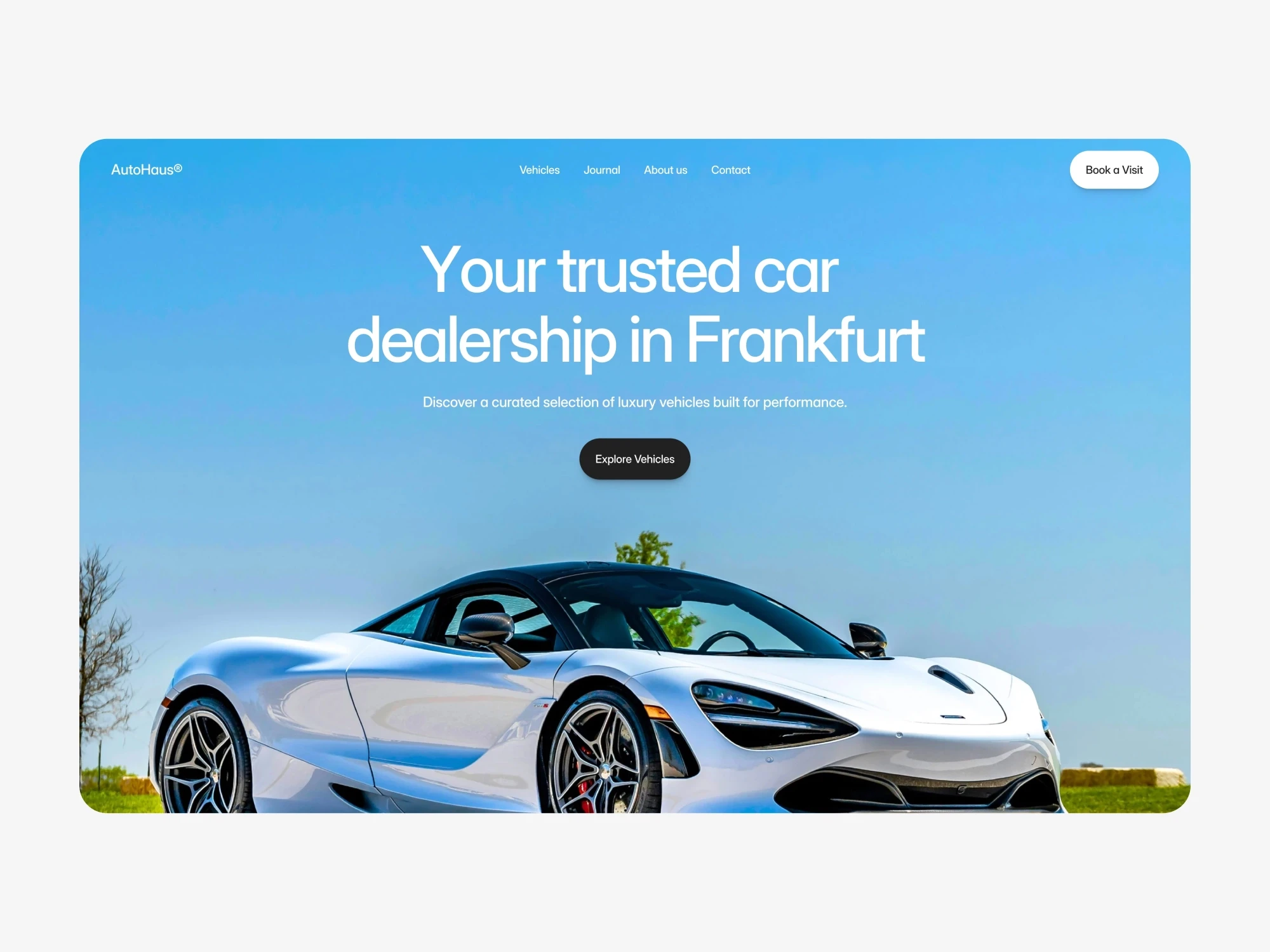

Structured car dealership website template homepage with clear hero section, vehicle navigation, and call to action button

Example of a structured car dealership website template: https://autohaus.framer.website

This type of template shows how a dealership can launch quickly with a clear layout, organized vehicle pages, and simple inquiry forms. Instead of spending most of the budget on complex design work, the focus remains on presenting vehicles clearly and guiding visitors toward contact.

How to choose wisely

Choosing the right option depends on the size and goals of the dealership. If the business requires complex systems and has a large internal team, a custom solution may be justified. If the goal is to generate inquiries, manage inventory easily, and control costs, a structured template is often the smarter choice.

The key is to align spending with expected results. A website should support daily sales activity, not become a long term financial burden. Clear structure and usability usually deliver better return than visual uniqueness alone.

Conclusion

The cost of a car dealership website depends on how it is built and how complex the requirements are. Custom websites can be powerful but expensive and slow to launch, while templates offer speed, control, and predictable costs.

For most small to mid sized dealerships, a structured template provides everything needed to present inventory, build trust, and collect inquiries without overspending. When budget is aligned with real business needs, the website becomes an asset that supports growth instead of limiting it.

If you want a deeper comparison of these two approaches, see Custom vs Template Car Dealership Website, where the differences are explained in more detail.

Why costs vary

The cost of a car dealership website can range from a few hundred dollars to tens of thousands. The difference depends on how the site is built, who builds it, and how complex the structure is. Many dealerships receive very different quotes because agencies include design, development, revisions, integrations, and long term support in different ways. Without understanding what is included, it is easy to overpay for features that do not directly increase inquiries or vehicle sales.

The real question is not just how much a website costs, but what the dealership actually needs. A small dealership with standard inventory and basic lead forms does not require the same investment as a large dealer group with multiple locations and custom systems. The structure and purpose of the site should define the budget, not visual preferences alone.

Custom website costs

A fully custom dealership website built by an agency usually costs between 5,000 and 30,000 dollars, and sometimes more. This price often includes design from scratch, custom development, revisions, and project management. If special integrations are required such as inventory feeds, CRM systems, or finance applications, the cost increases further.

Custom projects also require time. Development can take several months, especially when feedback cycles are long or when technical issues appear. After launch, updates and changes often depend on the same agency or developer, which creates ongoing monthly or hourly costs. For some large dealerships this approach makes sense, but for many small to mid sized businesses it creates unnecessary financial pressure.

Template website costs

Template based websites are significantly more affordable. A high quality dealership template usually costs between 50 and 300 dollars for the template itself, with additional costs for hosting and a domain name. Even when professional setup or customization is added, the total investment is often a small fraction of a custom build.

Templates reduce both cost and risk because the structure is already designed and tested. Instead of paying for weeks of design exploration, dealerships can focus on content, vehicle photos, and clear contact options. Editing text, updating inventory, and adjusting sections can usually be done internally without technical skills, which lowers long term expenses.

Ongoing expenses

The initial build is not the only cost to consider. Every dealership website includes ongoing expenses such as hosting, domain renewal, maintenance, and possible marketing tools. Hosting can range from 10 to 50 dollars per month depending on the platform and traffic. Additional tools for analytics, chat, or advertising may add to the total.

Custom websites often include higher maintenance costs because changes require developer support. Template websites are typically easier to manage, which reduces dependency and keeps monthly costs predictable. Over time, this difference can save thousands of dollars.

What actually increases cost

Several factors raise the price of a dealership website. Complex inventory filters, advanced integrations with third party systems, custom design elements, and multilingual content all require more time and development. The more unique the build, the more expensive and slower it becomes.

However, complexity does not always improve performance. A clear structure, readable vehicle pages, visible contact actions, and strong trust elements are what drive inquiries. Many dealerships can achieve these goals without investing in heavy customization.

Example of a cost effective approach

Below is an example of a structured car dealership website template designed to support inventory browsing and lead generation without unnecessary development costs.


Structured car dealership website template homepage with clear hero section, vehicle navigation, and call to action button

Example of a structured car dealership website template: https://autohaus.framer.website

This type of template shows how a dealership can launch quickly with a clear layout, organized vehicle pages, and simple inquiry forms. Instead of spending most of the budget on complex design work, the focus remains on presenting vehicles clearly and guiding visitors toward contact.

How to choose wisely

Choosing the right option depends on the size and goals of the dealership. If the business requires complex systems and has a large internal team, a custom solution may be justified. If the goal is to generate inquiries, manage inventory easily, and control costs, a structured template is often the smarter choice.

The key is to align spending with expected results. A website should support daily sales activity, not become a long term financial burden. Clear structure and usability usually deliver better return than visual uniqueness alone.

Conclusion

The cost of a car dealership website depends on how it is built and how complex the requirements are. Custom websites can be powerful but expensive and slow to launch, while templates offer speed, control, and predictable costs.

For most small to mid sized dealerships, a structured template provides everything needed to present inventory, build trust, and collect inquiries without overspending. When budget is aligned with real business needs, the website becomes an asset that supports growth instead of limiting it.

If you want a deeper comparison of these two approaches, see Custom vs Template Car Dealership Website, where the differences are explained in more detail.

Frequently Asked Questions

How much does a car dealership website usually cost?

A car dealership website can cost from a few hundred dollars for a template setup to 30,000 dollars or more for a custom build, depending on complexity and integrations.

Why are custom dealership websites so expensive?

Custom websites require design from scratch, development, revisions, and often ongoing developer support, which increases both initial and long term costs.

Are template websites reliable for dealerships?

Yes. A well structured template can support inventory, trust elements, and inquiry forms effectively at a much lower cost than custom development.

What ongoing costs should dealerships expect?

Dealerships should budget for hosting, domain renewal, maintenance, and optional marketing tools, which can add monthly expenses beyond the initial build.