
{ "@context": "https://schema.org", "@type": "FAQPage", "mainEntity": [ { "@type": "Question", "name": "What is the most important page on a car dealership website?", "acceptedAnswer": { "@type": "Answer", "text": "The inventory page is often the most important because it attracts buyers searching for available vehicles." } }, { "@type": "Question", "name": "Do car dealerships need separate pages for financing and trade in?", "acceptedAnswer": { "@type": "Answer", "text": "Yes, dedicated pages improve search visibility and make it easier for buyers to find specific information." } }, { "@type": "Question", "name": "Why are individual vehicle pages necessary?", "acceptedAnswer": { "@type": "Answer", "text": "Separate vehicle pages help your website appear in detailed search results and generate more targeted inquiries." } }, { "@type": "Question", "name": "Does a blog really help a dealership website?", "acceptedAnswer": { "@type": "Answer", "text": "Yes, informative articles attract additional traffic and connect visitors to your inventory through internal links." } } ] }

February 17, 2026

Pages Every Car Dealership Website Needs

Pages Every Car Dealership Website Needs

Every car dealership website needs a clear page structure to attract buyers and generate consistent leads. This guide explains the essential pages that improve search visibility, build trust, and support vehicle inquiries.

Every car dealership website needs a clear page structure to attract buyers and generate consistent leads. This guide explains the essential pages that improve search visibility, build trust, and support vehicle inquiries.

White sports coupe driving on an open highway at sunset with forest in the background

Introduction

Many car dealership websites struggle to generate inquiries not because of design, but because essential pages are missing or poorly structured. Buyers look for specific information such as vehicles, financing options, trade in details, or location. If that information is hard to find, visitors leave and choose another dealership. A clear page structure helps search engines understand your website and guides buyers to contact your team.

A well organized dealership website is not a collection of random pages. It is a system where each page has a clear purpose and supports visibility, trust, and lead generation. The following pages form the foundation of a dealership website built for performance.

Homepage

The homepage is the main entry point for most visitors. It should clearly explain who you are, what vehicles you offer, and how buyers can take the next step. A strong homepage includes links to inventory categories, highlights key vehicle types, and presents contact information without forcing users to search for it.

Instead of overwhelming visitors with too many design elements, the homepage should guide them toward browsing inventory or contacting the dealership. Clear navigation, visible calls to action, and trust elements such as reviews or years of experience help create confidence from the first visit.

Inventory Page

The inventory page is one of the most important pages for both visibility and leads. This page lists available vehicles and allows users to filter by brand, model, price range, body type, or year. A structured inventory page helps buyers quickly narrow down their options and find relevant vehicles.

From a visibility perspective, this page supports rankings for broad searches such as “used cars in [city]” or “SUVs for sale near me”. When organized properly, it also connects to more specific vehicle pages that target detailed search queries. A clear inventory structure increases traffic and improves the overall browsing experience.

Individual Vehicle Pages

Each vehicle should have its own dedicated page. These pages are essential for attracting buyers who search for specific models such as “2020 Ford F-150 for sale in [city]”. A strong vehicle page includes a unique title, detailed specifications, price, mileage, high quality images, and a clear contact or inquiry button.

Individual vehicle pages are often the final step before a lead is generated. If the page loads quickly, provides complete information, and makes it easy to contact the dealership, it significantly increases the likelihood of inquiries. Without separate vehicle pages, a dealership misses valuable opportunities to appear in detailed search results.

Financing Page

Many buyers search for financing information before contacting a dealership. A dedicated financing page explains available payment options, loan programs, and approval processes. This page builds trust and answers common questions that might otherwise prevent someone from submitting an inquiry.

A separate financing page also supports rankings for searches related to car loans and dealership financing in your area. By clearly explaining options and including a simple form, you reduce hesitation and encourage more potential buyers to take action.

Trade In Page

The trade in page attracts visitors who are specifically looking to exchange their current vehicle. This type of search is different from general vehicle searches and deserves its own dedicated page. A clear trade in page should explain how the process works and include a simple form for valuation requests.

Providing structured information about trade ins increases visibility for related searches and creates an additional entry point to your website. It also expands your lead opportunities beyond direct vehicle purchases.

About Page

Trust plays a major role in car buying decisions. The About page introduces your dealership, explains your experience, and highlights your values. Including team photos, dealership history, and local involvement helps buyers feel more confident about contacting you.

This page supports credibility and strengthens the impression of professionalism. While it may not generate leads directly, it reinforces trust, which influences the decision to inquire.

Contact Page

The contact page should be simple and easy to use. It must include your address, phone number, business hours, map location, and a clear inquiry form. Contact details should match your local business listings to maintain consistency.

A well structured contact page reduces friction and ensures that visitors can reach your dealership without confusion. Clear and accessible contact information supports both user experience and local visibility.

Service Page

If your dealership offers maintenance or repair services, a dedicated service page helps attract additional traffic. Many vehicle owners search for service centers in their area, and this page allows you to appear in those results.

A service page can include booking options, service descriptions, and common maintenance information. This expands your online presence and strengthens your local authority.

Blog or Guides

Informational content such as buying guides or maintenance tips helps attract additional traffic from people who are still researching. Articles like “How to Finance a Used Car” or “Best SUVs for Families” bring visitors to your website and connect them to inventory pages through internal links.

Regular content updates signal that your dealership is active and professional. Over time, these pages support broader visibility and help turn research focused visitors into future leads.

Example Structure

Below is an example of a structured car dealership website that includes all essential pages organized in a clear and logical system.
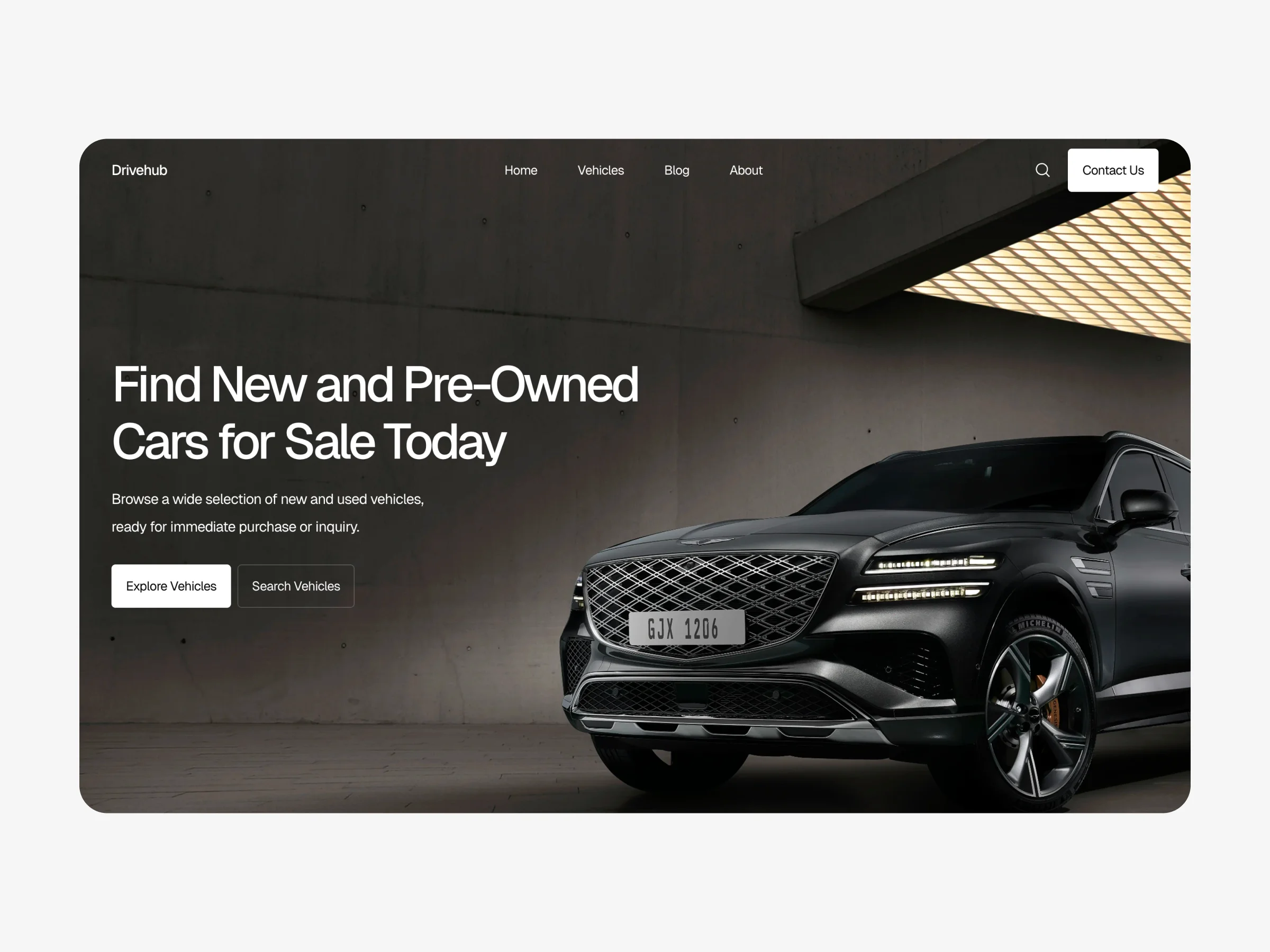

Drivehub car dealership website homepage with clear navigation, inventory section, blog link, and visible contact button

Example of a structured car dealership website: https://drivehub-template.framer.website

The Drivehub example demonstrates how homepage, inventory, vehicle pages, financing, trade in, and service sections work together to create a complete website system built for visibility and lead generation.

Conclusion

A successful car dealership website is built on the right pages working together as a system. Homepage, inventory, vehicle pages, financing, trade in, contact, service, and informational content each play a specific role in attracting traffic and generating inquiries.

When every essential page is clearly structured and easy to navigate, search visibility improves and buyers feel confident taking the next step, which turns online traffic into consistent dealership leads. To further improve performance, you can also read How Fast Websites Affect Car Dealership Leads to understand how loading speed influences visibility, user behavior, and inquiry conversions.

Introduction

Many car dealership websites struggle to generate inquiries not because of design, but because essential pages are missing or poorly structured. Buyers look for specific information such as vehicles, financing options, trade in details, or location. If that information is hard to find, visitors leave and choose another dealership. A clear page structure helps search engines understand your website and guides buyers to contact your team.

A well organized dealership website is not a collection of random pages. It is a system where each page has a clear purpose and supports visibility, trust, and lead generation. The following pages form the foundation of a dealership website built for performance.

Homepage

The homepage is the main entry point for most visitors. It should clearly explain who you are, what vehicles you offer, and how buyers can take the next step. A strong homepage includes links to inventory categories, highlights key vehicle types, and presents contact information without forcing users to search for it.

Instead of overwhelming visitors with too many design elements, the homepage should guide them toward browsing inventory or contacting the dealership. Clear navigation, visible calls to action, and trust elements such as reviews or years of experience help create confidence from the first visit.

Inventory Page

The inventory page is one of the most important pages for both visibility and leads. This page lists available vehicles and allows users to filter by brand, model, price range, body type, or year. A structured inventory page helps buyers quickly narrow down their options and find relevant vehicles.

From a visibility perspective, this page supports rankings for broad searches such as “used cars in [city]” or “SUVs for sale near me”. When organized properly, it also connects to more specific vehicle pages that target detailed search queries. A clear inventory structure increases traffic and improves the overall browsing experience.

Individual Vehicle Pages

Each vehicle should have its own dedicated page. These pages are essential for attracting buyers who search for specific models such as “2020 Ford F-150 for sale in [city]”. A strong vehicle page includes a unique title, detailed specifications, price, mileage, high quality images, and a clear contact or inquiry button.

Individual vehicle pages are often the final step before a lead is generated. If the page loads quickly, provides complete information, and makes it easy to contact the dealership, it significantly increases the likelihood of inquiries. Without separate vehicle pages, a dealership misses valuable opportunities to appear in detailed search results.

Financing Page

Many buyers search for financing information before contacting a dealership. A dedicated financing page explains available payment options, loan programs, and approval processes. This page builds trust and answers common questions that might otherwise prevent someone from submitting an inquiry.

A separate financing page also supports rankings for searches related to car loans and dealership financing in your area. By clearly explaining options and including a simple form, you reduce hesitation and encourage more potential buyers to take action.

Trade In Page

The trade in page attracts visitors who are specifically looking to exchange their current vehicle. This type of search is different from general vehicle searches and deserves its own dedicated page. A clear trade in page should explain how the process works and include a simple form for valuation requests.

Providing structured information about trade ins increases visibility for related searches and creates an additional entry point to your website. It also expands your lead opportunities beyond direct vehicle purchases.

About Page

Trust plays a major role in car buying decisions. The About page introduces your dealership, explains your experience, and highlights your values. Including team photos, dealership history, and local involvement helps buyers feel more confident about contacting you.

This page supports credibility and strengthens the impression of professionalism. While it may not generate leads directly, it reinforces trust, which influences the decision to inquire.

Contact Page

The contact page should be simple and easy to use. It must include your address, phone number, business hours, map location, and a clear inquiry form. Contact details should match your local business listings to maintain consistency.

A well structured contact page reduces friction and ensures that visitors can reach your dealership without confusion. Clear and accessible contact information supports both user experience and local visibility.

Service Page

If your dealership offers maintenance or repair services, a dedicated service page helps attract additional traffic. Many vehicle owners search for service centers in their area, and this page allows you to appear in those results.

A service page can include booking options, service descriptions, and common maintenance information. This expands your online presence and strengthens your local authority.

Blog or Guides

Informational content such as buying guides or maintenance tips helps attract additional traffic from people who are still researching. Articles like “How to Finance a Used Car” or “Best SUVs for Families” bring visitors to your website and connect them to inventory pages through internal links.

Regular content updates signal that your dealership is active and professional. Over time, these pages support broader visibility and help turn research focused visitors into future leads.

Example Structure

Below is an example of a structured car dealership website that includes all essential pages organized in a clear and logical system.


Drivehub car dealership website homepage with clear navigation, inventory section, blog link, and visible contact button

Example of a structured car dealership website: https://drivehub-template.framer.website

The Drivehub example demonstrates how homepage, inventory, vehicle pages, financing, trade in, and service sections work together to create a complete website system built for visibility and lead generation.

Conclusion

A successful car dealership website is built on the right pages working together as a system. Homepage, inventory, vehicle pages, financing, trade in, contact, service, and informational content each play a specific role in attracting traffic and generating inquiries.

When every essential page is clearly structured and easy to navigate, search visibility improves and buyers feel confident taking the next step, which turns online traffic into consistent dealership leads. To further improve performance, you can also read How Fast Websites Affect Car Dealership Leads to understand how loading speed influences visibility, user behavior, and inquiry conversions.

Frequently Asked Questions

What is the most important page on a car dealership website?

The inventory page is often the most important because it attracts buyers searching for available vehicles.

Do car dealerships need separate pages for financing and trade in?

Yes, dedicated pages improve search visibility and make it easier for buyers to find specific information.

Why are individual vehicle pages necessary?

Separate vehicle pages help your website appear in detailed search results and generate more targeted inquiries.

Does a blog really help a dealership website?

Yes, informative articles attract additional traffic and connect visitors to your inventory through internal links.