February 26, 2026
Restaurant Website Errors That Cost You Customers
Discover the most common restaurant website errors that drive guests away and reduce reservations. Learn what to fix to protect your bookings and improve online performance.

Introduction
A restaurant website should make it easy for guests to explore your menu, understand your concept, and reserve a table without confusion. However, many restaurants lose customers because of avoidable website errors. These issues may seem small, but they quietly reduce trust, increase exits, and lower booking rates. When visitors feel friction, they rarely complain. They simply leave and choose another restaurant.
Fixing structural problems often has a stronger impact than increasing advertising spend. When the website is clear, fast, and logically organized, more visitors complete reservations without additional marketing costs.
Hidden Reservation Button
One of the most damaging errors is hiding the reservation button or placing it where guests do not expect it. When booking options are difficult to find, visitors hesitate or abandon the website entirely. A reservation button should be visible in the header and repeated across key sections of the page.
Clear calls to action guide visitors naturally from viewing the menu to confirming a table. If guests must search for booking options, your website is working against you instead of supporting your business.
Slow Loading Speed
Website speed directly influences whether a guest stays or leaves. Large image files, background videos, and unnecessary animations can slow down performance and create frustration. If the page does not load quickly, many visitors return to search results and open a competitor’s website.
Fast loading creates confidence and signals professionalism. Slow loading makes a restaurant appear outdated or unreliable, even if the food and service are excellent. Performance should always support the booking process, not interrupt it.
Menu as PDF Only
Uploading the menu only as a PDF is a common mistake. While this may seem convenient, it limits search visibility and makes browsing harder on mobile devices. Guests prefer to scroll through a structured menu with clearly separated categories.
A text based menu allows search engines to understand dish names and improves usability for visitors. Categories such as Starters, Main Courses, and Desserts help guests quickly decide whether the restaurant fits their preferences.
Example of Clear Structure
To understand what works better, consider a restaurant website built around clarity, visible booking actions, and logical page structure.
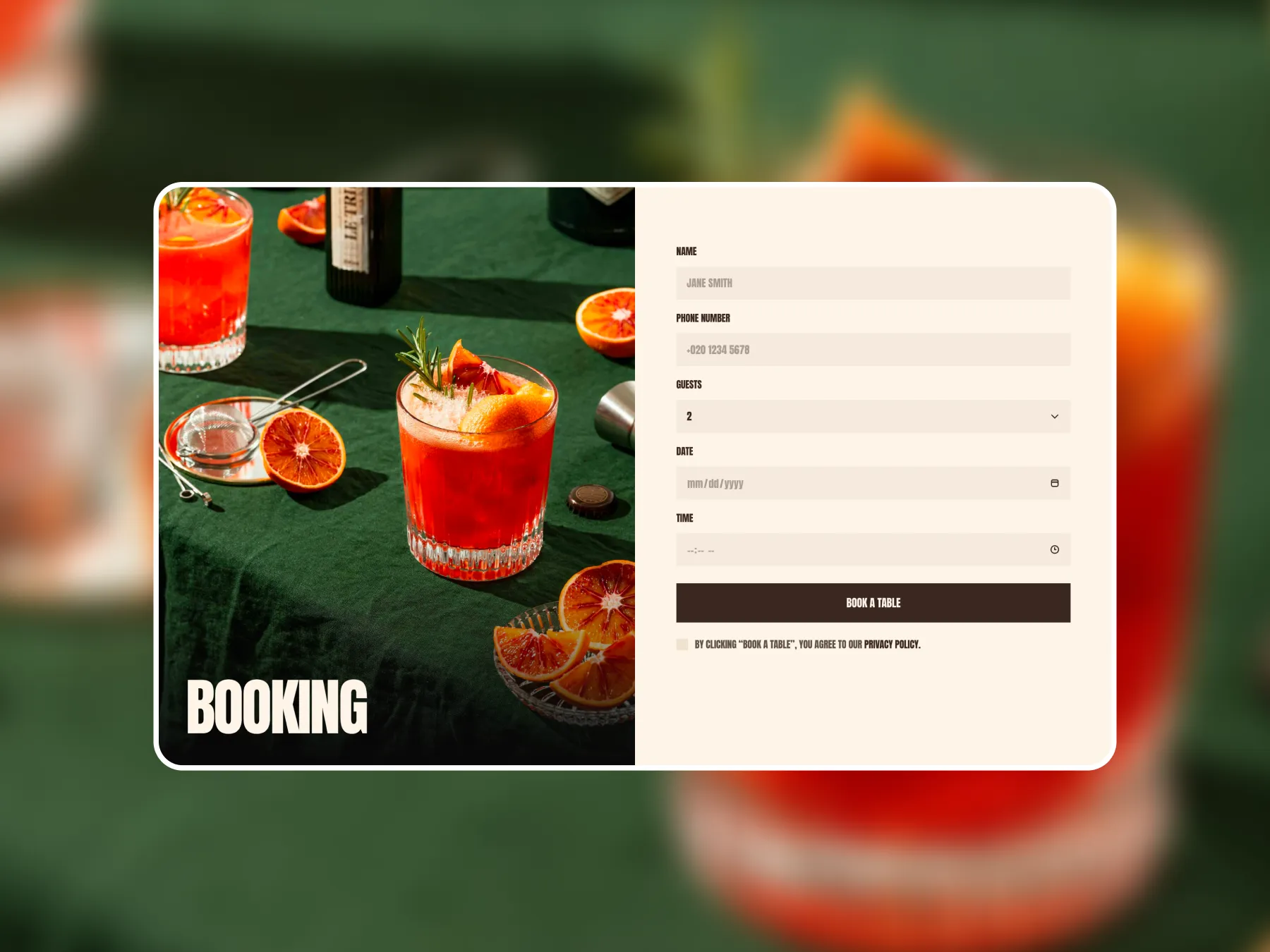
Marlund is a restaurant website template built with a clear booking path, organized menu sections, and visible reservation options throughout the page. The layout balances strong visual presentation with logical structure, ensuring that guests can quickly move from exploring the atmosphere to reserving a table.
⭢ Live preview
⭢ Marlund Restaurant Website Template
This example shows how proper structure reduces friction and supports higher booking rates.
Confusing Navigation
If visitors cannot quickly find the menu, location, or reservation page, they lose patience. A restaurant website should have a clear and predictable navigation structure with pages such as Homepage, Menu, Reservation, About, and Contact.
Logical structure reduces confusion and builds trust. When information is easy to access, guests feel more comfortable completing the booking process.
Poor Mobile Experience
A large portion of restaurant searches happens on mobile devices. If the website is not fully responsive or requires excessive zooming and scrolling, visitors will leave quickly. Booking forms must be simple, buttons must be easy to tap, and text must remain readable on smaller screens to ensure a smooth reservation experience.
Mobile performance is not optional. It directly affects how many same day reservations you capture from nearby searches.
Missing Contact Details
Guests expect to see your address, phone number, and opening hours clearly displayed. When this information is hidden or inconsistent, trust decreases. Many visitors check opening hours before reserving a table, and confusion can lead to lost bookings.
Clear contact details also support local visibility in search results. Consistency between your website and business listings improves credibility.
Overuse of Visual Effects
Strong imagery is important in the restaurant industry, but too many decorative elements can distract from the main goal. Excessive animations, heavy background videos, and complex layouts often slow down the website and create visual noise.
A clean and structured layout with high quality images performs better than a website overloaded with effects. Visual atmosphere should support clarity, not replace it.
Conclusion
By focusing on clarity, performance, and logical page structure, restaurant owners can improve booking rates without increasing advertising spend. A well structured website protects revenue and turns visitors into confirmed reservations. If you want to understand how performance directly impacts bookings, read our guide on How Fast Websites Affect Restaurant Bookings.
Introduction
A restaurant website should make it easy for guests to explore your menu, understand your concept, and reserve a table without confusion. However, many restaurants lose customers because of avoidable website errors. These issues may seem small, but they quietly reduce trust, increase exits, and lower booking rates. When visitors feel friction, they rarely complain. They simply leave and choose another restaurant.
Fixing structural problems often has a stronger impact than increasing advertising spend. When the website is clear, fast, and logically organized, more visitors complete reservations without additional marketing costs.
Hidden Reservation Button
One of the most damaging errors is hiding the reservation button or placing it where guests do not expect it. When booking options are difficult to find, visitors hesitate or abandon the website entirely. A reservation button should be visible in the header and repeated across key sections of the page.
Clear calls to action guide visitors naturally from viewing the menu to confirming a table. If guests must search for booking options, your website is working against you instead of supporting your business.
Slow Loading Speed
Website speed directly influences whether a guest stays or leaves. Large image files, background videos, and unnecessary animations can slow down performance and create frustration. If the page does not load quickly, many visitors return to search results and open a competitor’s website.
Fast loading creates confidence and signals professionalism. Slow loading makes a restaurant appear outdated or unreliable, even if the food and service are excellent. Performance should always support the booking process, not interrupt it.
Menu as PDF Only
Uploading the menu only as a PDF is a common mistake. While this may seem convenient, it limits search visibility and makes browsing harder on mobile devices. Guests prefer to scroll through a structured menu with clearly separated categories.
A text based menu allows search engines to understand dish names and improves usability for visitors. Categories such as Starters, Main Courses, and Desserts help guests quickly decide whether the restaurant fits their preferences.
Example of Clear Structure
To understand what works better, consider a restaurant website built around clarity, visible booking actions, and logical page structure.

Marlund is a restaurant website template built with a clear booking path, organized menu sections, and visible reservation options throughout the page. The layout balances strong visual presentation with logical structure, ensuring that guests can quickly move from exploring the atmosphere to reserving a table.
⭢ Live preview
⭢ Marlund Restaurant Website Template
This example shows how proper structure reduces friction and supports higher booking rates.
Confusing Navigation
If visitors cannot quickly find the menu, location, or reservation page, they lose patience. A restaurant website should have a clear and predictable navigation structure with pages such as Homepage, Menu, Reservation, About, and Contact.
Logical structure reduces confusion and builds trust. When information is easy to access, guests feel more comfortable completing the booking process.
Poor Mobile Experience
A large portion of restaurant searches happens on mobile devices. If the website is not fully responsive or requires excessive zooming and scrolling, visitors will leave quickly. Booking forms must be simple, buttons must be easy to tap, and text must remain readable on smaller screens to ensure a smooth reservation experience.
Mobile performance is not optional. It directly affects how many same day reservations you capture from nearby searches.
Missing Contact Details
Guests expect to see your address, phone number, and opening hours clearly displayed. When this information is hidden or inconsistent, trust decreases. Many visitors check opening hours before reserving a table, and confusion can lead to lost bookings.
Clear contact details also support local visibility in search results. Consistency between your website and business listings improves credibility.
Overuse of Visual Effects
Strong imagery is important in the restaurant industry, but too many decorative elements can distract from the main goal. Excessive animations, heavy background videos, and complex layouts often slow down the website and create visual noise.
A clean and structured layout with high quality images performs better than a website overloaded with effects. Visual atmosphere should support clarity, not replace it.
Conclusion
By focusing on clarity, performance, and logical page structure, restaurant owners can improve booking rates without increasing advertising spend. A well structured website protects revenue and turns visitors into confirmed reservations. If you want to understand how performance directly impacts bookings, read our guide on How Fast Websites Affect Restaurant Bookings.
Frequently Asked Questions
Why do restaurant websites lose customers?
Restaurant websites often lose customers because of slow loading speed, hidden reservation buttons, confusing navigation, or poor mobile experience. When visitors face friction, they leave and choose another restaurant.
How does website speed affect restaurant reservations?
Slow loading pages increase bounce rates and reduce the number of visitors who reach the booking form. Faster websites improve trust and make it easier for guests to complete a reservation.
Should a restaurant menu be a PDF?
Using only a PDF menu limits search visibility and makes browsing harder on mobile devices. A structured text based menu improves usability and helps search engines understand your content.
What is the most important element on a restaurant website?
The reservation button is one of the most important elements. It should be clearly visible and easy to access from every key page to maximize booking conversions.