{ "@context": "https://schema.org", "@type": "FAQPage", "mainEntity": [ { "@type": "Question", "name": "Do car repair websites really need online booking?", "acceptedAnswer": { "@type": "Answer", "text": "Not always. What matters is giving visitors a clear next step. Some customers prefer calls, others forms or online booking. A good website supports multiple options and guides users based on intent." } }, { "@type": "Question", "name": "Is a “Contact Us” page enough for service appointments?", "acceptedAnswer": { "@type": "Answer", "text": "In most cases, no. Contact pages work best as a secondary option. Booking actions should appear earlier and closer to service information to reduce hesitation." } }, { "@type": "Question", "name": "Where should booking buttons be placed on a car repair website?", "acceptedAnswer": { "@type": "Answer", "text": "High-performing websites place booking actions in the hero section, on service pages, near reviews, and as a visible option on mobile. One isolated button is rarely enough." } }, { "@type": "Question", "name": "Why do visitors hesitate to book a car repair service online?", "acceptedAnswer": { "@type": "Answer", "text": "Visitors usually hesitate when they lack clarity. Missing service details, unclear location, no reviews, or uncertainty about next steps all reduce confidence." } }, { "@type": "Question", "name": "How important is mobile booking for auto repair websites?", "acceptedAnswer": { "@type": "Answer", "text": "Very important. Most local searches happen on mobile devices. Booking actions must be easy to tap, quick to complete, and visible without scrolling." } } ] }

December 30, 2025

December 30, 2025

Car Repair Website Booking System: How Auto Shops Turn Visits Into Appointments

Car Repair Website Booking System: How Auto Shops Turn Visits Into Appointments

How car repair websites should handle bookings to turn visits into real service appointments with a clear, conversion-focused structure.

How car repair websites should handle bookings to turn visits into real service appointments with a clear, conversion-focused structure.

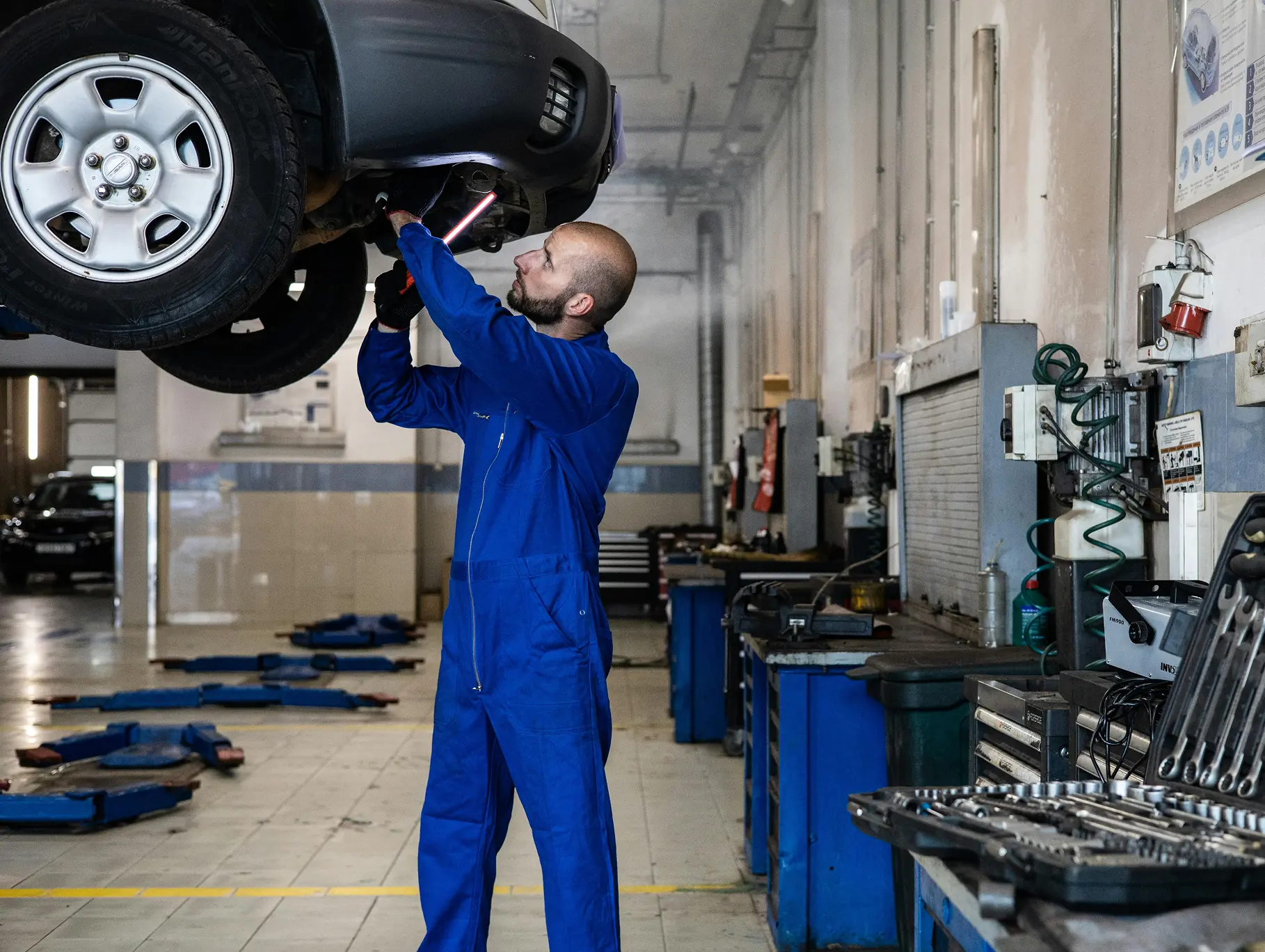
Car repair technician inspecting a vehicle, illustrating how auto repair websites turn visits into service appointments

When someone visits a car repair website, they usually have a clear reason. They want to understand whether the shop can help and how to book a service.

Booking issues rarely come from a lack of interest. In most cases, visitors hesitate because the website does not clearly guide them from information to action.

This article explains how booking and appointments should work on a car repair website and what helps visitors confidently take the next step.

Booking Is a Process, Not a Button

Many auto repair websites treat booking as a single action. This usually means a phone number in the header or a “Book Now” button added somewhere on the page.

In reality, booking starts much earlier. Before contacting a shop, visitors want to understand what services are offered, who the business is for, and whether the website feels trustworthy.

If the structure does not answer these questions first, booking feels rushed. That is why booking performance is closely connected to overall website design and clarity.

To see how layout and messaging influence service requests, continue with Car Repair Website Design: What Actually Brings Service Requests

Contact Pages and Booking Work Differently

A traditional Contact page still has value, but it often puts the entire decision on the visitor. They have to choose how to reach out without any guidance.

More effective websites support different booking behaviors depending on intent.

Phone calls work best when the issue feels urgent or when pricing depends on inspection. Contact forms are better suited for routine services or non-urgent requests. Online booking works well when services are clearly explained and expectations feel predictable.

The key is not choosing one option, but placing each option where it makes sense. This depends heavily on how the website is structured.

A clear breakdown of this logic is covered in Best Car Repair Website Structure for Local Auto Shops.

Where Booking Actions Should Appear

Booking actions should feel like a natural continuation of the page, not an interruption.

On well-structured car repair websites, booking options usually appear in the hero section, after service explanations, near reviews or proof of experience, as a visible action on mobile, and before the footer.

Each placement answers a different question the visitor might have. When booking elements are placed randomly or inconsistently, visitors hesitate without fully understanding why.

Common placement and flow issues are explained in Car Repair Website Mistakes That Kill Online Bookings.

What Visitors Need to See Before Booking

Before contacting a repair shop, visitors look for reassurance.

They want to quickly confirm that the shop handles their specific problem, where it is located, when it is open, whether other customers trust it, and what happens after they make contact.

If this information is difficult to find, visitors pause. This hesitation often shows up as low conversion rates, even though the real issue is missing context.

Clear structure also affects local visibility and search traffic, which directly influences booking volume. This connection is explained in Car Repair Website SEO: How Auto Shops Get More Local Customers.

Why Mobile Booking Matters So Much

Most local auto repair searches happen on mobile devices. For many visitors, the mobile version of the site is the only version they will ever see.

Booking actions on mobile must be easy to tap, visible without scrolling, quick to complete, and usable with one hand.

Long forms, hidden buttons, or unclear next steps reduce engagement quickly. Mobile-first booking is not an enhancement. It is the primary experience.

A Practical Booking-Oriented Website Structure

When booking works well, the structure behind it is usually simple.

It includes a clear hero with service and location, immediate call or booking options, service pages with contextual actions, trust signals placed before contact points, and a streamlined mobile flow.

Building this structure from scratch takes time and testing. Because of this, some auto repair businesses prefer to start with a ready-made foundation that already follows these principles and adapt it to their services.

This approach leads naturally to the next step, choosing a website template built specifically for car repair businesses.

Final Thought

Appointments are not created by aggressive calls to action. They come from clarity and structure.

When visitors understand what you offer and what happens next, booking becomes an easy and natural decision.

When someone visits a car repair website, they usually have a clear reason. They want to understand whether the shop can help and how to book a service.

Booking issues rarely come from a lack of interest. In most cases, visitors hesitate because the website does not clearly guide them from information to action.

This article explains how booking and appointments should work on a car repair website and what helps visitors confidently take the next step.

Booking Is a Process, Not a Button

Many auto repair websites treat booking as a single action. This usually means a phone number in the header or a “Book Now” button added somewhere on the page.

In reality, booking starts much earlier. Before contacting a shop, visitors want to understand what services are offered, who the business is for, and whether the website feels trustworthy.

If the structure does not answer these questions first, booking feels rushed. That is why booking performance is closely connected to overall website design and clarity.

To see how layout and messaging influence service requests, continue with Car Repair Website Design: What Actually Brings Service Requests

Contact Pages and Booking Work Differently

A traditional Contact page still has value, but it often puts the entire decision on the visitor. They have to choose how to reach out without any guidance.

More effective websites support different booking behaviors depending on intent.

Phone calls work best when the issue feels urgent or when pricing depends on inspection. Contact forms are better suited for routine services or non-urgent requests. Online booking works well when services are clearly explained and expectations feel predictable.

The key is not choosing one option, but placing each option where it makes sense. This depends heavily on how the website is structured.

A clear breakdown of this logic is covered in Best Car Repair Website Structure for Local Auto Shops.

Where Booking Actions Should Appear

Booking actions should feel like a natural continuation of the page, not an interruption.

On well-structured car repair websites, booking options usually appear in the hero section, after service explanations, near reviews or proof of experience, as a visible action on mobile, and before the footer.

Each placement answers a different question the visitor might have. When booking elements are placed randomly or inconsistently, visitors hesitate without fully understanding why.

Common placement and flow issues are explained in Car Repair Website Mistakes That Kill Online Bookings.

What Visitors Need to See Before Booking

Before contacting a repair shop, visitors look for reassurance.

They want to quickly confirm that the shop handles their specific problem, where it is located, when it is open, whether other customers trust it, and what happens after they make contact.

If this information is difficult to find, visitors pause. This hesitation often shows up as low conversion rates, even though the real issue is missing context.

Clear structure also affects local visibility and search traffic, which directly influences booking volume. This connection is explained in Car Repair Website SEO: How Auto Shops Get More Local Customers.

Why Mobile Booking Matters So Much

Most local auto repair searches happen on mobile devices. For many visitors, the mobile version of the site is the only version they will ever see.

Booking actions on mobile must be easy to tap, visible without scrolling, quick to complete, and usable with one hand.

Long forms, hidden buttons, or unclear next steps reduce engagement quickly. Mobile-first booking is not an enhancement. It is the primary experience.

A Practical Booking-Oriented Website Structure

When booking works well, the structure behind it is usually simple.

It includes a clear hero with service and location, immediate call or booking options, service pages with contextual actions, trust signals placed before contact points, and a streamlined mobile flow.

Building this structure from scratch takes time and testing. Because of this, some auto repair businesses prefer to start with a ready-made foundation that already follows these principles and adapt it to their services.

This approach leads naturally to the next step, choosing a website template built specifically for car repair businesses.

Final Thought

Appointments are not created by aggressive calls to action. They come from clarity and structure.

When visitors understand what you offer and what happens next, booking becomes an easy and natural decision.

When someone visits a car repair website, they usually have a clear reason. They want to understand whether the shop can help and how to book a service.

Booking issues rarely come from a lack of interest. In most cases, visitors hesitate because the website does not clearly guide them from information to action.

This article explains how booking and appointments should work on a car repair website and what helps visitors confidently take the next step.

Booking Is a Process, Not a Button

Many auto repair websites treat booking as a single action. This usually means a phone number in the header or a “Book Now” button added somewhere on the page.

In reality, booking starts much earlier. Before contacting a shop, visitors want to understand what services are offered, who the business is for, and whether the website feels trustworthy.

If the structure does not answer these questions first, booking feels rushed. That is why booking performance is closely connected to overall website design and clarity.

To see how layout and messaging influence service requests, continue with Car Repair Website Design: What Actually Brings Service Requests

Contact Pages and Booking Work Differently

A traditional Contact page still has value, but it often puts the entire decision on the visitor. They have to choose how to reach out without any guidance.

More effective websites support different booking behaviors depending on intent.

Phone calls work best when the issue feels urgent or when pricing depends on inspection. Contact forms are better suited for routine services or non-urgent requests. Online booking works well when services are clearly explained and expectations feel predictable.

The key is not choosing one option, but placing each option where it makes sense. This depends heavily on how the website is structured.

A clear breakdown of this logic is covered in Best Car Repair Website Structure for Local Auto Shops.

Where Booking Actions Should Appear

Booking actions should feel like a natural continuation of the page, not an interruption.

On well-structured car repair websites, booking options usually appear in the hero section, after service explanations, near reviews or proof of experience, as a visible action on mobile, and before the footer.

Each placement answers a different question the visitor might have. When booking elements are placed randomly or inconsistently, visitors hesitate without fully understanding why.

Common placement and flow issues are explained in Car Repair Website Mistakes That Kill Online Bookings.

What Visitors Need to See Before Booking

Before contacting a repair shop, visitors look for reassurance.

They want to quickly confirm that the shop handles their specific problem, where it is located, when it is open, whether other customers trust it, and what happens after they make contact.

If this information is difficult to find, visitors pause. This hesitation often shows up as low conversion rates, even though the real issue is missing context.

Clear structure also affects local visibility and search traffic, which directly influences booking volume. This connection is explained in Car Repair Website SEO: How Auto Shops Get More Local Customers.

Why Mobile Booking Matters So Much

Most local auto repair searches happen on mobile devices. For many visitors, the mobile version of the site is the only version they will ever see.

Booking actions on mobile must be easy to tap, visible without scrolling, quick to complete, and usable with one hand.

Long forms, hidden buttons, or unclear next steps reduce engagement quickly. Mobile-first booking is not an enhancement. It is the primary experience.

A Practical Booking-Oriented Website Structure

When booking works well, the structure behind it is usually simple.

It includes a clear hero with service and location, immediate call or booking options, service pages with contextual actions, trust signals placed before contact points, and a streamlined mobile flow.

Building this structure from scratch takes time and testing. Because of this, some auto repair businesses prefer to start with a ready-made foundation that already follows these principles and adapt it to their services.

This approach leads naturally to the next step, choosing a website template built specifically for car repair businesses.

Final Thought

Appointments are not created by aggressive calls to action. They come from clarity and structure.

When visitors understand what you offer and what happens next, booking becomes an easy and natural decision.

Frequently Asked Questions

Do car repair websites really need online booking?

Not always. What matters is giving visitors a clear next step. Some customers prefer calls, others forms or online booking. A good website supports multiple options and guides users based on intent.

Is a “Contact Us” page enough for service appointments?

In most cases, no. Contact pages work best as a secondary option. Booking actions should appear earlier and closer to service information to reduce hesitation.

Where should booking buttons be placed on a car repair website?

High-performing websites place booking actions in the hero section, on service pages, near reviews, and as a visible option on mobile. One isolated button is rarely enough.

Why do visitors hesitate to book a car repair service online?

Visitors usually hesitate when they lack clarity. Missing service details, unclear location, no reviews, or uncertainty about next steps all reduce confidence.

How important is mobile booking for auto repair websites?

Very important. Most local searches happen on mobile devices. Booking actions must be easy to tap, quick to complete, and visible without scrolling.

Do car repair websites really need online booking?

Not always. What matters is giving visitors a clear next step. Some customers prefer calls, others forms or online booking. A good website supports multiple options and guides users based on intent.

Is a “Contact Us” page enough for service appointments?

In most cases, no. Contact pages work best as a secondary option. Booking actions should appear earlier and closer to service information to reduce hesitation.

Where should booking buttons be placed on a car repair website?

High-performing websites place booking actions in the hero section, on service pages, near reviews, and as a visible option on mobile. One isolated button is rarely enough.

Why do visitors hesitate to book a car repair service online?

Visitors usually hesitate when they lack clarity. Missing service details, unclear location, no reviews, or uncertainty about next steps all reduce confidence.

How important is mobile booking for auto repair websites?

Very important. Most local searches happen on mobile devices. Booking actions must be easy to tap, quick to complete, and visible without scrolling.

Do car repair websites really need online booking?

Not always. What matters is giving visitors a clear next step. Some customers prefer calls, others forms or online booking. A good website supports multiple options and guides users based on intent.

Is a “Contact Us” page enough for service appointments?

In most cases, no. Contact pages work best as a secondary option. Booking actions should appear earlier and closer to service information to reduce hesitation.

Where should booking buttons be placed on a car repair website?

High-performing websites place booking actions in the hero section, on service pages, near reviews, and as a visible option on mobile. One isolated button is rarely enough.

Why do visitors hesitate to book a car repair service online?

Visitors usually hesitate when they lack clarity. Missing service details, unclear location, no reviews, or uncertainty about next steps all reduce confidence.

How important is mobile booking for auto repair websites?

Very important. Most local searches happen on mobile devices. Booking actions must be easy to tap, quick to complete, and visible without scrolling.